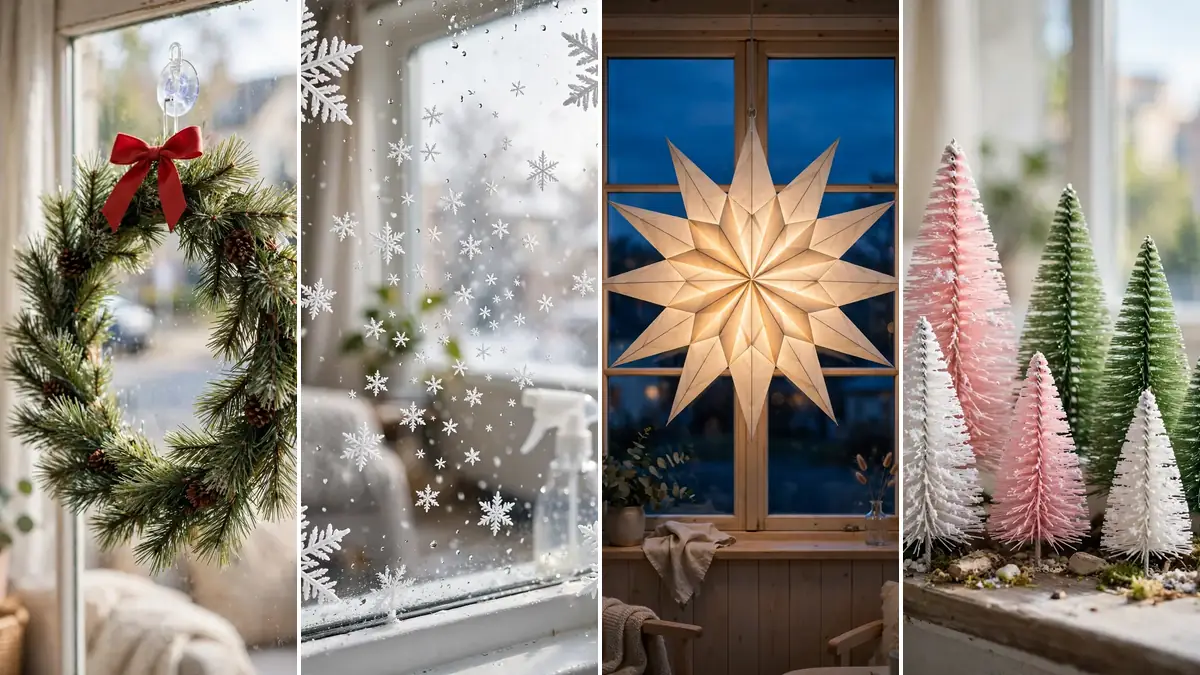
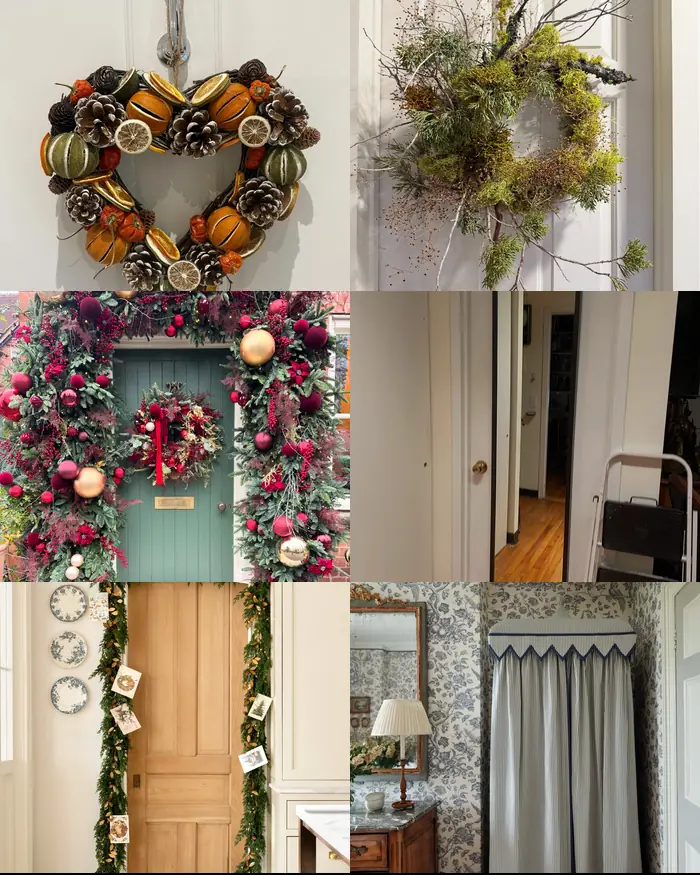

A door is the biggest flat surface you are not using. In most rentals it is also the blandest: a slab of white, beige or tired wood that you look at fifty times a day and never really see. Learning how to decorate a door changes that with the smallest budget in the house, because a door needs one good idea, not a room’s worth of furniture. This guide covers 17 door decor ideas in four groups: front doors that set the tone before anyone steps inside, plain interior doors that are begging for a job, closet doors that take up whole walls, and the finishing touches that make any of them feel considered. Every idea here hangs, sticks or leans – nothing needs a drill, and everything comes away clean when the lease ends. The heart-shaped wreath above is idea one in miniature: one hook over the top of the door, zero holes, and a plain white door turned into the warmest welcome in the flat. Start with the five basics, then pick your door.
Table of Contents
- How to Decorate a Door: Five Rules Before You Hang Anything
- 1. How to Decorate a Door With a Wreath on an Over-Door Hook
- 2. How to Decorate a Door With One Statement Wreath for the Season
- 3. How to Decorate a Door With a Garland Around the Frame
- 4. How to Decorate a Door With a Full Seasonal Arch
- 5. How to Decorate a Door With Peel and Stick Panels
- 6. How to Decorate a Door With a Chalkboard Panel
- 7. How to Decorate a Door With a Full-Length Mirror
- 8. Hang a Key Cabinet Beside the Door
- 9. Swap or Dress the Door Knob: How to Decorate a Door Knob
- 10. How to Decorate a Glass Panel Door With Frost or Pattern
- 11. How to Decorate a Door With Adhesive Numbers or a Name
- 12. How to Decorate a Pale Door so It Looks Like the Plan
- 13. How to Decorate a Closet Door With a Curtain
- 14. Dress Flat Closet Doors With Fabric Panels
- 15. How to Decorate a Door With Colour: Let It Anchor the Room Palette
- 16. Stop the Draft With a Decorative Door Stopper
- 17. Strip It Back in an Hour on Moving Day
- 5 How to Decorate a Door Mistakes That Make Door Decor Look Wrong
- FAQs About How to Decorate a Door
How to Decorate a Door: Five Rules Before You Hang Anything
Rule one: the door has to keep working. Test every idea with the door fully open and fully closed before you fix anything in place. A wreath that stops the door closing, a mirror that kisses the wall behind, a mat so thick the door scrapes it – none of them survive the week in a real house. Decor that fights the door always loses, and usually tears something on its way out.
Rule two: renters hang, they do not drill. Over-door hooks, adhesive hooks rated for the weight, hanging straps and magnets for steel doors carry everything in this guide. Screws and nails into a door or frame need your landlord’s written yes, and on a hollow-core door they often split the skin besides.
Rule three: weight lives over the top edge. A door moves. Whatever hangs on it swings, bumps and settles, so secure the top first and let the bottom be free or lightly held. One firm anchor at the top and, for tall pieces, one strip or magnet low down to stop the swing.
Rule four: mind the clearances. The gap between door and frame is small on purpose. Bulky knots, thick straps and wreath frames pressed into that gap will rub paint off the frame’s edge over a season, which is exactly the kind of slow damage that eats deposits.
Rule five: photograph the door first. Dated photos of every door you decorate, close up on existing marks, saved before anything goes up. Covers come and go; the photos are how you prove the scuff on the frame was there in October, not caused by you in June.
Front Door Ideas
1. How to Decorate a Door With a Wreath on an Over-Door Hook
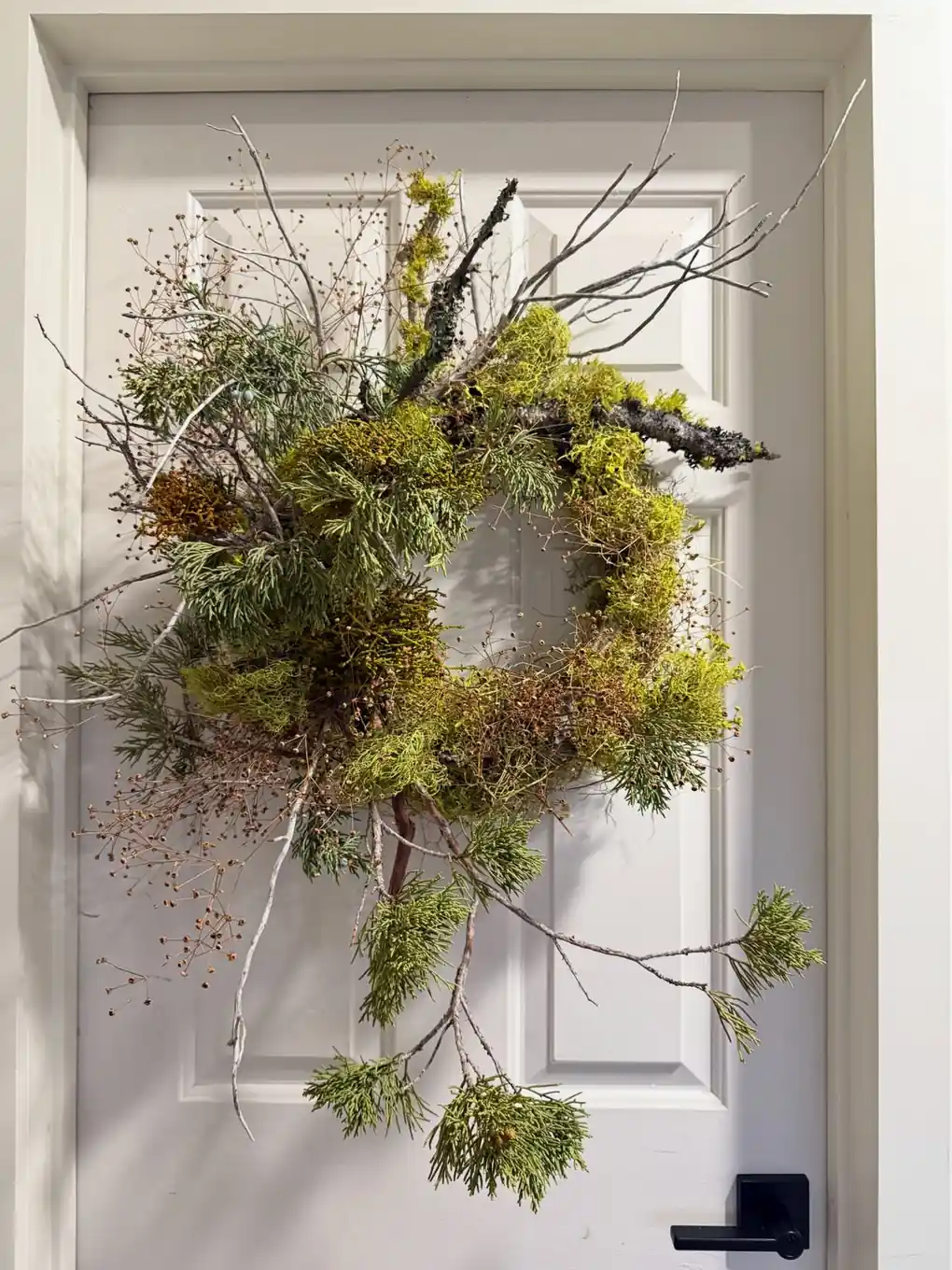
The greenery wreath in the photo is doing everything right: it is generous, a little wild, and hung so the door still reads as a door. The wreath is the front door’s whole wardrobe in one piece, and the over-door hook is what makes it a rental move. A flat metal hook slides over the top edge of the door, the wreath hangs from it, and the whole arrangement lifts off in seconds on moving day with no mark behind it.
Pick the hook before the wreath. Measure the door’s thickness, because hooks come in widths and a loose one rattles every time the door moves. For wreath size, a rough guide is a wreath about two thirds the width of the door: smaller looks lost, bigger crowds the handle. Hang it so its centre sits at eye level, which on most doors means the hook’s drop does half the work for you.
If your front door is steel, as many apartment doors are, skip the hook entirely: a strong magnet hook on the face holds a wreath with no hardware over the edge at all. And if the door opens onto a shared hallway, check your building’s rules once – some leases and fire codes treat hallway doors as shared space.
Wreath sizing, quickly
Standard door (about 80cm wide): a wreath around 50 to 55cm across.
Wide or double doors: one wreath per door, hung at the same height, or one oversized wreath centred on the pair.
Narrow doors: drop to 40cm and let a ribbon tail add the length instead.
2. How to Decorate a Door With One Statement Wreath for the Season
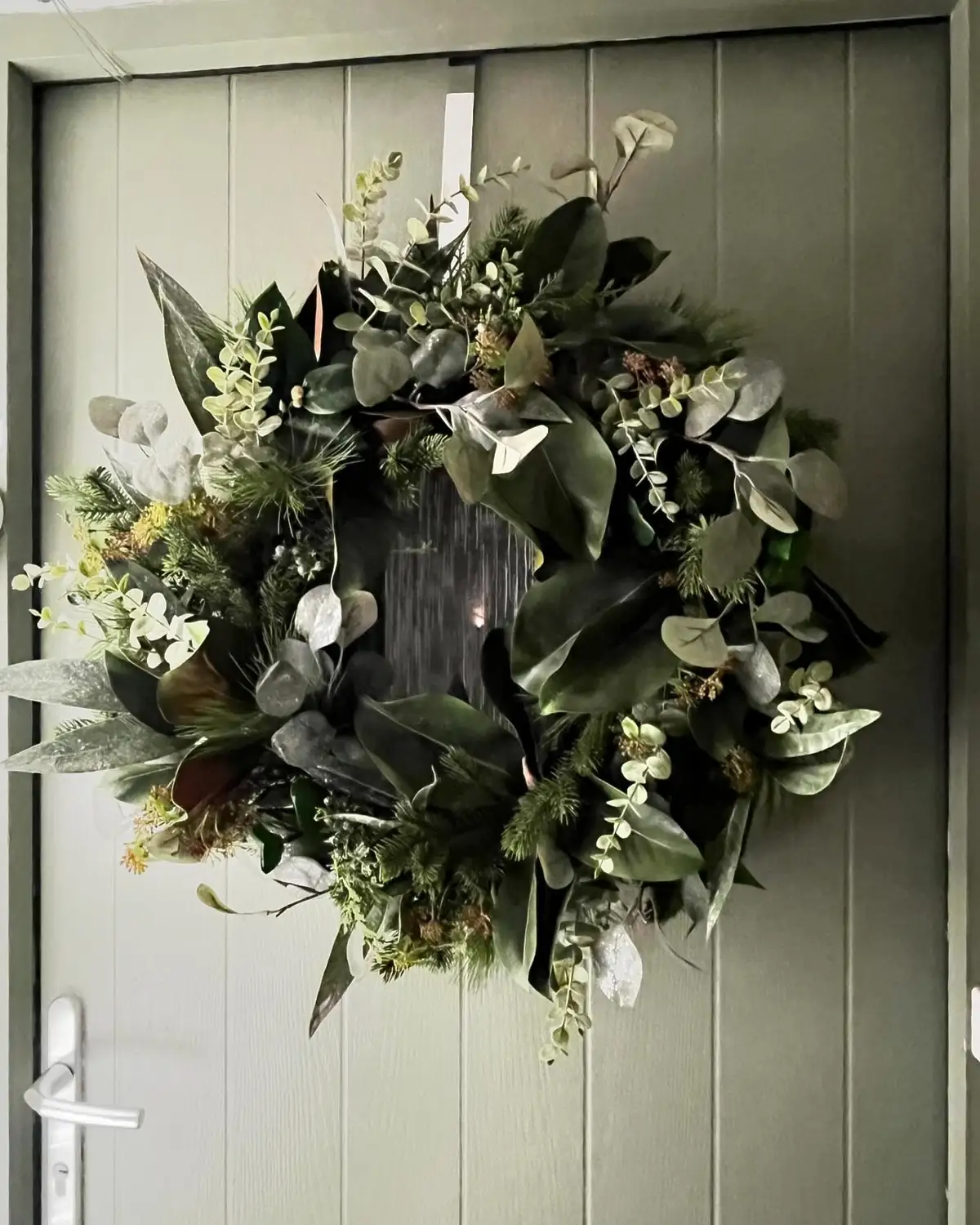
Look at what the foliage wreath does on the sage door: green on green, and it still works, because the wreath’s job is texture as much as colour. Big leaves, berries, dried grasses, pinecones – a wreath with texture reads from the street, where a flat ring of colour disappears. This is the seasonal version of idea one: the hook stays, the wreath changes. A spring wreath of blossom and soft green, a summer one of dried grasses, autumn leaves and cones, and the full festive treatment when the year turns.
Keeping a small rotation is cheaper than it sounds. One plain greenery base wreath, re-dressed four times a year with ribbon, a few stems and whatever the season offers, costs less than four separate wreaths and stores in one bag. Choose colours against your door, not against the season in the abstract: a red door wants cream and green at Christmas, not more red; a white door takes anything; a dark door needs pale or metallic pieces to show up at dusk.
Store wreaths hanging, not stacked, if you can – a hook on a wardrobe door keeps the shape. Crushed in a box is how last year’s wreath becomes this year’s sad wreath.
The one-base-wreath trick
Buy the plainest full greenery wreath you can find. Spring: tuck in blossom stems and a linen bow. Summer: dried grasses and seed heads. Autumn: cones, dried orange slices, a rust ribbon. Winter: berries, baubles, the bow in velvet. One wreath, four doors’ worth of first impressions.
3. How to Decorate a Door With a Garland Around the Frame
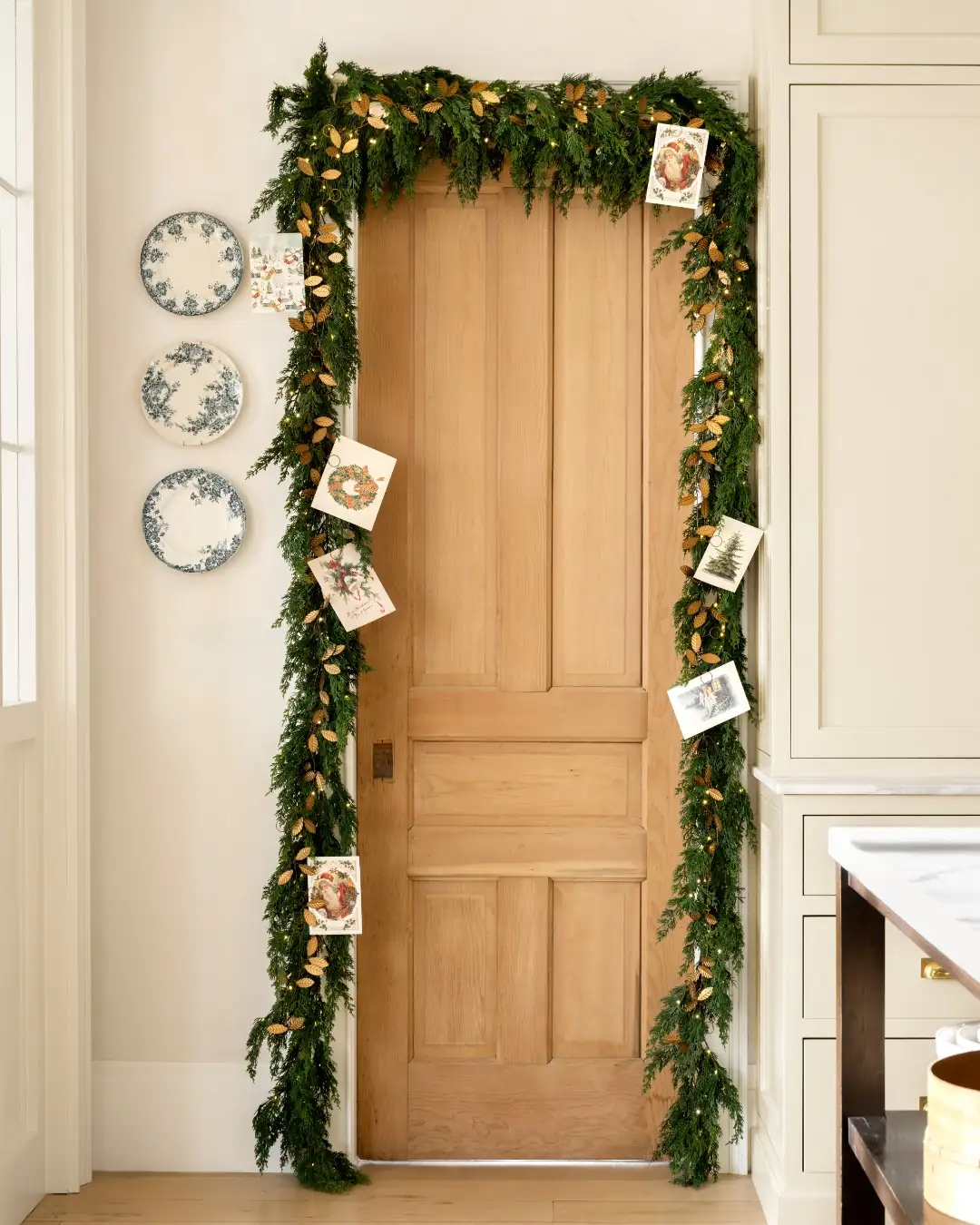
The garland framing this wooden door does something a wreath cannot: it decorates the whole doorway, so the door becomes a picture inside a frame. It also hides the exact thing rental doorways suffer from – a tired frame with scuffed paint – without touching the paint itself. And notice the greeting cards tucked into the greenery: a garland is a display line as well as a decoration, which makes it the hardest-working idea in this section through the card-heavy end of the year.
Fix a garland with clear adhesive hooks along the top and sides of the frame, on the wall or trim rather than the door, spaced about every 40cm so it drapes in gentle swags instead of sagging. On brick or stone porches, hooks go on the mortar lines or the frame’s edge, never drilled. Drape first, fix second: hang it loosely, step back, adjust the falls at the sides so they end at the same height, then press the hooks home.
Fresh greenery looks best and lasts two to three weeks outdoors; a good faux garland lasts years and only needs a shake and a fluff each season. Battery fairy lights wound through it turn the whole doorway into the street’s evening landmark, and a timer setting means you never have to remember the switch.
Garlanding, step by step
1. Measure across the top and down both sides; add a fifth extra for the drape.
2. Place clear hooks along the frame, roughly every 40cm.
3. Drape loosely, adjust the side falls to match, then fix.
4. Weave lights last, battery pack tucked at the top corner.
4. How to Decorate a Door With a Full Seasonal Arch
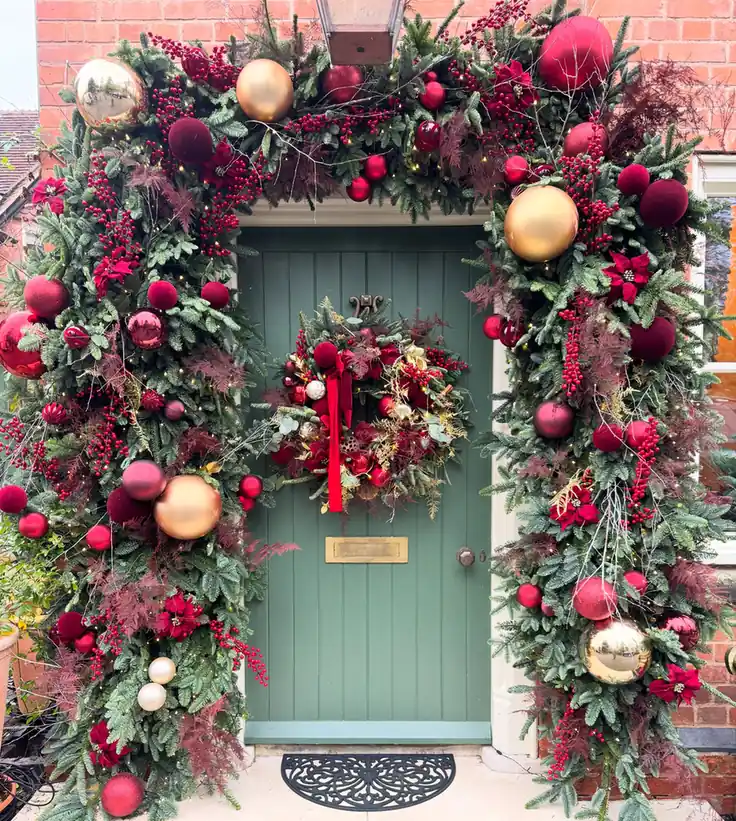
This is the garland with the volume turned all the way up: a full arch of baubles, berries and greenery wrapped around a sage front door, wreath nested in the middle. It is a statement, it takes an hour or two, and for the weeks it is up your door is the one the street photographs. The method is the same as idea three with more of everything: a thicker garland or two twisted together, hooks closer together to carry the weight, and the decorations wired or clipped on once the green is hung.
Build it in layers. Green first, shaped and fixed. Then the big pieces – baubles in your two colours, placed in loose clusters of three. Then the small filler: berries, cones, ribbon tails. Cluster, do not scatter; even spacing is what makes an arch look like confetti, while clusters look designed. The wreath at the centre ties the door itself into the scheme, hung on its usual hook.
Seasonal honesty: this level of display makes sense for a house front or a private porch. On an apartment door opening to a shared hallway, scale it down to the garland-plus-wreath version and keep the walkway fully clear, both for the neighbours and for the fire rules most buildings quietly have.
Arch math, so it looks designed
Two colours only, plus green. Big pieces in clusters of three. Heaviest hooks at the top corners, where the weight turns. Wreath last, centred on the door, not on the arch.
Take it down in reverse: decorations, lights, then greenery, while the hooks stay for next year.
Plain Interior Door Ideas
5. How to Decorate a Door With Peel and Stick Panels
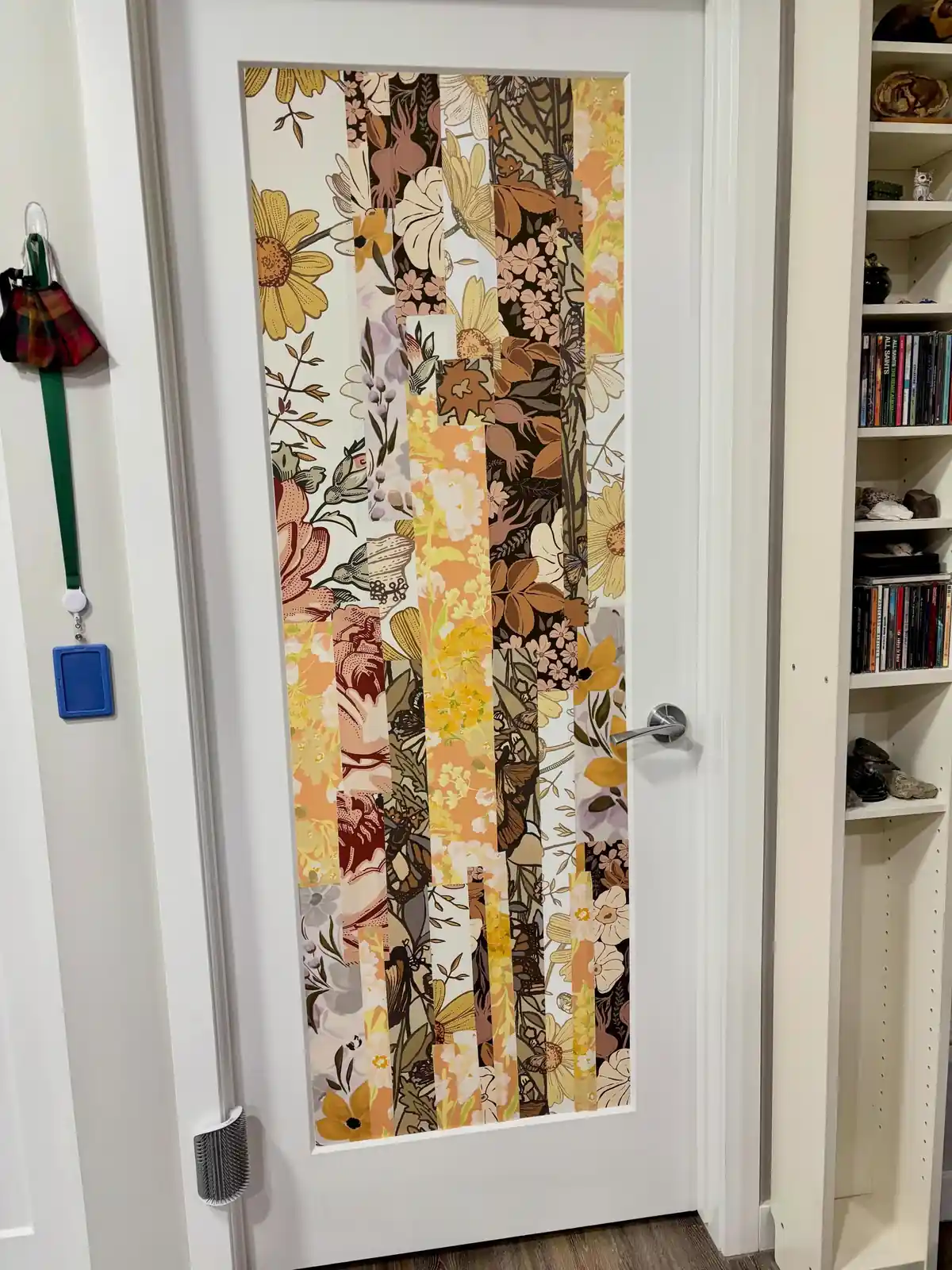
A flat rental door is a blank poster waiting for a print. The door in the photo wears strips of retro floral wallpaper across its glass panel, and the same treatment works on a plain slab: peel and stick wallpaper or contact paper, cut into panels that follow the door’s own shape. Panel by panel is the forgiving way to do it – one rectangle at a time, each small enough to lift and re-lay, instead of one huge sheet fighting you with bubbles.
On a panelled door, paper inside the panels and leave the frame plain, or paper the whole face and let the moulding show through as gentle shadow lines under the sheet. On a flat door, add the panels the door never had: measure a margin in from the edges, mark it lightly in pencil, and lay two or four paper rectangles to fake a classic panelled door. The method behind it is the same one used for whole walls in our removable wallpaper accent wall ideas, just working smaller.
Cut with a sharp blade on a board, not on the door, and use a felt squeegee from the centre out. Patterns with a small repeat forgive beginners; giant motifs demand perfect alignment at every join. Pick your bravery honestly before you buy.
Panel layout, three ways
Panelled door: paper inside each recess, frame stays plain.
Flat door: two tall rectangles, fake classic panels, pencil lines first.
Brave door: one full sheet, pattern matched at the edges, two pairs of hands.
6. How to Decorate a Door With a Chalkboard Panel
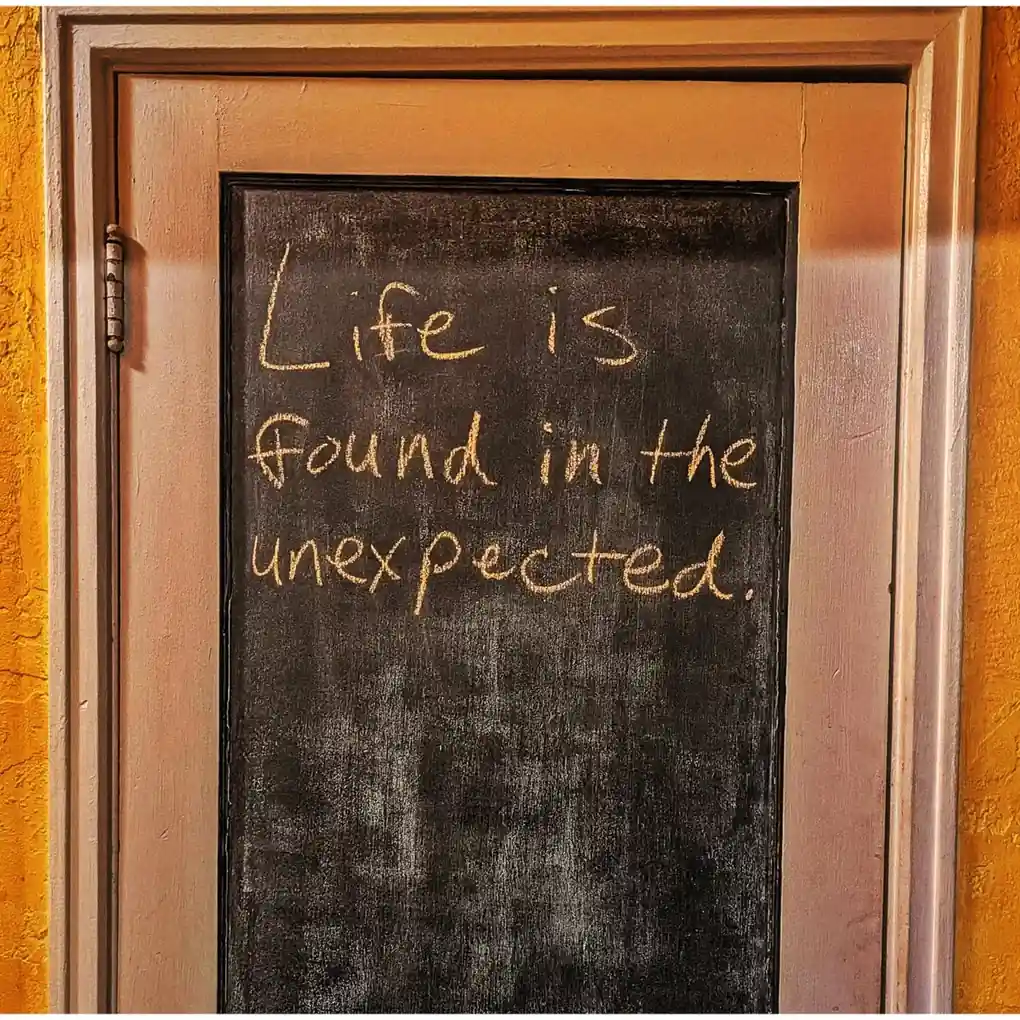
One panel of this door has become a chalkboard, and the whole door has become the household noticeboard: quotes, lists, reminders, the occasional drawing from a small visitor. Chalkboard peel and stick film gives you this without paint – it is sold in rolls, cuts with scissors and sticks like the films you already know, which makes it a rental method where chalkboard paint is not. Cut it to one panel, or to a tall rectangle on a flat door, smooth it down, and season it by rubbing chalk dust over the whole surface and wiping it off before the first real writing.
Place it where messages actually happen: the kitchen door for lists, the hallway door for leave-the-house reminders, a child’s door at their height for drawing. Real chalk feels better and dusts more; liquid chalk pens are cleaner and write brighter, but test one corner first because a few brands stain some films. On moving day the film peels like any other, and nobody’s deposit ever died of a shopping list.
A border helps it read as intentional: a thin washi tape frame or a strip of wood-tone contact paper around the panel turns a black rectangle into a designed feature. Keep a small pot of chalk on the nearest shelf or it will never get used.
Chalkboard black is the classic, but the film also comes in slate blue, deep green and terracotta – pick the one your hallway can carry.
7. How to Decorate a Door With a Full-Length Mirror
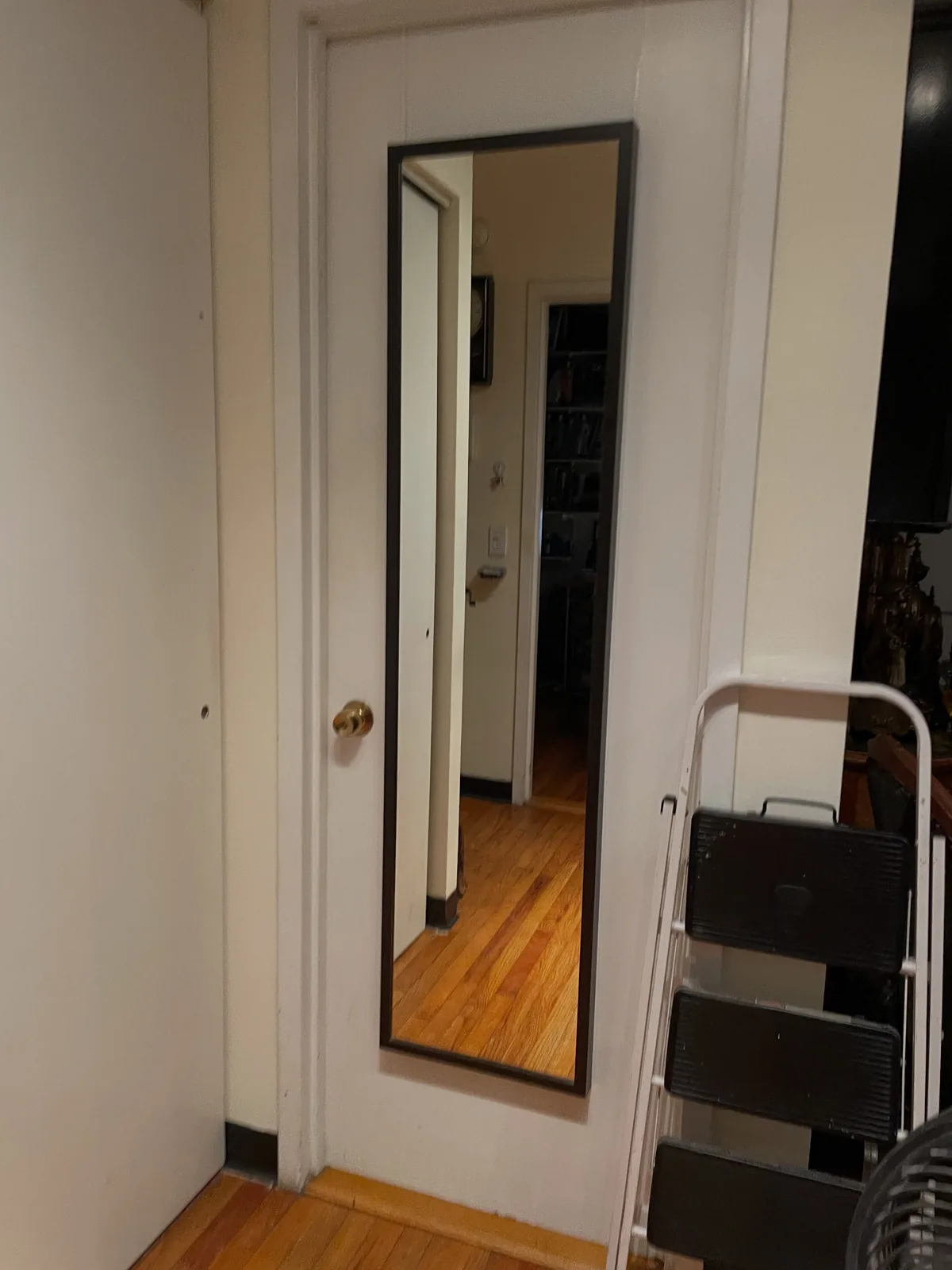
The most useful decoration a door can wear is a mirror, and the photo shows why: a tall mirror on a plain white door, in a hallway barely wide enough for one, doubling the light and giving a small home the full-length check it had nowhere else to put. Doors are the natural home of the full-length mirror in a rental, because the wall space is always spoken for.
Over-door mirror hangers are the cleanest method: two flat hooks over the top edge, the mirror suspended from them, nothing attached to the door at all. Adhesive strips rated well above the mirror’s weight are the second option, and they belong on the mirror’s frame, in pairs, pressed for the full time the packet says. Add one strip or a felt pad at the bottom corners so the mirror hangs still instead of swinging and tapping every time the door moves – that tapping is the sound of a deposit argument warming up.
Weight is the honest limit. A light framed or frameless acrylic mirror is a door mirror; a heavy bevelled antique is a wall mirror having an adventure. Our mirror decor ideas cover shapes, light and placement in depth; the door chapter of that story is simple: centre it, hang it firm, and enjoy the borrowed light. Check the swing before you commit: the door must open fully without the mirror meeting the wall behind it.
Door mirror safety list
✓ Acrylic or light frame only – weigh it honestly.
✓ Over-door hangers first choice; strips second, rated above the weight.
✓ Bottom corners padded so it cannot swing or tap.
✓ Full swing tested before the final press.
8. Hang a Key Cabinet Beside the Door
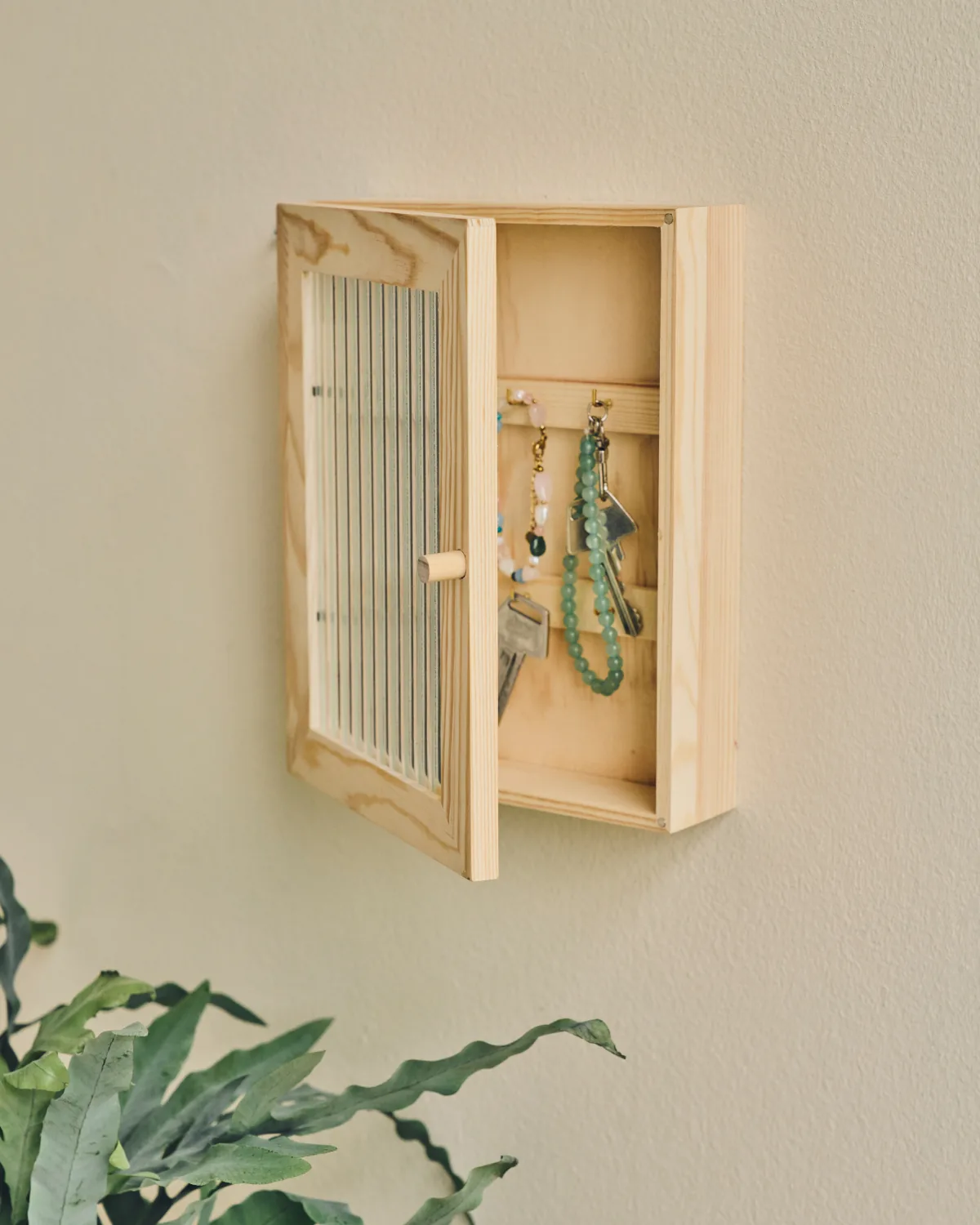
Not every door idea goes on the door. The strip of wall beside a front door is dead space in most homes and prime space in a small one, and a key cabinet like this one – a shallow wooden box with hooks inside and a little door of its own – turns it into the home’s launch pad: keys, dog lead, the spare set for the neighbour. A door that hands you your keys on the way out is a decorated system, not just a decorated slab.
Hang it with removable strips sized for the loaded weight, or one screw into a stud if your lease allows fixings in studs only – ask first if you are not sure. Inside, a hook per person and one labelled spare hook ends the key hunt honestly. If a cabinet feels like furniture shopping, the budget version is a small magnetic strip or a row of adhesive hooks at the same spot; the principle is identical, the keys land in one place beside the door instead of in five places around the flat.
Place it on the handle side, at hand height as you leave, and style the top with one small plant or dish so it reads as part of the entry rather than a storage accident. This pairs naturally with the wider entry picture in our entryway decor ideas for apartments – the door and the wall beside it are one project, not two.
The launch pad rule
Everything you leave with should live within one step of the door: keys in the cabinet, shoes below, bag hook at hand height. A decorated door is lovely; a door zone that works is what you will thank yourself for on a rainy Monday.
9. Swap or Dress the Door Knob: How to Decorate a Door Knob
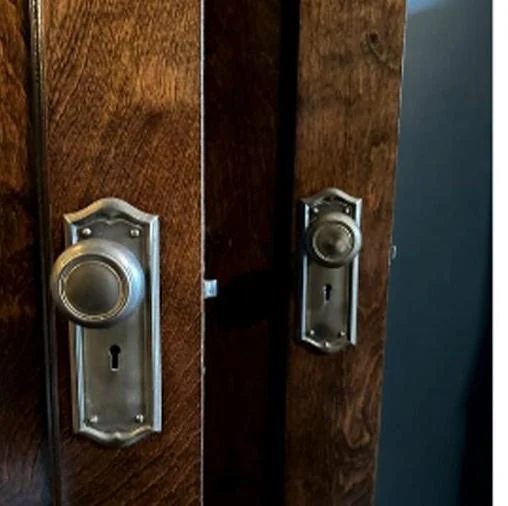
You touch the door knob more than any other part of the door, and on many rental doors it is the saddest object in the room: loose, scratched, builder-basic. The vintage knobs in the photo show what a knob can be – the door’s jewellery. A renter’s swap is simple in principle: knobs and lever handles are held by screws, screws reverse, and the original goes in a labelled bag in a drawer until moving day, when it goes back on.
Measure before you shop: note the backset (the distance from the door’s edge to the knob’s centre) and keep the same function – a passage knob where there is no lock, a privacy set where there is one. Take the old knob to the shop if you can; matching parts beats guessing. Interior doors are the easy wins here. A front door lock is a different matter: many leases forbid changing locks, and buildings need key access, so the front door’s handle is a dress-up job only, never a swap, unless your landlord agrees in writing.
Dressing is the zero-risk version: a ribbon or a small hanging ornament on the handle, a tassel, a tiny seasonal wreath no bigger than your palm. It sounds like nothing and reads as care, which is most of what decorating ever is.
Knob swap kit
✓ New knob or lever in the same function as the old one, backset measured.
✓ Screwdriver, plus the old knob’s bag labelled with the door’s name.
✓ Front door locks: dress, do not swap, without written permission.
10. How to Decorate a Glass Panel Door With Frost or Pattern
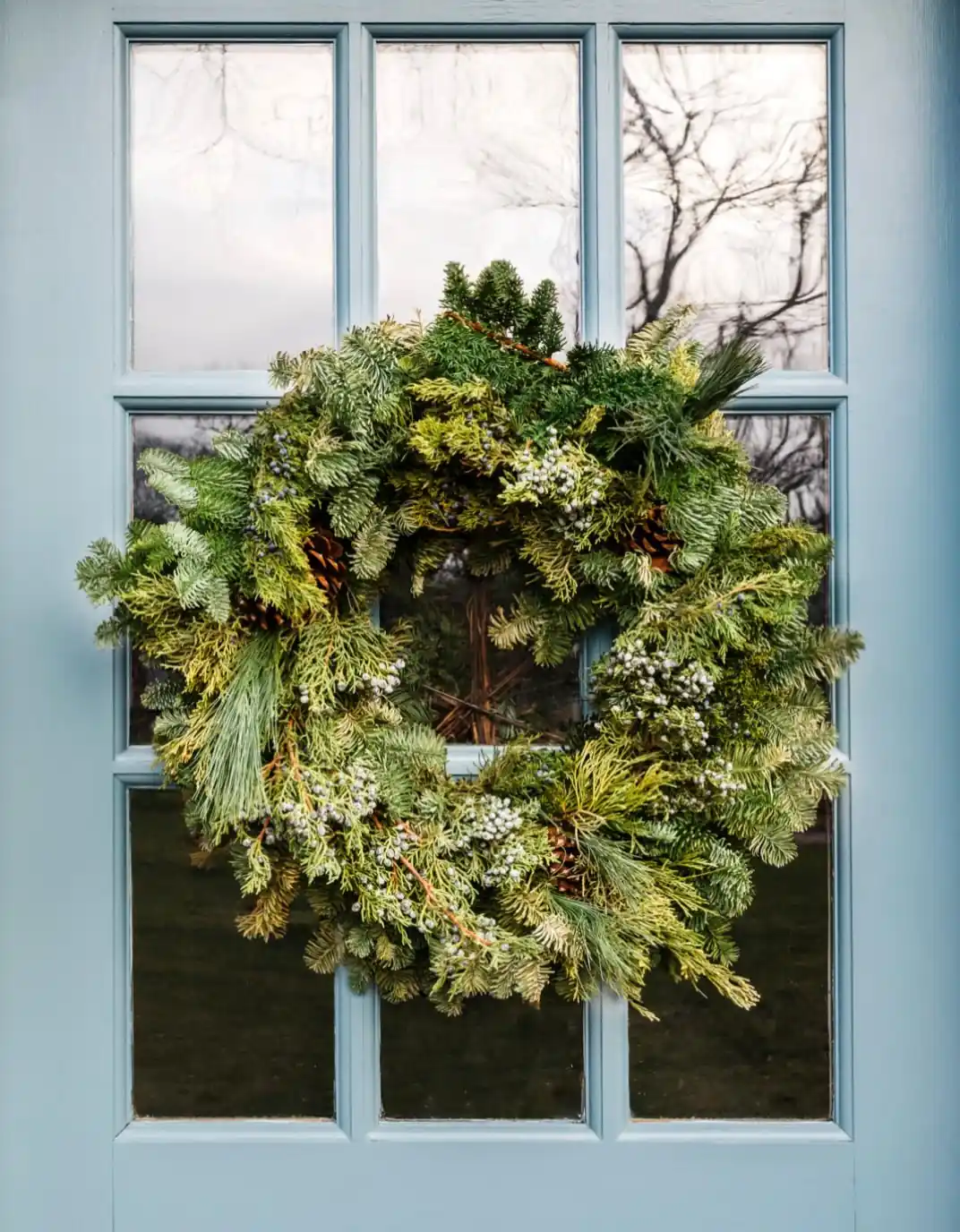
Doors with glass in them – front doors, kitchen doors, old internal doors with frosted panes – have a problem solid doors do not: they show everything on the other side. The pale blue door in the photo answers with the bold move, a huge wreath parked right over the glass, but the quieter fix works every day of the year: static cling film. It holds to glass with no adhesive at all, which makes it the safest product in this whole list.
Frost the pane for privacy with soft light, or use a patterned film – stained glass styles, reeded and fluted looks, simple grids – and the door becomes a feature instead of a window into the laundry pile. Mist the glass, smooth the film on with a card, trim the edges with a blade against the frame. On a multi-paned door, cut each pane’s piece from the same part of the roll so the pattern flows.
On the front door, film solves the evening problem: a lit hallway behind clear glass shows callers your whole life. One frosted pane later, the light still glows out warmly and the details stay yours. Our peel and stick tile guide covers the same peel-and-stick family for floors; the door version is the same material thinking, one surface up.
Glass door film, where it shines
Shines: front door panes, bathroom and kitchen doors, any glass showing a mess.
Skip: one clear pane left on purpose in a dark hallway – borrowed light is worth keeping somewhere.
11. How to Decorate a Door With Adhesive Numbers or a Name
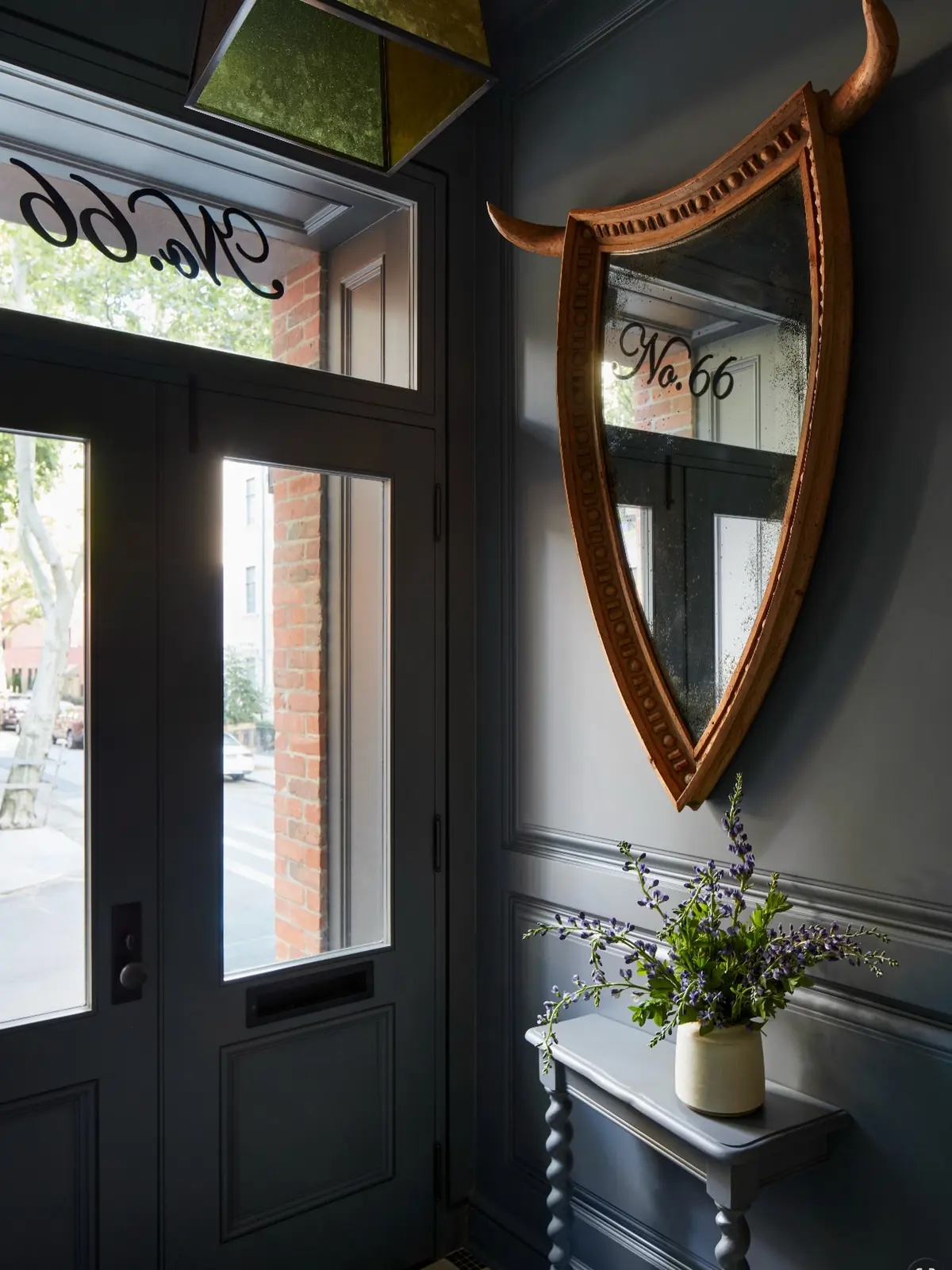
The number above this door is written on the glass itself, in a script that matches the house’s character, and it does a quiet double job: callers find you faster, and the front of the home gains a detail that looks like it was always meant. House numbers and names are small, but they are the difference between a door and an address.
The renter’s versions fix with adhesive, not screws: modern floating numbers with sticky pads rated for outdoors, script decals on a glass transom or sidelight like the one above, or a small plaque hung from the door’s own hook. Place numbers where a caller actually looks – beside the door at eye height, lit by the porch light, in a finish that contrasts with the wall behind. Gold on dark paint, black on pale brick, white on deep green: contrast is what makes a number readable from the street at dusk.
Apartments have a version of this too: a name or number decal on the door itself or the frame’s edge, in the building’s rules. Keep it neat and small and most landlords never blink. Deliveries alone make it worth the five minutes.
Number finishes that read at dusk: brass, matte black, cream on dark doors, slate on pale walls.
12. How to Decorate a Pale Door so It Looks Like the Plan
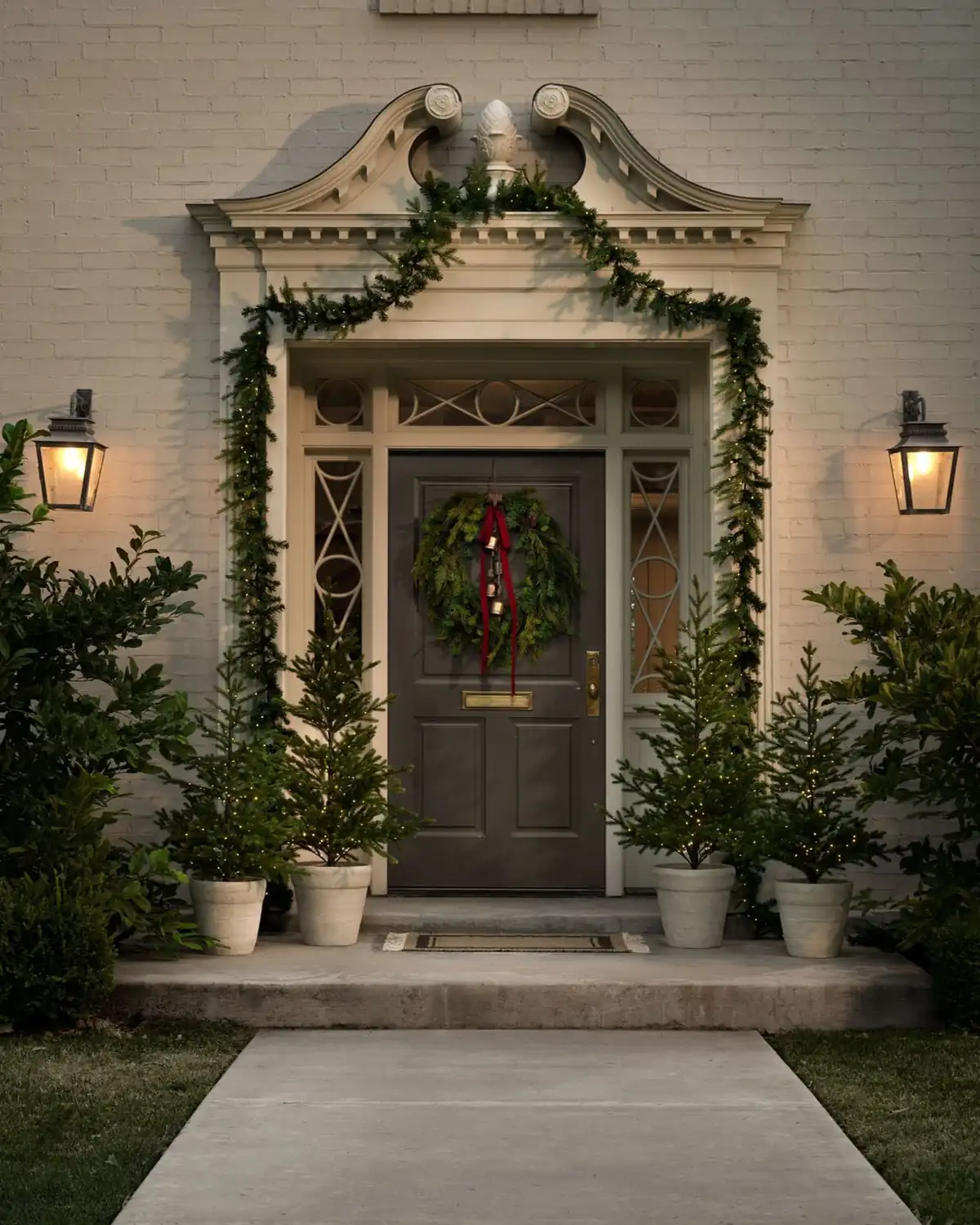
Some doors are not ugly, just unfinished – and a pale door on a pale wall is the classic case, a door-shaped absence in the room. The grey door in the photo solves it from outside the door itself: an arch of greenery, a wreath at the centre and lanterns at the sides give the doorway edges, depth and a point. Inside, the same trick works with softer tools: the doorway gets a frame of attention.
Interior versions: a garland or a string of lights over the frame through the darker months; a pair of small wall pieces or sconces flanking the door; a rug laid to lead the eye to it; a plant on a stand at its side. The rule underneath all of them is contrast – the door should end somewhere visible. If the door and wall are one pale wash, even a thin line helps: a washi tape border inside the frame’s edge, or the frame papered in a deeper tone of the same colour, makes the doorway read as architecture again.
This is also the fix for a door you are not allowed to touch at all. Everything here decorates the surround, and the door itself stays factory plain while looking, somehow, entirely deliberate.
The doorway test
Stand where a guest stands and squint. If you cannot see where the door ends and the wall begins, the doorway needs a frame of something – greenery, light, a rug’s edge – before the door needs anything at all.
Closet Door Ideas
13. How to Decorate a Closet Door With a Curtain
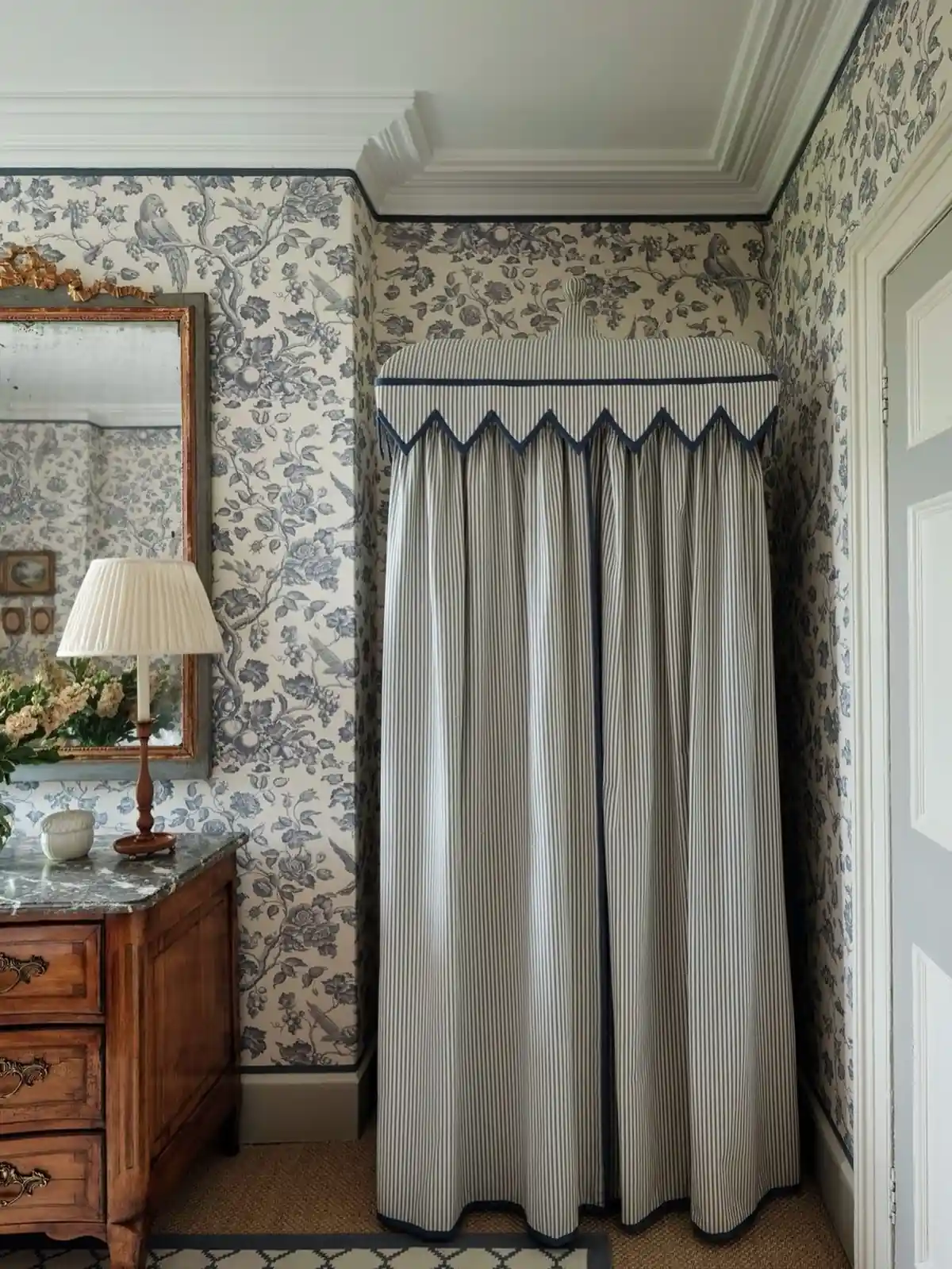
The cream curtain over this closet doorway replaces a wall of doors with one soft fall of fabric, and it changes the room’s whole temperature: no door lines, no handles, no echo when you walk past. Curtains are the classic closet door cover because closets are where doors fail first – sliding doors jump their tracks, bifolds pinch and sag, and landlords consider all of it cosmetic.
Mount a tension rod inside the frame or a slim rod on adhesive brackets above it, and hang a curtain a little fuller than the opening so it gathers rather than stretches. Floor length reads calmest; a valance or a pelmet strip at the top hides the rod and the gap. Access becomes silent and one-handed, which at 7 in the morning is a kindness. Choose washable fabric in the room’s palette, and if the closet holds out-of-season clothes, a heavier curtain also keeps the dust where it belongs.
For sliding-door closets, the curtain hangs in front of the doors rather than instead of them, so nothing about the doors changes at all. That version is the single most reversible idea in this guide.
Closet curtain, step by step
1. Measure the opening; buy fabric at one and a half times the width.
2. Tension rod inside the frame, or adhesive brackets above it.
3. Hang to the floor; add a valance strip if the top gap shows.
4. Test the daily reach: you should be in the closet in one motion.
14. Dress Flat Closet Doors With Fabric Panels
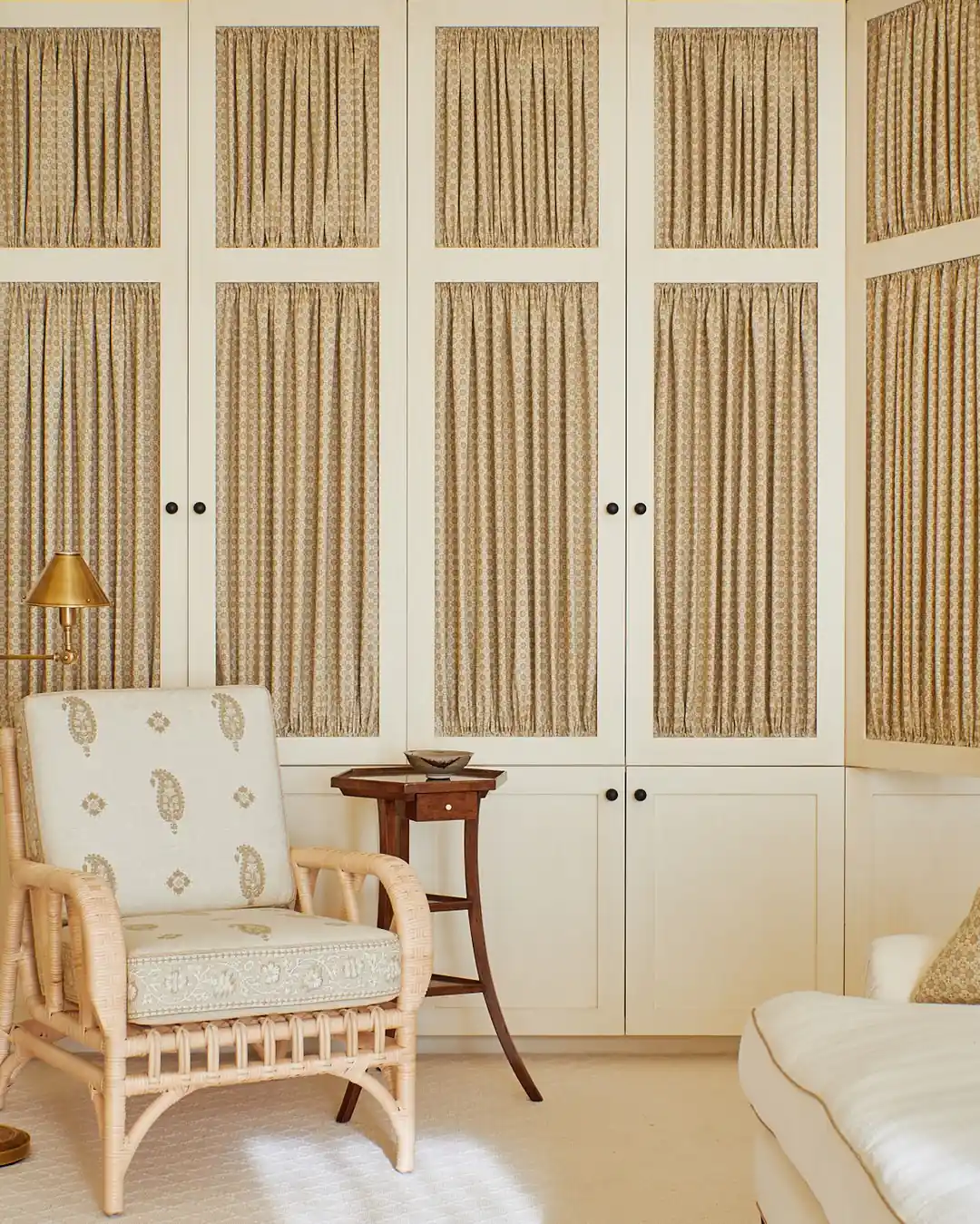
A wall of fitted closet doors is the largest flat surface in most small bedrooms, and in a plain rental it is usually the blankest. The fabric panels gathered into these door frames show the rich version of the fix: each door’s inset filled with softly shirred fabric, turning storage into something closer to a dressed wall. The renter’s version borrows the look, not the joinery: fabric panels fixed inside each door’s frame line with removable strips or, on flat doors, with liquid starch exactly as in our fabric method for other plain doors.
Shirring is forgiving – gathered fabric hides small measuring sins that a flat sheet would announce. Flat and neat works too, in a linen that matches the bedding, and it quiets a wall of doors into one calm plane. Match the fabric family to the room rather than the doors: bedroom closets in soft weaves, hallway closets in something wipeable.
If the doors are mirrored – the other great closet affliction – panels and curtains are your two friends: fabric over the mirror section ends the funhouse effect, and the room usually feels bigger in spirit even as it loses the literal reflections. More on working with what a rental gives you, mirrors included, runs through our rental feel-like-yours guide.
Fabric on closet doors, honestly rated
Effort ▮▮▮▯▯ a panel per door, an afternoon for a wall
Softness added ▮▮▮▮▮ the biggest warmth change in a bedroom
Removal ▮▮▮▮▯ starch washes off; strips pull by their tabs
15. How to Decorate a Door With Colour: Let It Anchor the Room Palette
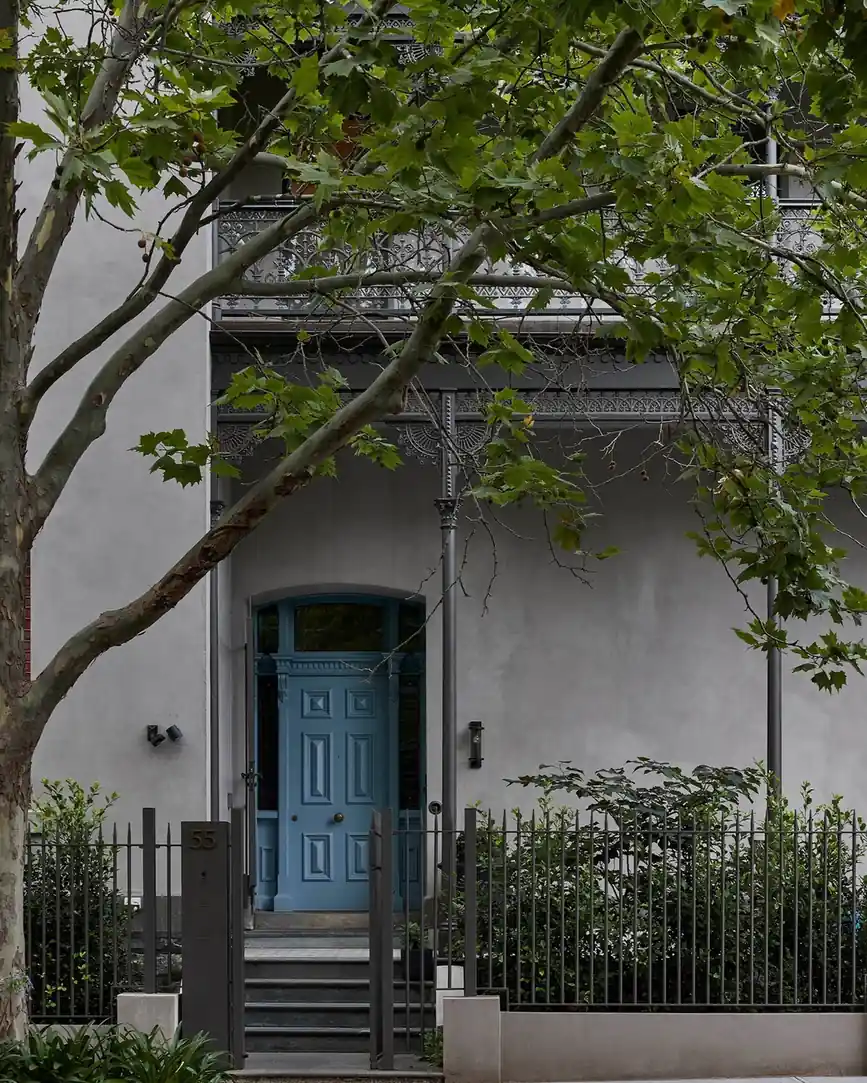
Someone chose this pale blue for the terrace door, and you can bet the hallway inside answers it somewhere – a cushion, a print, a painted chair. That is the idea: a door with any colour in it at all is not an obstacle, it is a palette handed to you. The commonest rental failure is decorating as if the door were invisible, then wondering why the room never quite settles.
Work it plainly. Name the door’s colour family honestly (sage, slate, honey oak, burgundy, that particular landlord cream). Pull one or two echoes of it into the room at different sizes: a cushion or throw, one print with the colour in it, a plant pot. Repeat it three times and the door stops being the landlord’s choice and becomes the scheme’s anchor – guests will assume the door was painted to match the room, which is the finest compliment a rental can collect.
If the door is a colour you truly cannot live with, the echoes still help: surround it with its neighbours on the colour wheel rather than its opposites, and the fight goes out of it. The full wall-of-doors version of this thinking sits in our hallway decor ideas for renters, where doors line both sides and the palette has to work harder.
A pale blue door’s natural echoes: cream, warm black and garden green – three repeats and the door is the design.
Finishing Touches and Moving Day
16. Stop the Draft With a Decorative Door Stopper
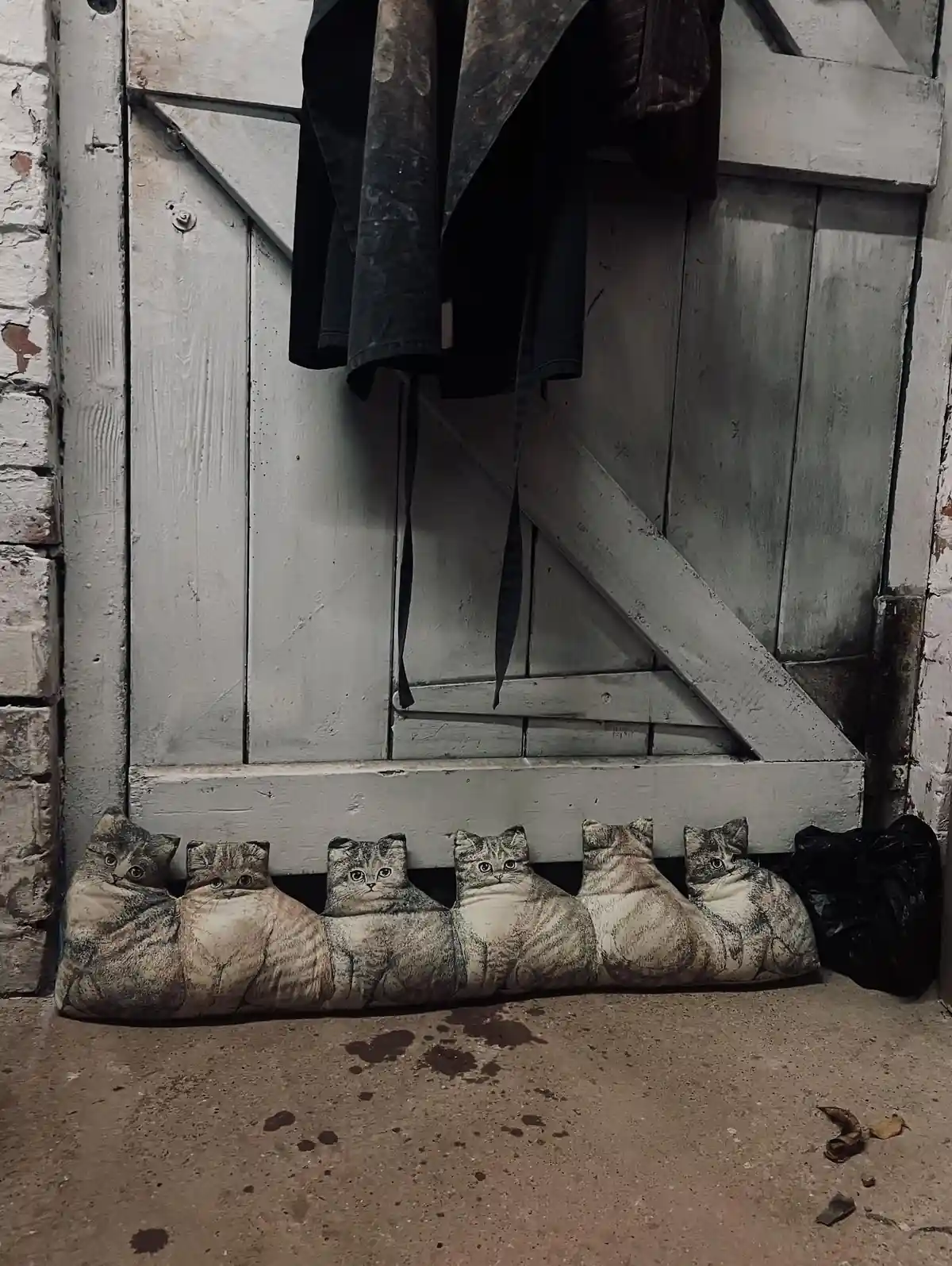
The bottom of the door is decoration too, and this row of cat stoppers along a weathered door makes the point better than any plain sausage could: the draft stopper is a functional object wearing a costume. A stopper seals the gap that leaks warm air all winter, quiets a door that rattles in its frame, and gives the most ignored strip of the doorway a personality. In a rental, where you cannot adjust the door or add seals to the frame, a stopper is also the only draft fix that is entirely yours.
Choose by door job. A heavy fabric stopper, filled and firm, for the front door against winter. A lighter one for bedroom doors, where it mostly stops light and noise creeping under. Novelty shapes belong where guests see them – the hallway door – while plain ones do the quiet work elsewhere. Measure the door’s width and buy or make the stopper a fraction wider, so the ends kiss the frame.
One habit keeps them decor instead of clutter: the stopper lives at its door, always, the way a mat does. The moment it wanders, it becomes a trip hazard with a face.
Stopper picking, quickly
Front door: heaviest you can find, full width plus a little.
Bedroom doors: lighter, softer – light and noise duty.
Guest-facing doors: this is where the cats earn their place.
17. Strip It Back in an Hour on Moving Day
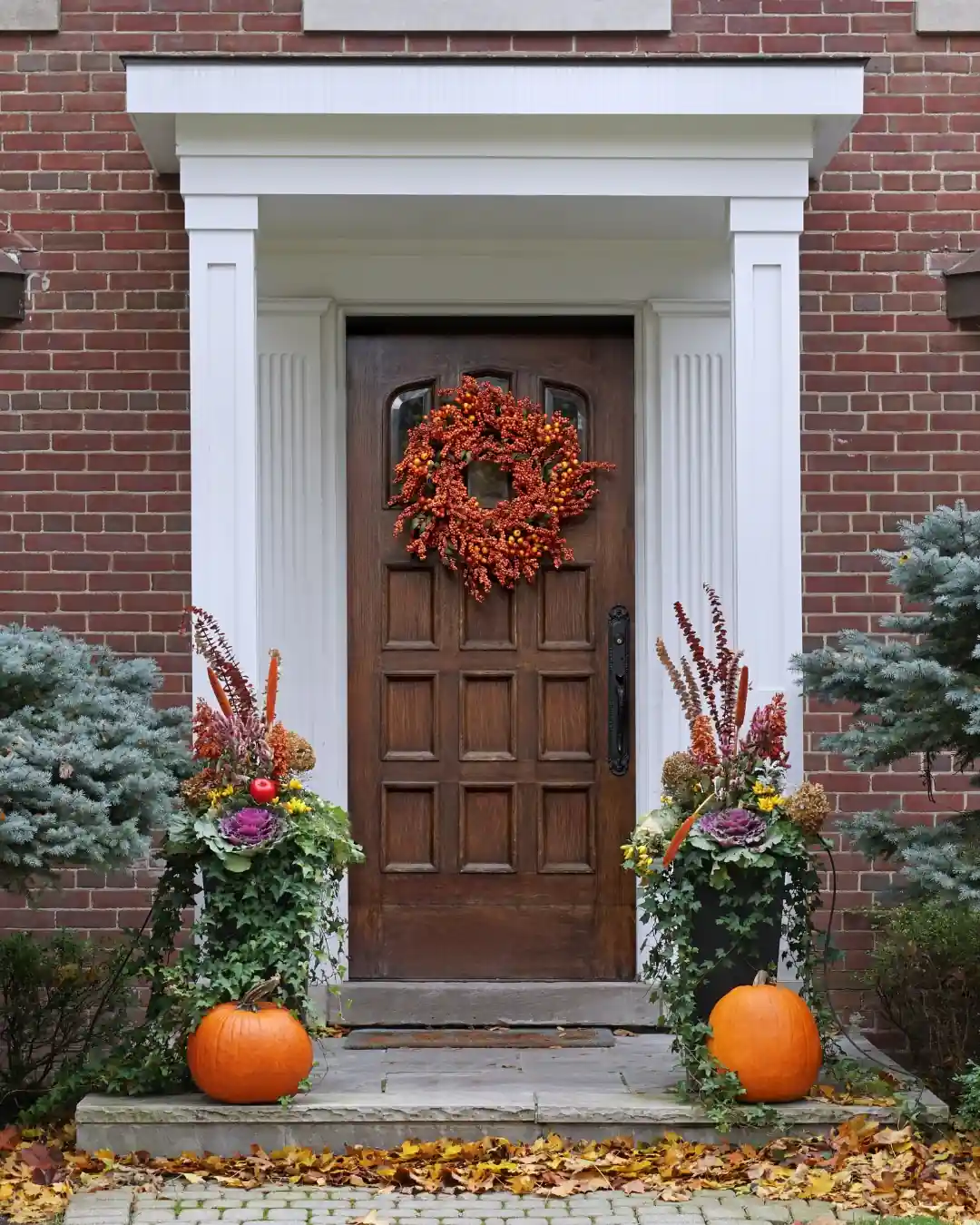
Everything in this guide was chosen to come off, and this last idea is the proof of the whole system: a decorated door, returned to plain in about an hour, looking like the autumn door in the photo was never dressed at all. Moving day door work is a small ritual with a fixed order, and it belongs at the start of the move-out clean, not the exhausted end of it.
Work top to bottom, outside to inside. Wreaths, arches and garlands come down first, hooks lifted off or strips pulled by their tabs, working slowly so nothing snaps against the door. Films and papers next: warm air from a hairdryer on low, a corner lifted, a slow pull at a low angle, residue wiped with a little rubbing alcohol. Mirrors off their hangers, curtains off their rods, panels off their strips, original knobs back on from their labelled bags. Then the honest inspection: stand where your landlord will stand, in daylight, and look for the marks your photos say were already there and any that were not. Small scuffs from hooks usually wipe away with a damp cloth and a little soap; anything more gets the same gentle treatment, and your dated move-in photos settle the rest.
Pack the decorations as you strip: wreaths in bags, garlands coiled, the good hooks in an envelope labelled doors. Next home’s doors are waiting, and they are probably plain too.
The moving day order: hangings down, films peeled warm, mirrors and curtains off, original knobs back, daylight inspection with your move-in photos in hand.
5 How to Decorate a Door Mistakes That Make Door Decor Look Wrong
1. The wreath at the wrong height. Hung too high, it crowds the frame; too low, it fights the handle. Centre at eye level is the mark, and it is worth the two minutes with a tape measure to find it once.
2. Decor that stops the door working. If the door cannot open flat, close fully or latch without a shove, the decoration is wrong however pretty it is. Clearance is a rule, not a detail, and it is rule one in the basics above for a reason.
3. One lonely hook doing a heavy job. A sagging wreath on an undersized hook makes the whole door look tired. Match the hook and strips to the real weight, then add a margin, because doors move and loads shift.
4. Ignoring the door’s own colour. A decoration that clashes with the door beneath it looks borrowed. Work with the door’s family or against it deliberately; the muddle in the middle is where door decor goes to look accidental.
5. Permanent fixes on a temporary home. Screwed plaques, glued panels and painted doors in a rental are next year’s deposit dispute wearing this year’s enthusiasm. Everything in this guide exists because the removable version works.
FAQs About How to Decorate a Door
Can I decorate a rental door without damaging it?
Yes, if everything hangs, sticks or leans. Over-door hooks, adhesive hooks and strips rated for the weight, magnets on steel doors and tension rods inside frames carry every idea in this guide, and all of them reverse cleanly. The damage risks are screws, nails and paint, which is why none of them are needed here.
How do you hang a wreath without nails?
An over-door hook is the standard answer: it slides over the top edge of the door and the wreath hangs from it, no fixing at all. On a steel door, a strong magnetic hook does the same job on the face. Match the hook to the door’s thickness so it does not rattle, and hang the wreath’s centre at eye level.
What size wreath suits a standard door?
About two thirds of the door’s width – roughly 50 to 55cm across on a standard single door. Smaller reads as lost, larger crowds the handle and the frame. On double doors, hang one wreath per door at matching heights, or one generous wreath centred across the pair.
What can I do with a plain white interior door?
Give it a job or a pattern. Peel and stick panels fake classic panelling, one chalkboard panel turns it into the household noticeboard, a full-length mirror makes it earn its space, and a fabric panel softens it. If you can touch nothing, frame the doorway instead and the plain door starts to look deliberate.
How do I cover ugly closet doors?
A curtain on a tension rod or adhesive brackets is the classic cover, hung in front of the doors so nothing about them changes. Fabric panels inside each door’s frame line give a softer, dressed look, and a calm colour scheme that echoes the door’s own tone settles a wall of doors into the room.
Can I change my door handles in a rental?
Interior knobs and levers, usually yes: they are held by screws, and the original goes back on at moving day from its labelled bag. Measure the backset first and match the function. Front door locks are different – many leases forbid changing them, so dress the front handle instead of swapping it, unless your landlord agrees in writing.
Can you put peel and stick wallpaper on doors?
Yes. Learning how to decorate a door with peel-and-stick wallpaper is one of the easiest rental projects: it grips well on a smooth, clean door and peels off warm. It works on the flat face of a plain door or inside the panels of a panelled one. Smooth it from the centre out with a felt squeegee, cut around the handle and hinges with a blade, and test a corner first if the paint is old. Skip it on textured or peeling doors, where the edges will lift.
What is the 3-5-7 rule in decorating?
The 3-5-7 rule says groups of three, five or seven things look better than pairs, because the eye reads odd numbers as natural and relaxed. When you work out how to decorate a door for a season, it means hanging baubles in clusters of three on an arch, tucking five cards into a garland instead of four, or grouping seven small ornaments around one big wreath instead of lining them up in two even rows. Keep one hero piece, let the odd group support it, and leave space between the groups.
One Last Thing
A decorated door is the cheapest room change in the house, and the most reversible: one hook, one panel, one mirror, and the flat you hand back is exactly the flat you were given. Finish the door and the room beyond it usually asks for the same treatment – the space the front door opens into is covered in our entryway ideas, and the porch on the other side of the glass in our small front porch ideas. If you hang one wreath this week, send the season with it. The door was never plain; it was just waiting for its one good idea.

Elora Vania here, founder and Senior Editor of Home Aure. With years of experience in interior styling and home decor, I created this site to bring thoughtful, practical design advice to real homes—helping you create spaces that feel warm, personal, and beautifully lived-in.