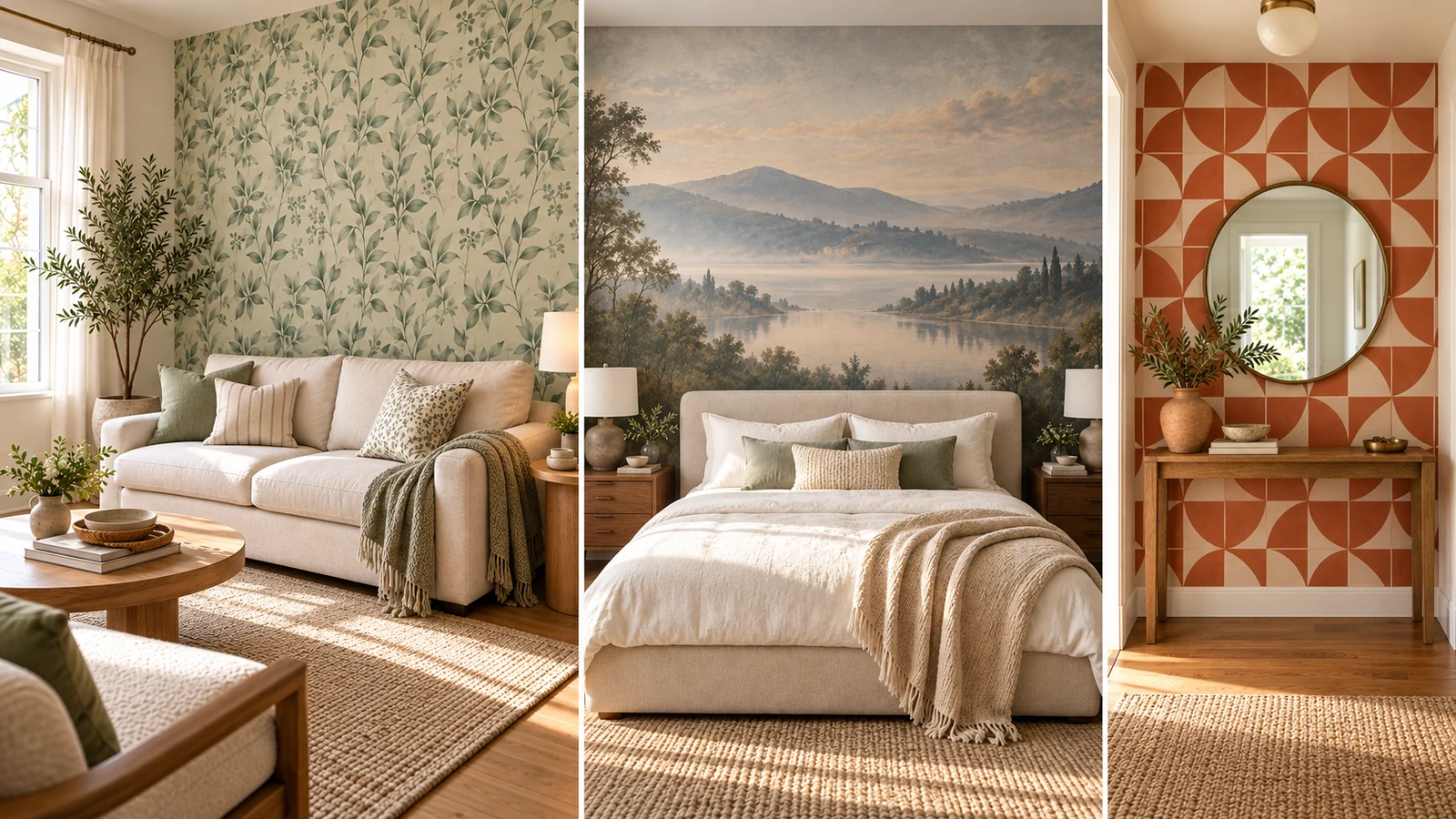
A plain rental wall can make an otherwise comfortable room feel unfinished. Removable wallpaper gives you a way to add pattern where it matters most: behind a sofa, around a bed, at the end of a hallway, or in a small corner that needs a purpose. You do not have to cover the whole apartment to make it feel more like yours.
These removable wallpaper accent wall ideas are organized around real apartment spaces, including a studio sleeping zone, breakfast nook, work corner, and laundry nook. Some use a bold print on a small wall. Others rely on a quiet pattern that helps furniture feel grounded. Each idea shows where the wallpaper should go and what to consider before you choose a design.
Before buying, check your lease and the wallpaper maker’s instructions. Test a sample on your actual painted wall, especially if the paint is fresh or the surface is uneven. Removable does not guarantee damage-free removal on every finish. If wallpaper is only one part of your update, these rental-friendly ways to make a place feel like yours without painting offer more ideas.
1. Frame the Sofa With a Soft Botanical Wall
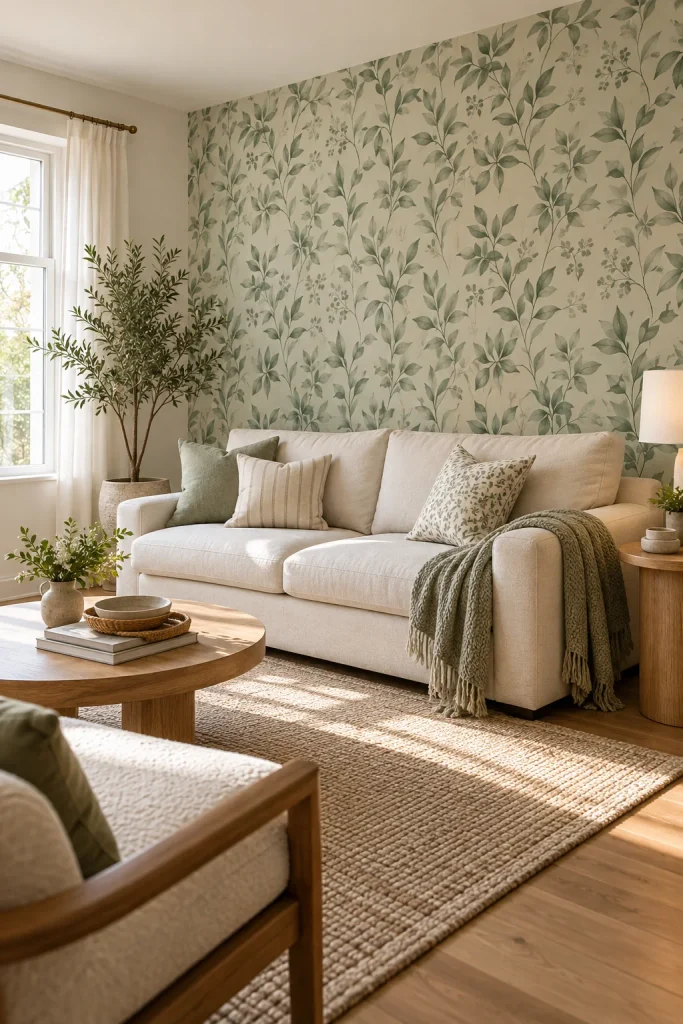
A living room accent wall should make the seating area feel settled. If you want to compare pattern finishes first, see our peel-and-stick wallpaper ideas that look more permanent. Put a leafy print on the wall behind the sofa, then repeat one of its quieter colors in a cushion or throw. Choose a design with space between the leaves if the room is small. Dense foliage can look busy once you add books, lamps, and everyday clutter.
- Best placement: The uninterrupted wall behind the sofa.
- Keep simple: Let the other walls and large furniture stay calm.
2. Give the Bed a Mural-Like Backdrop
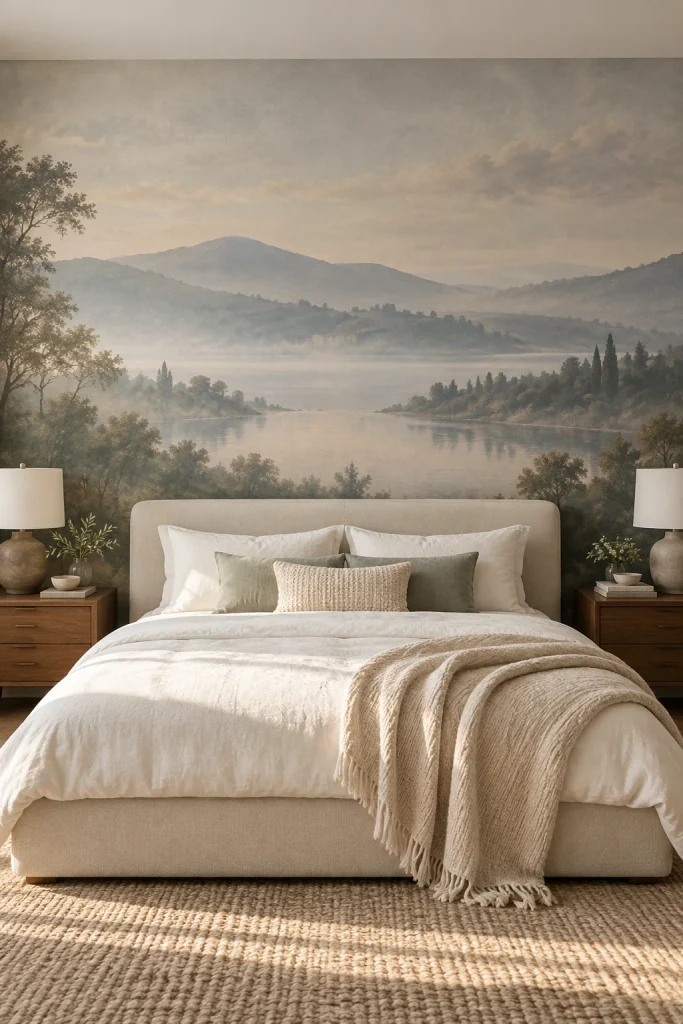
A landscape print behind the bed can do the work of oversized art. Look for a removable mural with a gentle horizon, then center its main feature over the headboard. Keep tall lamps and shelves away from the most detailed part of the scene.
This works especially well when the bed wall has no window or door breaking it up. Measure the wall before choosing the mural: its artwork may be sold as fixed panels rather than a repeating pattern.
3. Make a Tiny Entry Feel Like Its Own Room
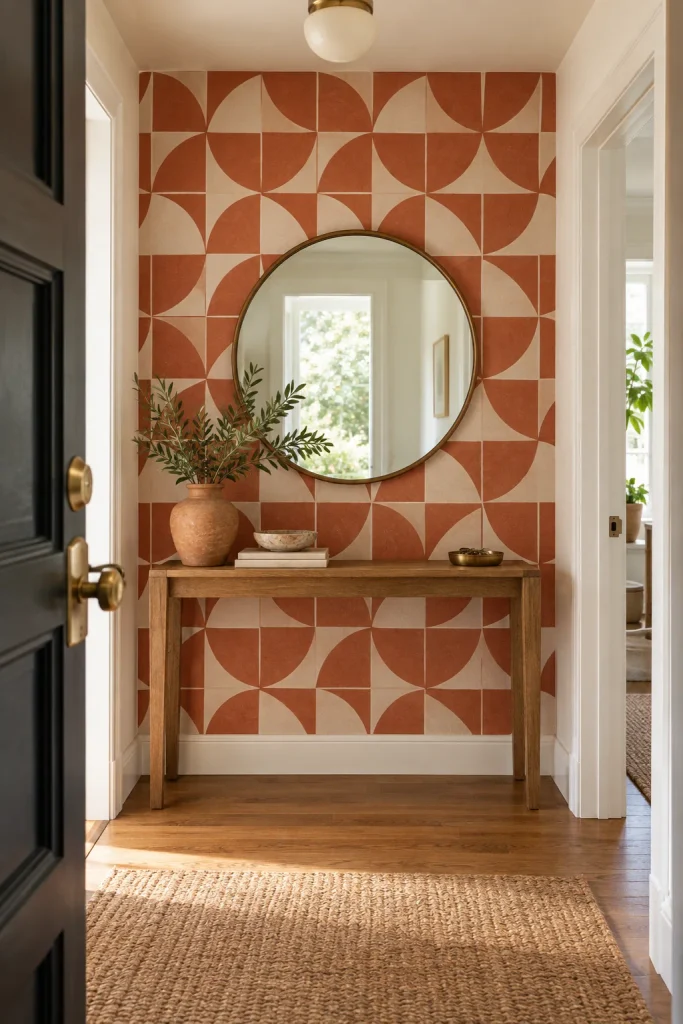
The first wall you face when you enter is a natural place for a bold print. In a short entry, a warm geometric wallpaper gives the space an identity without covering a large area. Add a narrow console or a simple mirror, but leave part of the pattern visible.
Watch the sightline: Check how the print looks from the living room as well as from the front door. In an open apartment, both views matter.
The wall catches your eye the moment you come home, while its small size lets you try a stronger pattern.
4. Draw Attention to the Dining Nook
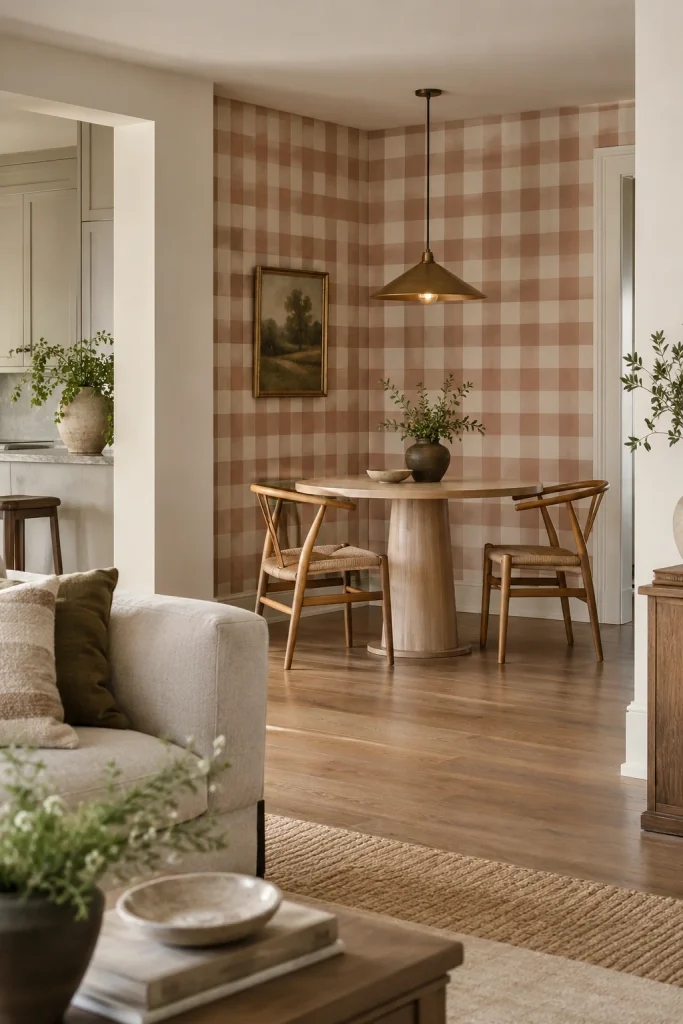
A dining area tucked into a living room can disappear visually. Wallpaper the wall behind the banquette or dining table to give that corner a clear boundary. A medium-scale stripe or loose check reads well from across the room without fighting plates, chairs, and pendant lighting.
Pull the table slightly away from the wall when installing the paper. You need room to align the strips and smooth the lower section.
At the table, it should feel pleasant up close. From the sofa, it should still define the dining area.
5. Put a Quiet Pattern Behind the Desk
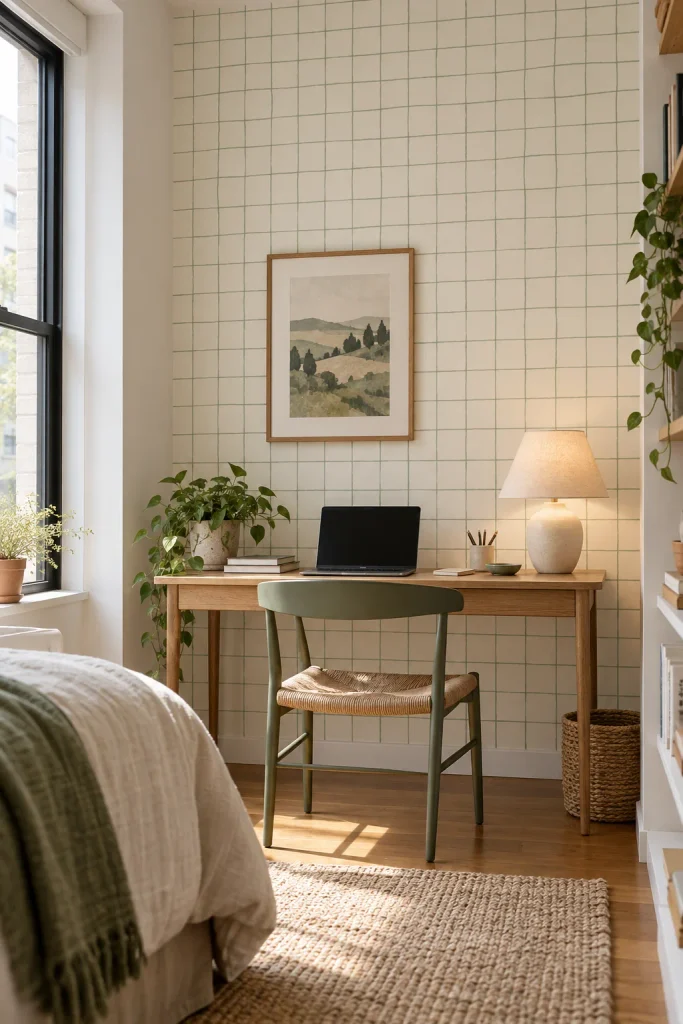
The wall behind a desk gets plenty of attention during the workday. Give it a small-scale print that adds texture without pulling your eye from the screen. Thin hand-drawn lines, a subtle grid, or scattered dots can make a plain work corner feel finished.
If the wall appears in video calls, sit at the desk and check the camera view before applying anything. The most striking part of a pattern may end up directly behind your head.
☐ Pattern looks calm on camera
☐ Monitor does not hide its best detail
☐ Shelves can stay sparse
6. Add Color to the End of a Long Hallway
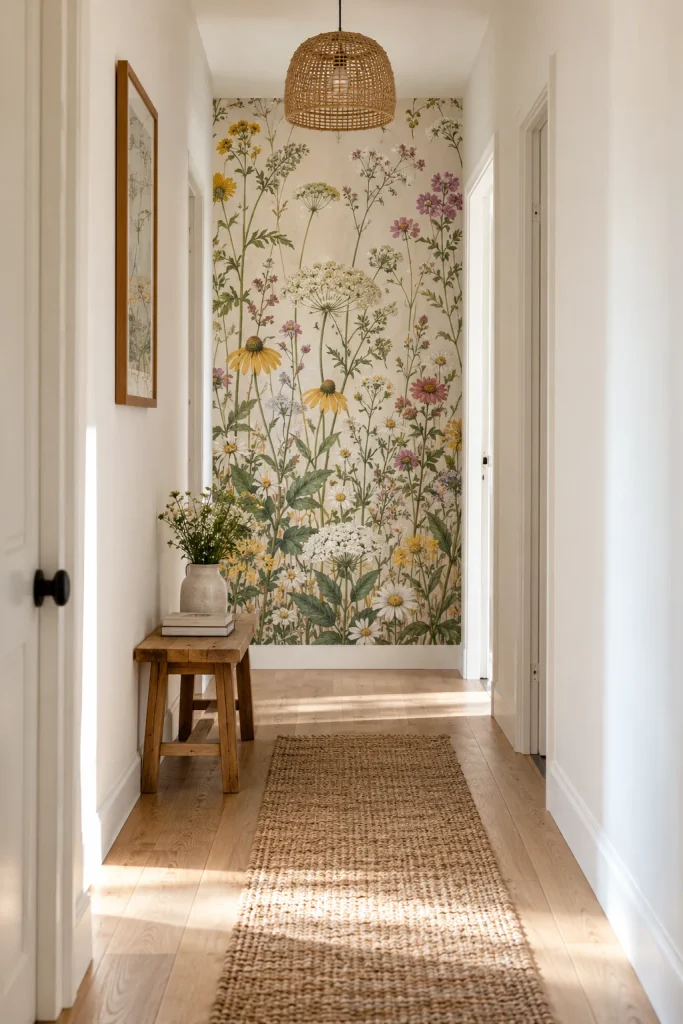
A narrow hallway does not need wallpaper on both sides. Paper the short wall at its far end, where the pattern draws your eye forward. A large floral or abstract shape gives that small surface enough presence to be seen from the entrance.
Check the wall for doors, switches, and uneven corners first. A print with forgiving, organic shapes is easier to place around interruptions than a strict grid.
7. Turn a Kitchen Breakfast Corner Into a Feature
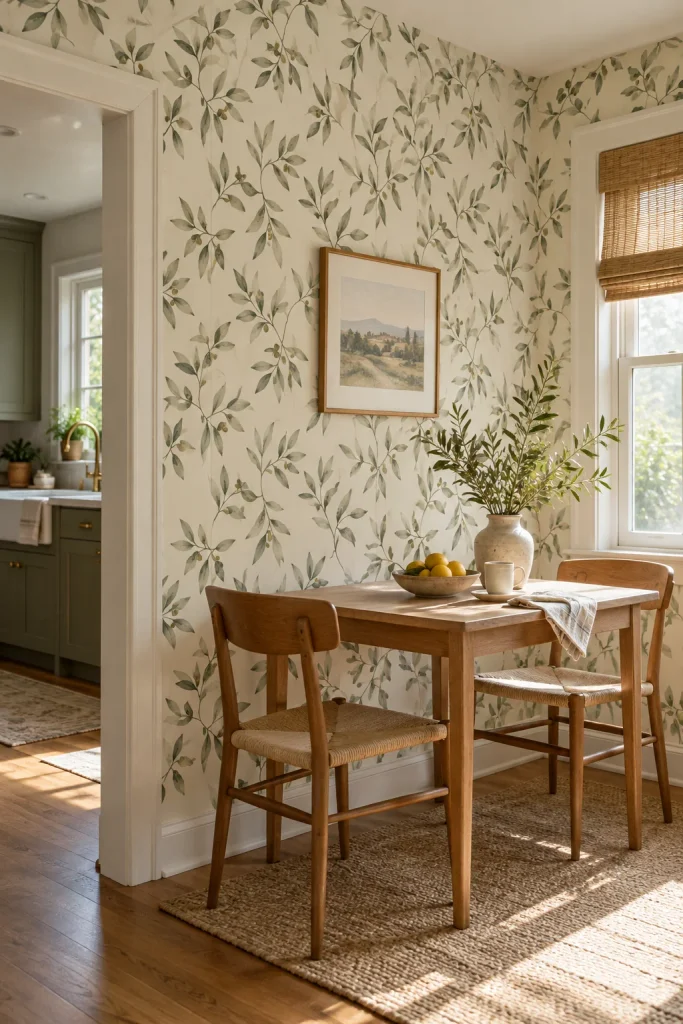
If your kitchen has a little table away from the stove and sink, its wall is a better wallpaper candidate than a backsplash. A citrus, herb, or simple tile-inspired print can make breakfast feel cheerful without putting paper in a splash zone.
Keep the wallpaper clear of direct heat and frequent water contact. Check the product’s surface instructions before applying it near any kitchen work area.
Check carefully: Areas beside a sink, cooktop, kettle, or other source of moisture and heat.
8. Give the Bathroom’s Dry Wall a Bold Print
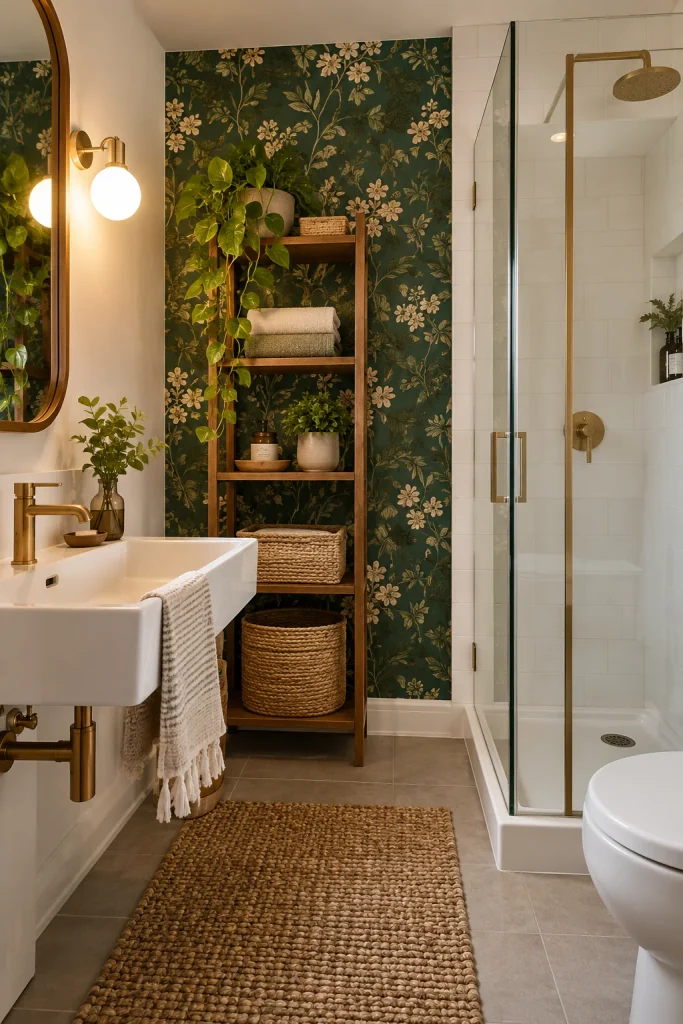
A bathroom is a good place to test a stronger pattern because you spend little time looking at it from a distance. Try a dark floral or graphic print on a dry wall opposite the shower. Keep the rest of the room simple so the paper feels deliberate.
Bathrooms vary widely in humidity. Check whether your chosen wallpaper is approved for the space, improve ventilation, and avoid any wall that receives direct water. For example, Tempaper says its bathroom wallpaper is moisture resistant but not waterproof. That distinction matters when you choose a wall.
Confirm that the wallpaper maker allows bathroom use and that the chosen wall stays dry during normal use.
9. Wrap a Living Room Alcove
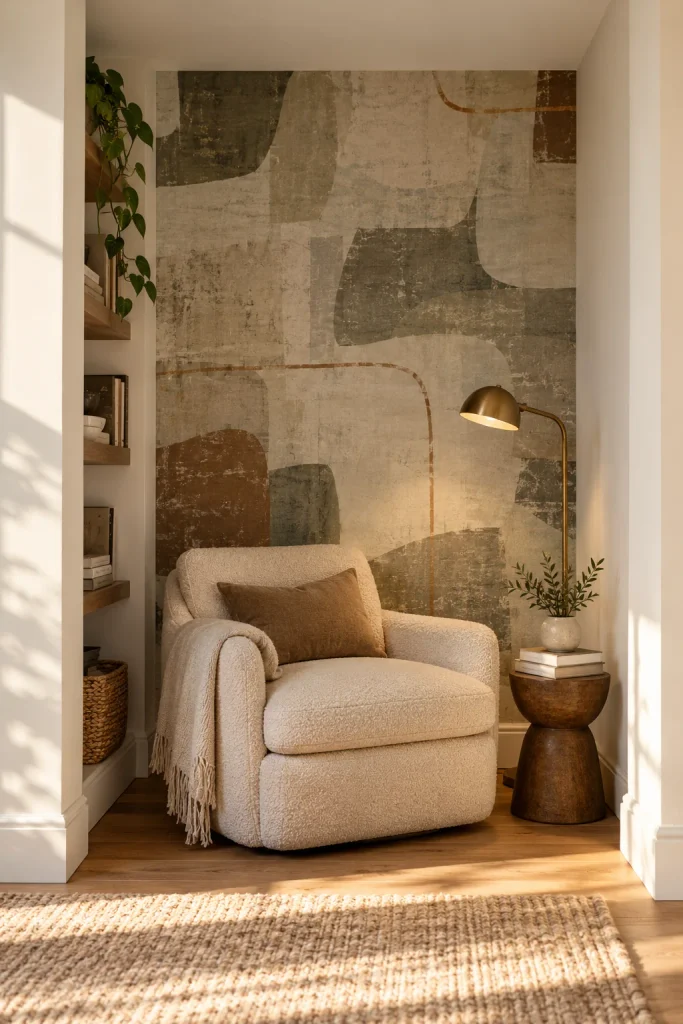
An alcove already has a natural frame. Paper its back wall and let the surrounding plain walls outline the print. A textured-looking pattern or soft abstract design gives the niche depth without needing another large piece of furniture.
Use the alcove for a chair, compact bookcase, or reading lamp. Avoid covering every inch with objects; the wallpaper needs visible space to do its job.
10. Make the Wall Behind Open Shelves Work Harder
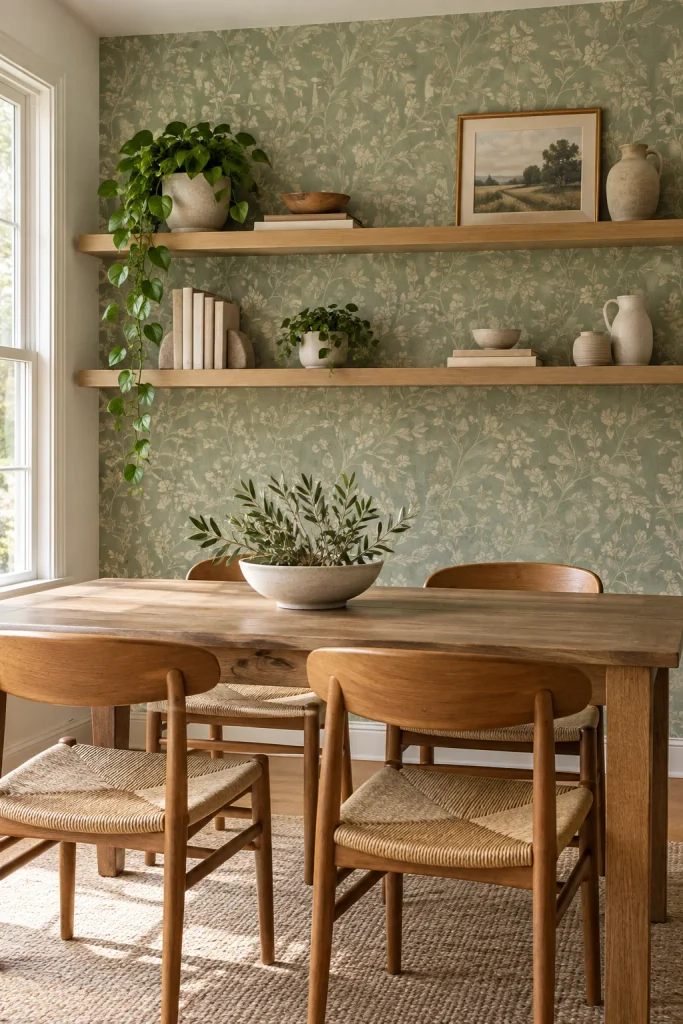
Open shelves often fade into a plain wall. A restrained removable wallpaper behind them gives dishes, books, or collected objects a backdrop. Choose a pattern with low contrast so the shelf contents remain easy to see.
Plan where the stripes begin before applying the first panel. A partial stripe trapped in a prominent corner can look accidental. A level and a vertical guide help keep the first strip straight; see Tempaper’s peel-and-stick installation steps for an example, then follow your own product’s directions.
Detailed shelves call for quiet wallpaper. Nearly empty shelves can handle a stronger pattern.
11. Use Vertical Stripes on a Short Bedroom Wall
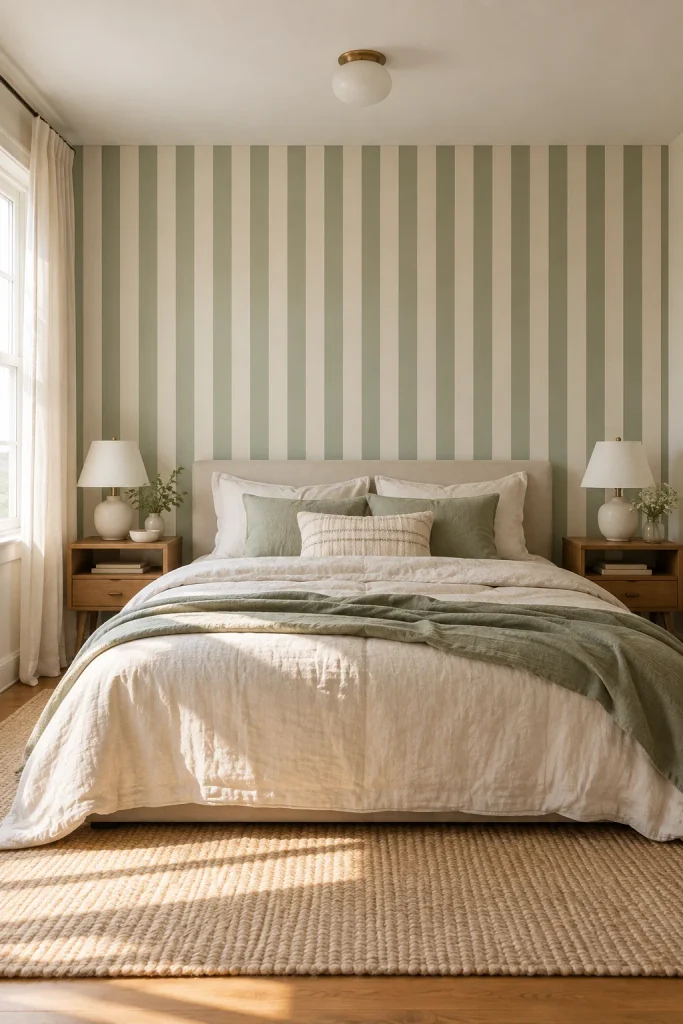
A low ceiling can make the bed wall feel compressed. A vertical stripe draws the eye upward and gives the room a clear rhythm. Choose a soft, slightly irregular stripe if you want a relaxed look; a sharp, high-contrast stripe will feel more graphic.
Plan where the stripes begin before applying the first panel. A partial stripe trapped in a prominent corner can look accidental.
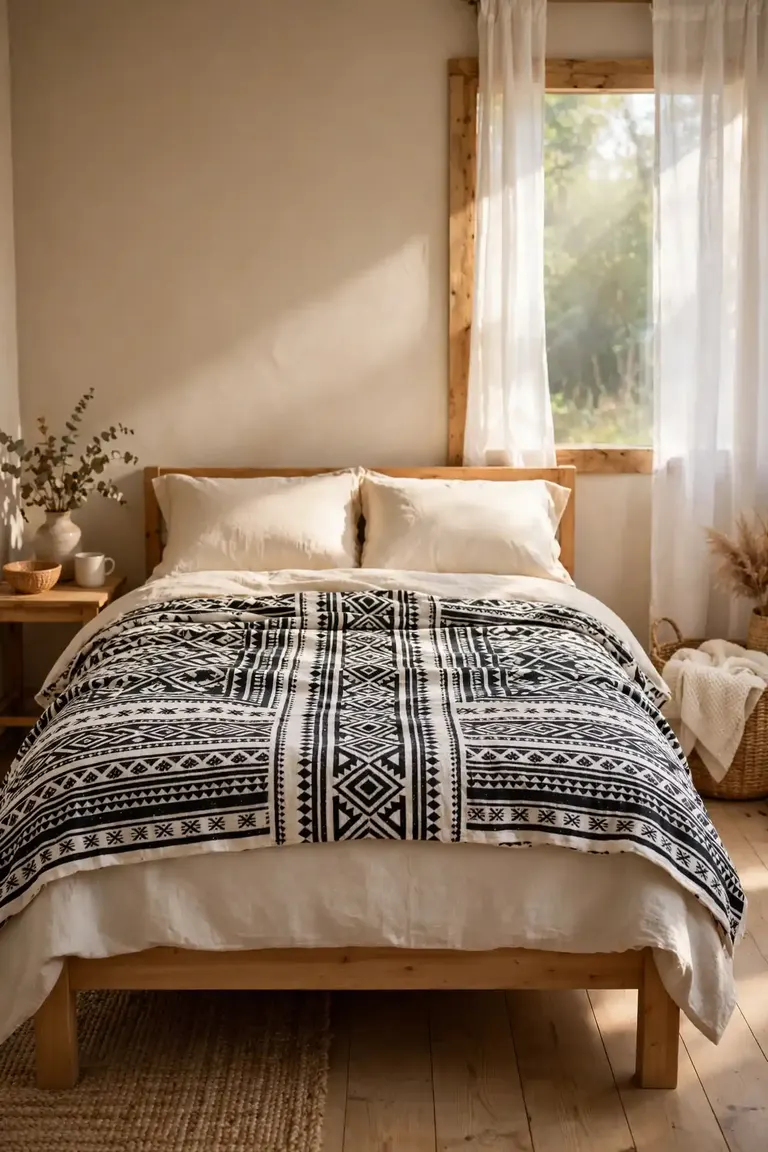
12. Define a Studio Apartment’s Sleeping Zone
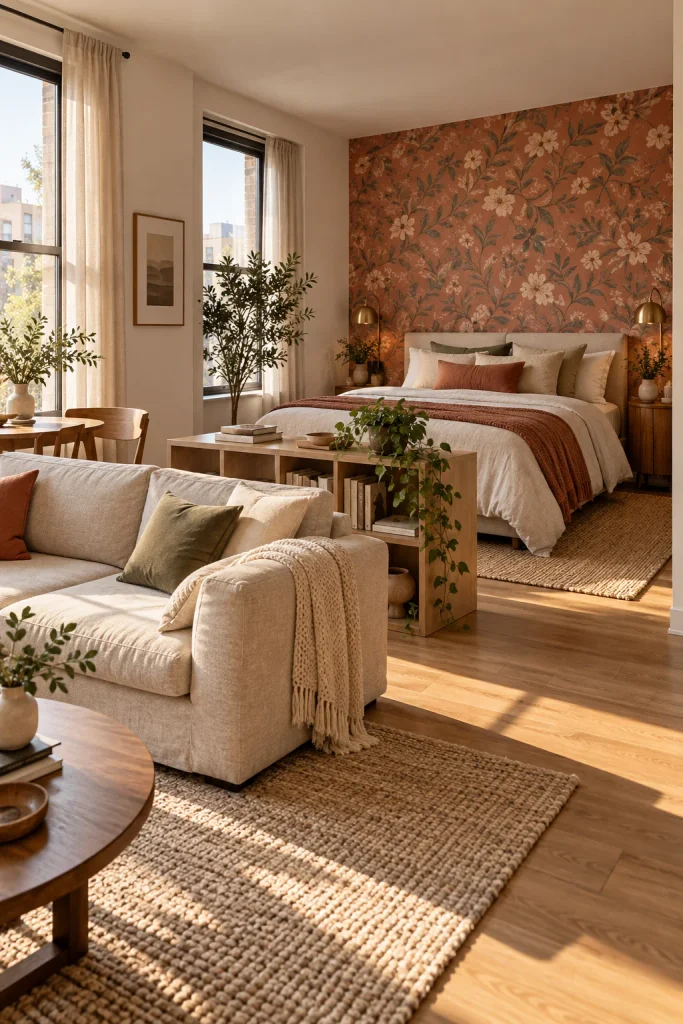
In a studio, the bed and sofa can feel as though they belong to one crowded room. First, try a few ways to make a small room look bigger without buying anything new so the wallpaper supports the layout rather than fighting it. Wallpapering only the wall behind the bed gives the sleeping area its own visual boundary. A warm, quiet pattern will separate the zones without making the apartment feel chopped up.
Look at the entire studio before choosing colors. The wallpaper should relate to at least one item in the living zone, such as the rug or curtains.
13. Create a Playful Wall in a Child’s Corner
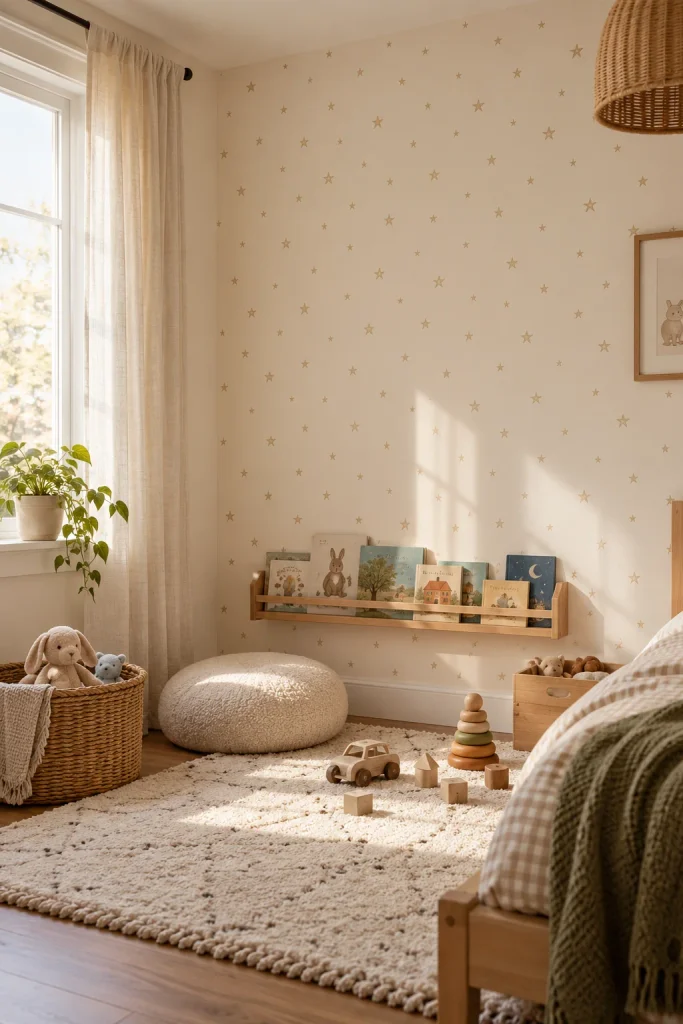
A child’s corner within an apartment may share space with a bedroom or living room. A removable wallpaper wall with small stars, clouds, or hand-drawn shapes can mark out the play area while keeping the furniture flexible.
Choose a pattern the child can grow with. Tiny themed characters may be fun now but date quickly. Keep the paper away from places where a child can repeatedly pick at an edge, and follow the product’s installation instructions.
A simple shape or nature print can work as the corner changes from toys to books and a desk.
14. Highlight the Wall Behind a Bar Cart
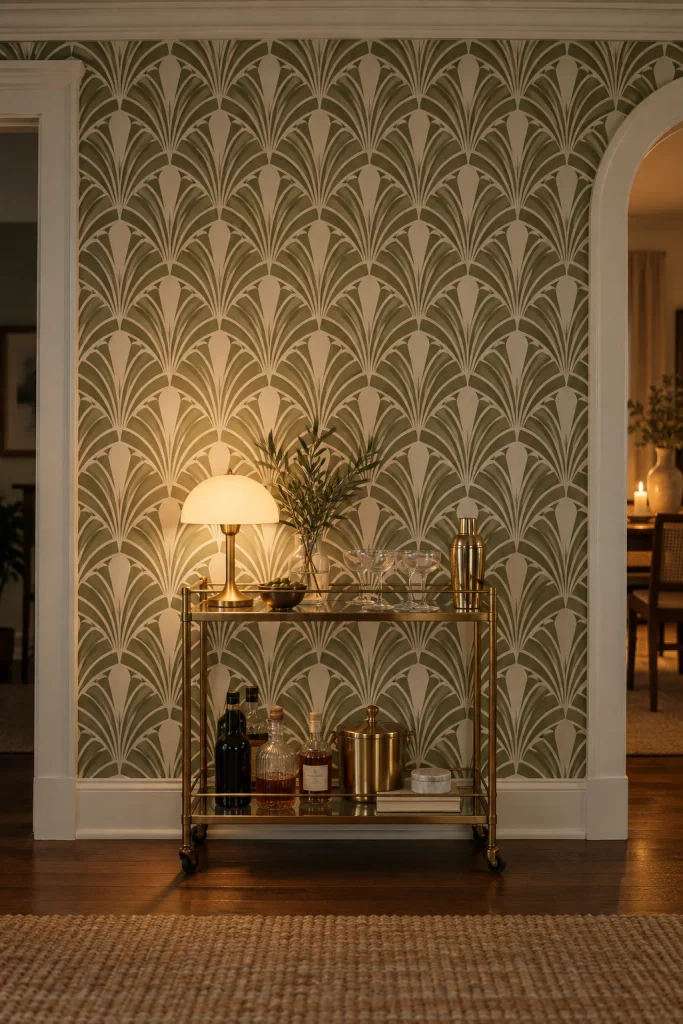
A bar cart or drinks cabinet can look stranded against a long plain wall. Give it a narrow, intentional backdrop with a rich Art Deco inspired removable print. The pattern can supply the atmosphere, leaving the cart itself simple.
For a polished look, align the cart with the pattern’s center. If the wall has a thermostat or switch, sketch its position before ordering so a key motif does not land awkwardly around it.
15. Add a Gentle Pattern Behind the Nursery Crib
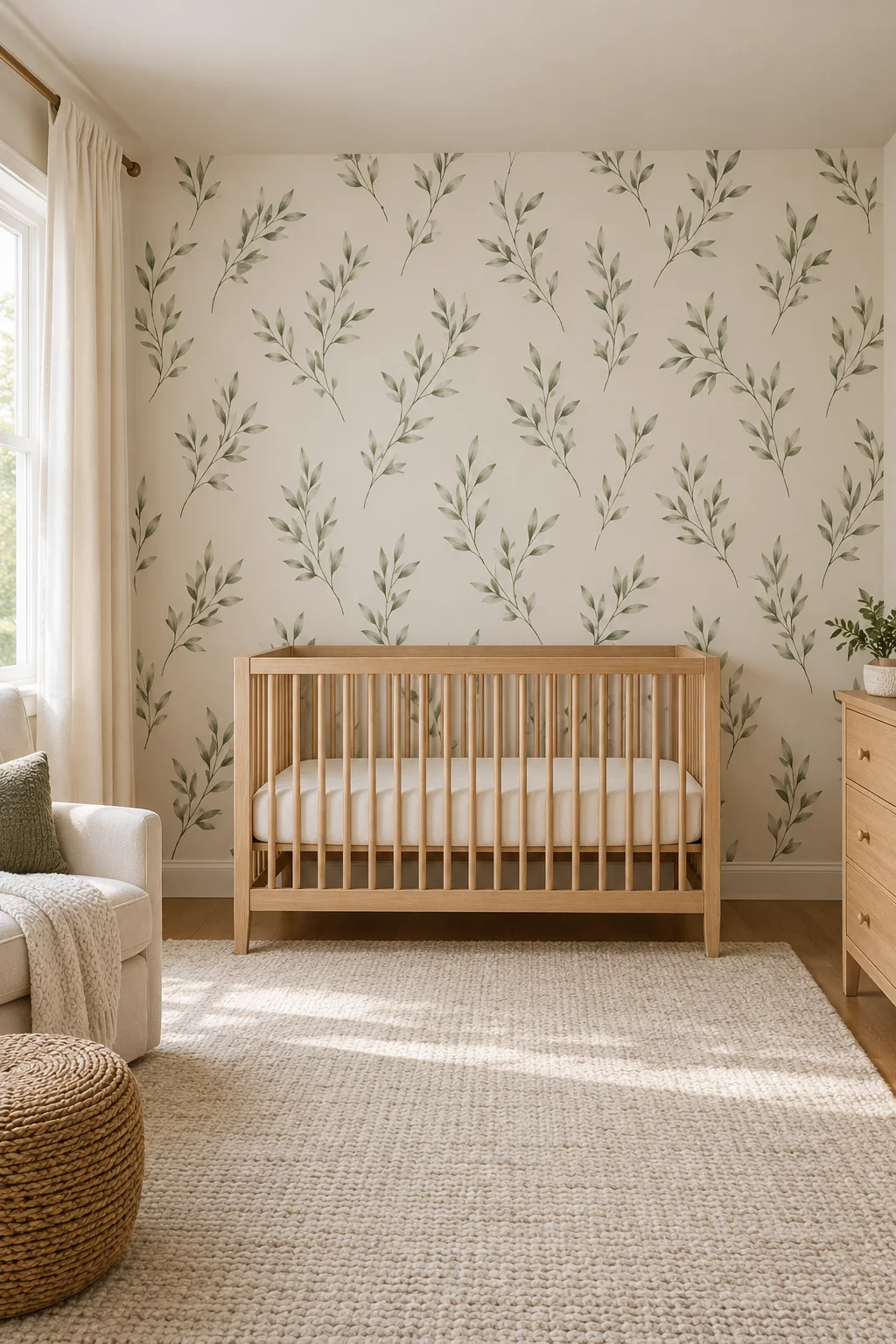
A nursery wall does not need loud color. A soft, widely spaced nature print behind the crib brings interest to a simple room while leaving room for the furniture to change later. Choose a design that still looks good when part of it is hidden by the crib.
Keep the wall treatment securely installed and follow safe crib placement guidance for nearby objects. Skip loose wall decorations or cords above the sleeping area.
16. Let a Laundry Nook Have Some Personality
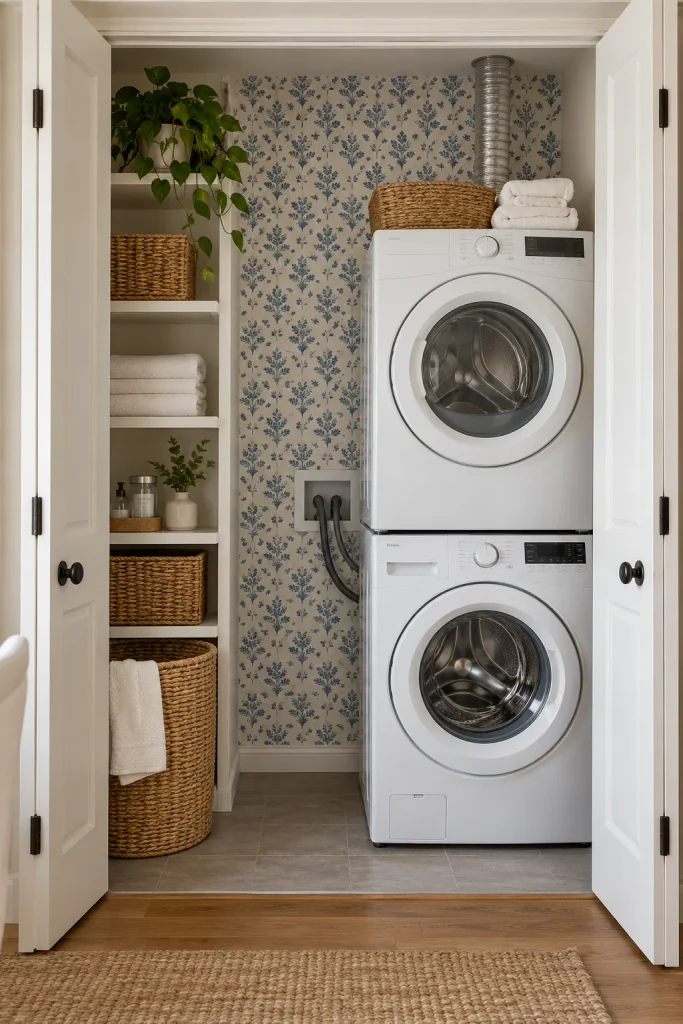
A laundry nook may be the least inviting corner of the apartment. Wallpaper its back wall with a cheerful small-scale pattern, and the open doors will reveal a finished little space. This works best when the wall is dry and there is enough room to install and maintain the paper.
Check for condensation, heat, and ventilation around your machines. Keep wallpaper clear of appliance vents and connections, and follow both the appliance and wallpaper makers’ guidance.
☐ Back wall stays dry
☐ Appliances have required clearance
☐ Wallpaper will not cover vents or connections
17. Turn a Blank Wall Into a Framed Wallpaper Feature
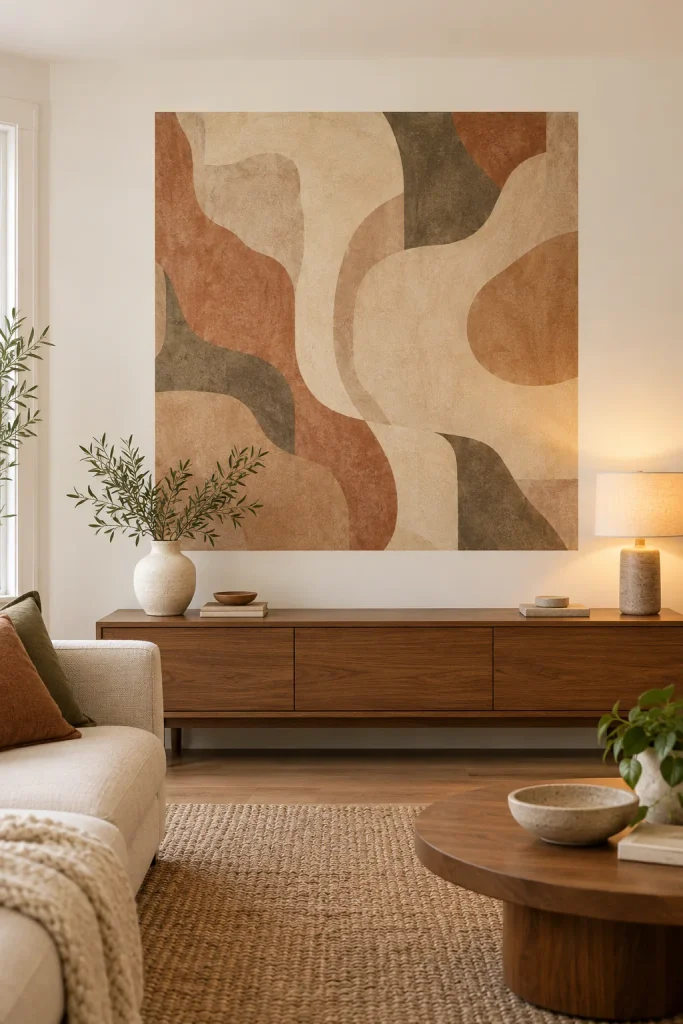
Some apartment walls are too large for a full wallpaper project. Instead, place removable wallpaper inside a broad rectangular area behind a console, leaving a generous plain border. The result reads like an oversized piece of art.
This idea depends on crisp edges. Measure and mark the rectangle carefully, and confirm that your chosen wallpaper can be trimmed cleanly. Test the material on your paint before committing to the larger section. Paint finish and wall texture affect adhesion and removal; Tempaper’s surface guide explains why a sample test is worth doing.
The best accent wall has a clear job. It might frame your bed, mark the dining corner, brighten the end of a hallway, or give a studio apartment two distinct zones. Choose the placement first, then find a pattern that suits the room’s size, light, and furniture.
Start with one wall and order a sample before committing to full panels. That small check helps you see the color in your own light and test how the material behaves on your paint. Save your favorite idea to Pinterest, then use it as a starting point for a version that fits your apartment.
Frequently Asked Questions
What rooms work best with metallic peel and stick wallpaper?
Living room accent walls, bedroom headboard walls, dining rooms, entryways, and home offices work best with metallic peel and stick wallpaper. The metallic finish reflects light, so it looks best on one focal wall in a room with natural or warm light. Avoid steamy bathrooms and the wall right behind a stove, because heat and steam can loosen the adhesive. Use it on one wall only, and pair it with matte furniture so the shine does not overwhelm the room.