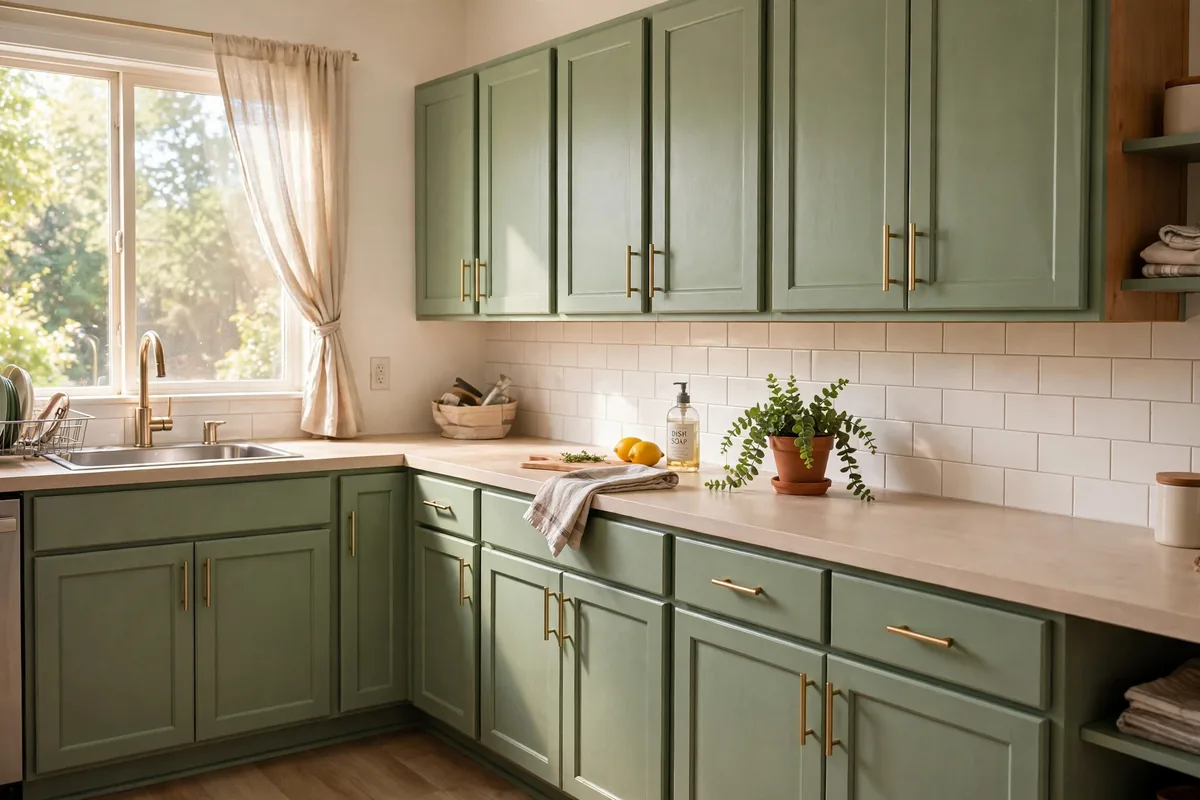
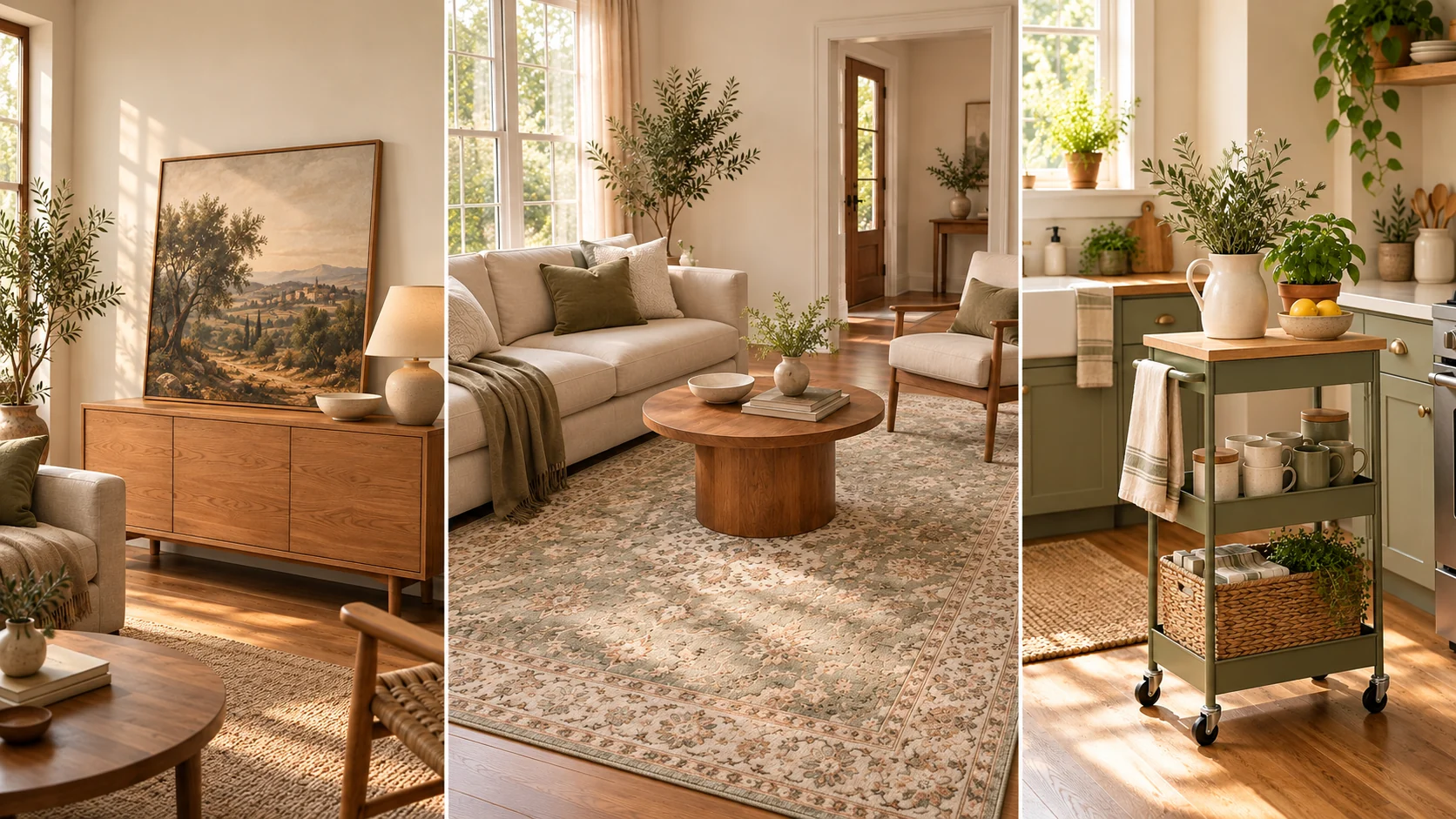
A blank wall can make a rental feel unfinished, but decorating it does not have to be the first move. Furniture, lighting, textiles, and objects you can take with you can give a room color and shape without sticking anything to the walls.
These rental decorating ideas without adhesives work across the apartment. Lean a large framed print on a cabinet, rest smaller frames on a bookcase, or place art on an easel. A floor plant can fill an empty corner, while a rug can help a seating area feel like its own space. Curtains on an existing rod, a mirror on a sturdy sideboard, and a few lamps can change how a room feels without adding wall hooks.
The smaller choices matter too. Pillows and a throw can tie the sofa to the rug. A rolling cart can make a tight kitchen more useful. Bedding can bring warmth to a plain bedroom. Start with what you own, then choose one spot that still feels bare. The ideas below give you 16 places to try.
1. Lean One Large Print on a Low Cabinet
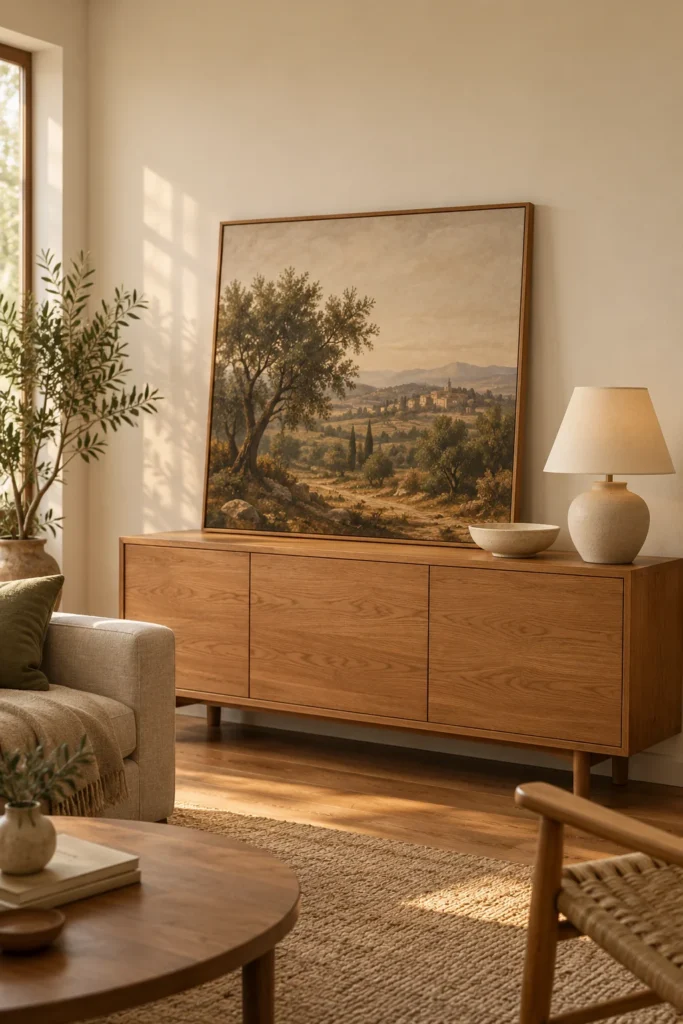
A blank wall doesn’t always need anything attached to it. Set one large framed print on a low cabinet, then place a lamp or small vase beside it. The frame gives the wall a focal point while the cabinet carries its weight.
Choose art that is noticeably narrower than the cabinet, so it has room to breathe. A simple landscape in olive and warm brown would suit Home Aure’s cream and green palette.
Check the setup before styling it: the cabinet must be stable, the frame needs a secure resting place, and the arrangement should sit away from a busy walkway. If children or pets could pull the frame down, choose a safer display location.
🖼️
Start with one frame
A larger piece creates a clearer focal point than several tiny frames.
🏺
Vary the height
Place a lower bowl on one side and a taller lamp or vase on the other.
📏
Check stability
Keep the whole frame base supported and follow the furniture maker’s instructions.
2. Make a Gallery on Top of a Bookcase
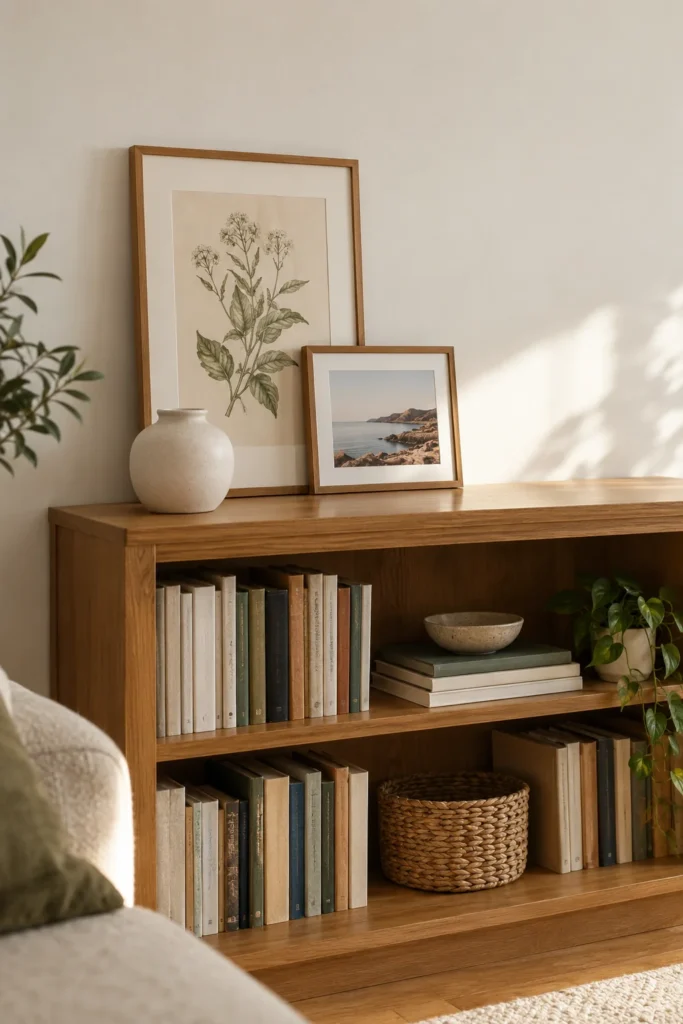
Gather the smaller frames you already own and arrange them on top of a bookcase. Put the tallest at the back, a shorter frame in front, and a small object beside them. The different heights give the display shape without asking the wall to hold anything.
Try a family photo, a botanical drawing, and a simple ceramic piece. Leave part of the bookcase top empty so the grouping looks intentional rather than stored there temporarily.
Keep the display within easy reach. A frame perched on a tall unit where it could slide or fall is a poor trade for an empty wall. Follow the bookcase maker’s load and anchoring instructions. If it requires wall anchoring and your lease does not allow that, use another piece of furniture.
✅ Give each piece a place
Put the tallest frame at the back.
Leave open space on at least one side of the grouping.
⚠️ Check the support
Follow the bookcase’s anchoring and load instructions.
Keep frames away from an edge where they could be knocked down.
3. Turn a Low Bookcase Into the Room’s Anchor
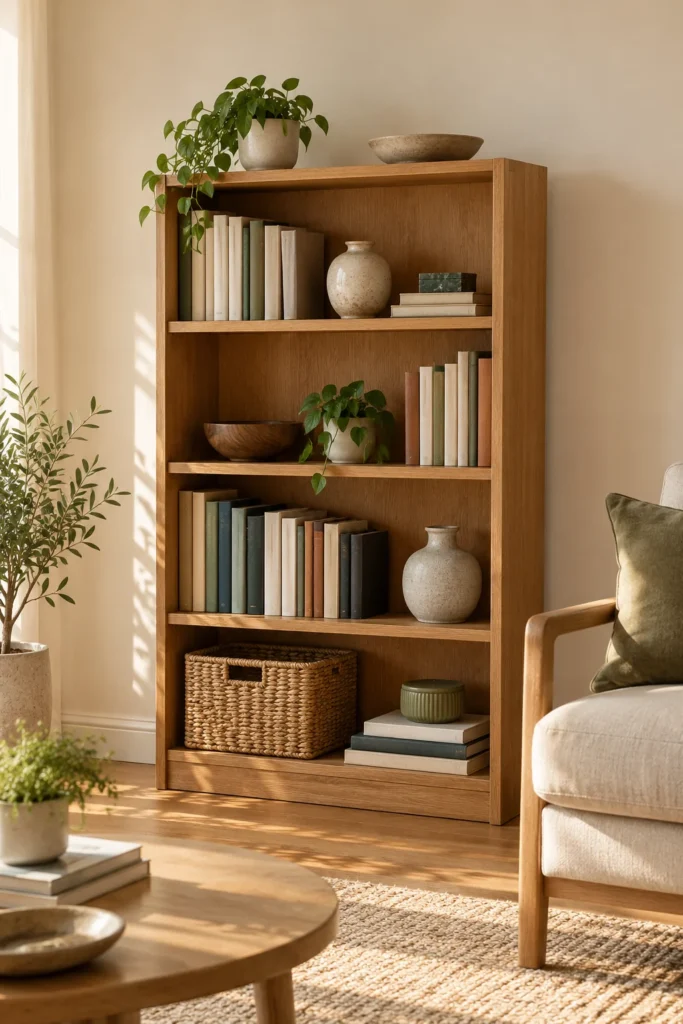
When one wall feels empty, a freestanding bookcase can give it purpose. Keep the heaviest books low, then mix books with a few objects at eye level. A woven basket on a lower shelf hides everyday clutter while adding texture.
Use a repeating color to tie it to the room. For example, an olive book spine, a small plant, and a cushion nearby can connect the shelf to the seating area.
This idea works best when the bookcase is chosen for its size and safe placement, not just its appearance. Check the manufacturer’s anchoring instructions. If the model requires a wall attachment you cannot install, choose a different unit approved for use in your situation.
📚 A SIMPLE SHELF PLAN
Place heavier items on lower shelves, group everyday books where you can reach them, and leave some open space around the objects you want to notice.
4. Let a Floor Plant Fill an Empty Corner
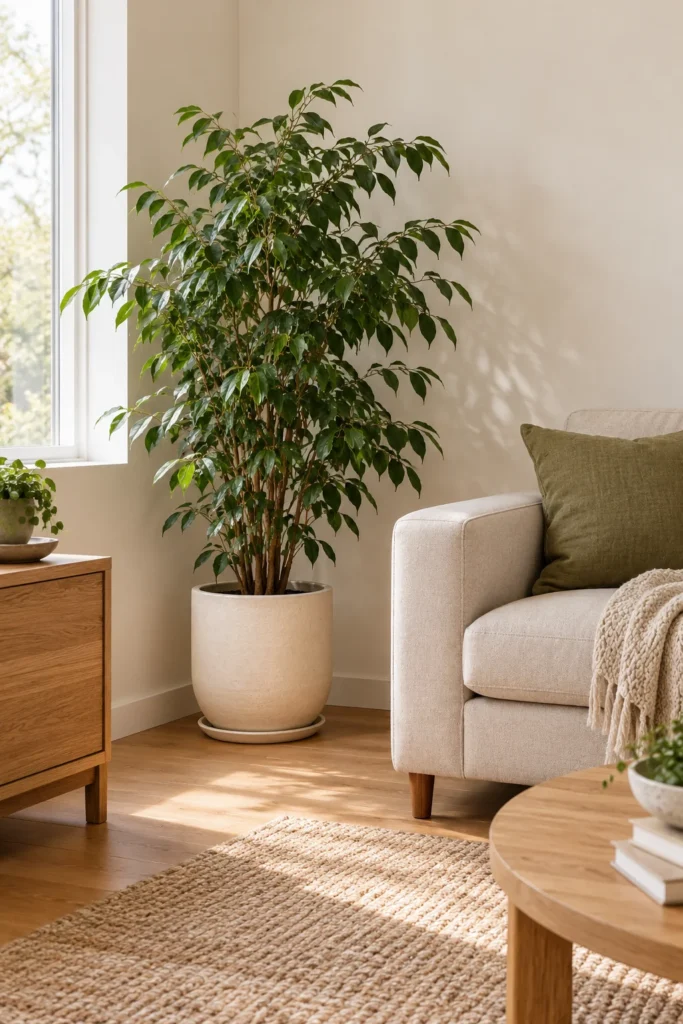
A bare corner beside the sofa often needs height. A floor plant adds a softer shape than another piece of furniture, and you can move it when you rearrange the room.
Choose the plant for the light the corner actually gets. Set its pot inside a watertight outer container or on a suitable saucer, then leave enough room to reach it for watering. A slim plant stand can raise a smaller plant without taking much floor space.
Check the floor after watering. Moisture trapped beneath a pot can leave a mark even though nothing has touched the wall. If the corner gets little natural light, a floor lamp may be the more practical choice.
🪴 Choose the corner first
Notice how much natural light reaches the spot during the day.
Check the mature plant size against the available floor space.
Protect the floor and leave a clear path for walking and watering.
5. Use a Rug to Give the Seating Area a Center
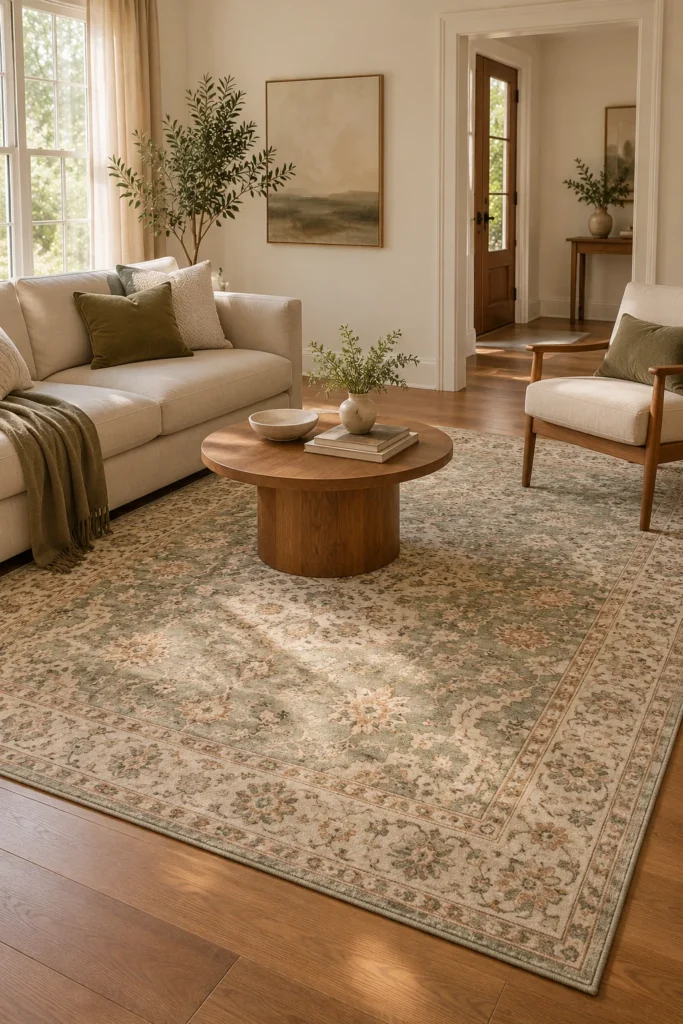
A rug can change the room before you move a single piece of furniture. It gives the sofa and chairs a shared area and adds color where a rental often feels plainest: across the floor.
Start by measuring the seating arrangement. Mark the proposed rug edges with objects you already own, such as books, so you can see the size before ordering. A muted patterned rug can hide minor daily wear, while a nearly solid rug lets cushions and artwork carry more detail.
Check the backing and any rug pad against your flooring guidance. Keep the edges flat and the rug stable. If a door catches it or the corners curl into the walking path, the size or placement needs to change.
BEFORE
The sofa, chair, and coffee table read as separate pieces on a bare floor.
WITH A RUG
The same furniture has a clear shared area. Repeat one rug color in a cushion to connect the two.
6. Replace Flat Overhead Light With a Pair of Lamps
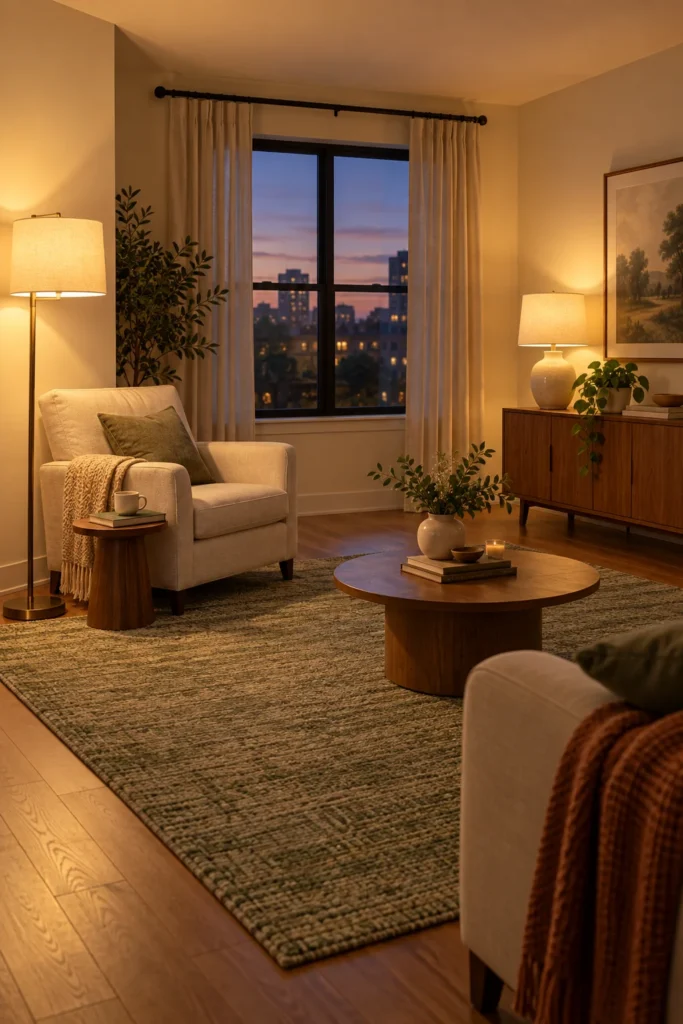
One ceiling light often leaves the corners dark. Put a floor lamp near the seating area and a smaller table lamp across the room. The two pools of light give the room more depth in the evening, and neither fixture needs a wall mount.
A warm shade can soften the floor lamp beside an armchair. The second lamp might sit on a console where you sort mail or read. Turn both on after dark before deciding whether the room needs anything else.
Choose bulbs within each fixture’s rating. Keep cords out of the walking path and never run them beneath a rug. If a lamp would need an awkward cord crossing, move it closer to a suitable outlet or choose another position.
| Floor lamp | Table lamp |
|---|---|
| Light a chair or a dim corner. | Add a smaller pool of light across the room. |
| Check the base does not intrude into the walkway. | Use a stable surface near a suitable outlet. |
7. Frame the Window With Curtains on an Existing Rod
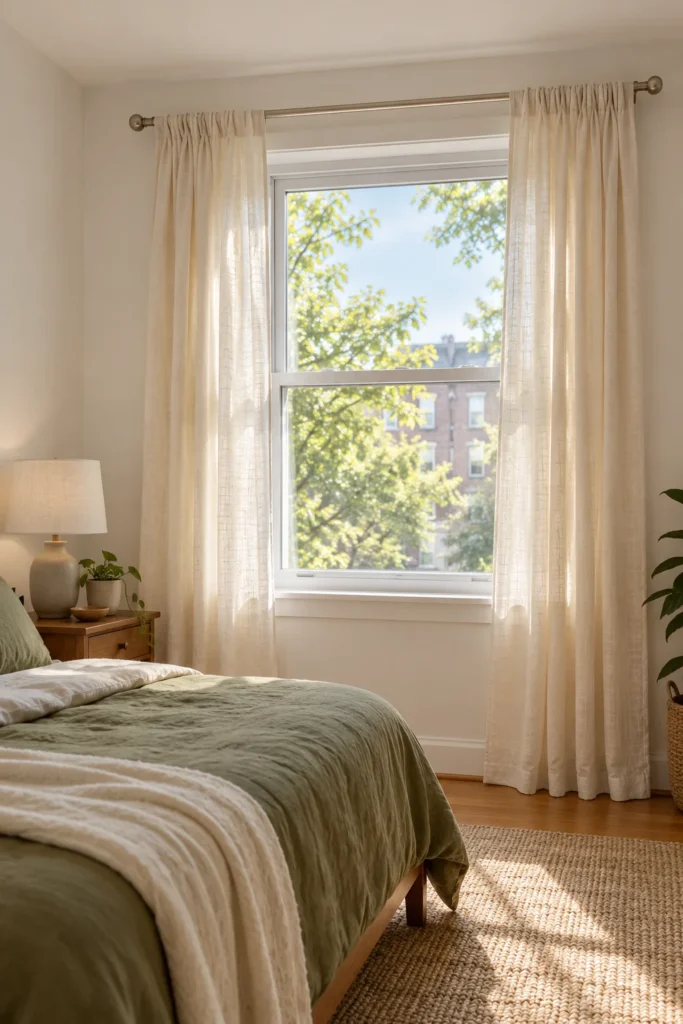
If the rental already has curtain hardware, use it to bring softness into the room. Warm cream panels can make a small bedroom feel calmer. Olive panels add color while leaving the walls alone.
Measure the rod and window before choosing fabric. Let the curtains hang clear of heaters, and keep any landlord-owned panels somewhere clean and safe so you can put them back later.
The useful detail: check how the curtains look both open and closed. A lovely fabric is frustrating if it blocks too much daylight or bunches against nearby furniture.
📌 Check what is already installed
Measure the existing rod, check its condition and load guidance, and store the original curtains if they belong to the rental.
8. Place a Modest Mirror Where It Catches Daylight
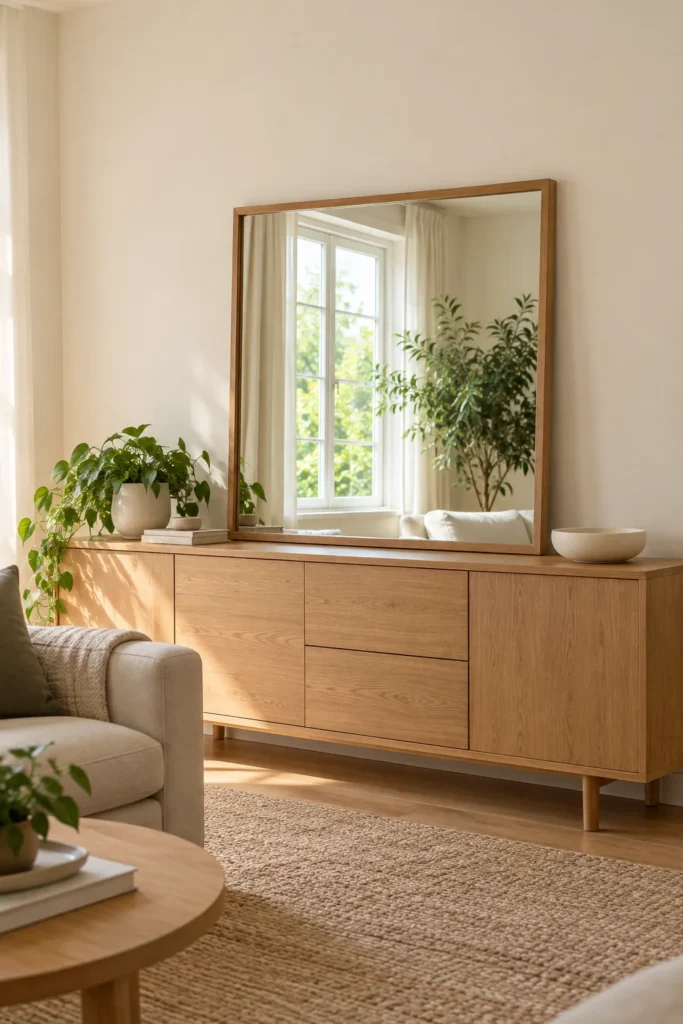
A mirror on a broad, stable piece of furniture can brighten the darker side of a room. Before settling on its position, look through it. A reflection of the window, a plant, or a lamp gives you something pleasant to see. A reflection of a crowded countertop usually does the opposite.
Try the mirror in two spots during the day. Natural light moves, and the better position may surprise you.
Keep the entire base supported. Large floor mirrors and storage furniture may require anchoring, so follow their makers’ instructions instead of assuming a leaning setup is safe.
9. Let Cushions and a Throw Change the Sofa
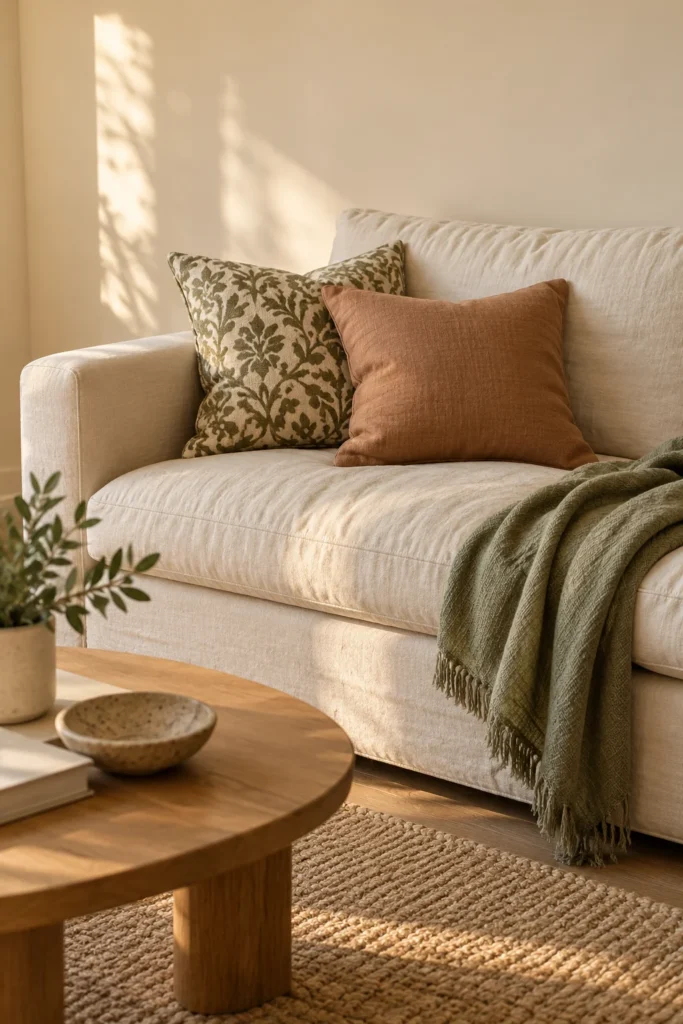
The sofa may be the largest thing in your living room. Changing its textiles can shift the whole palette without buying another sofa or touching the walls.
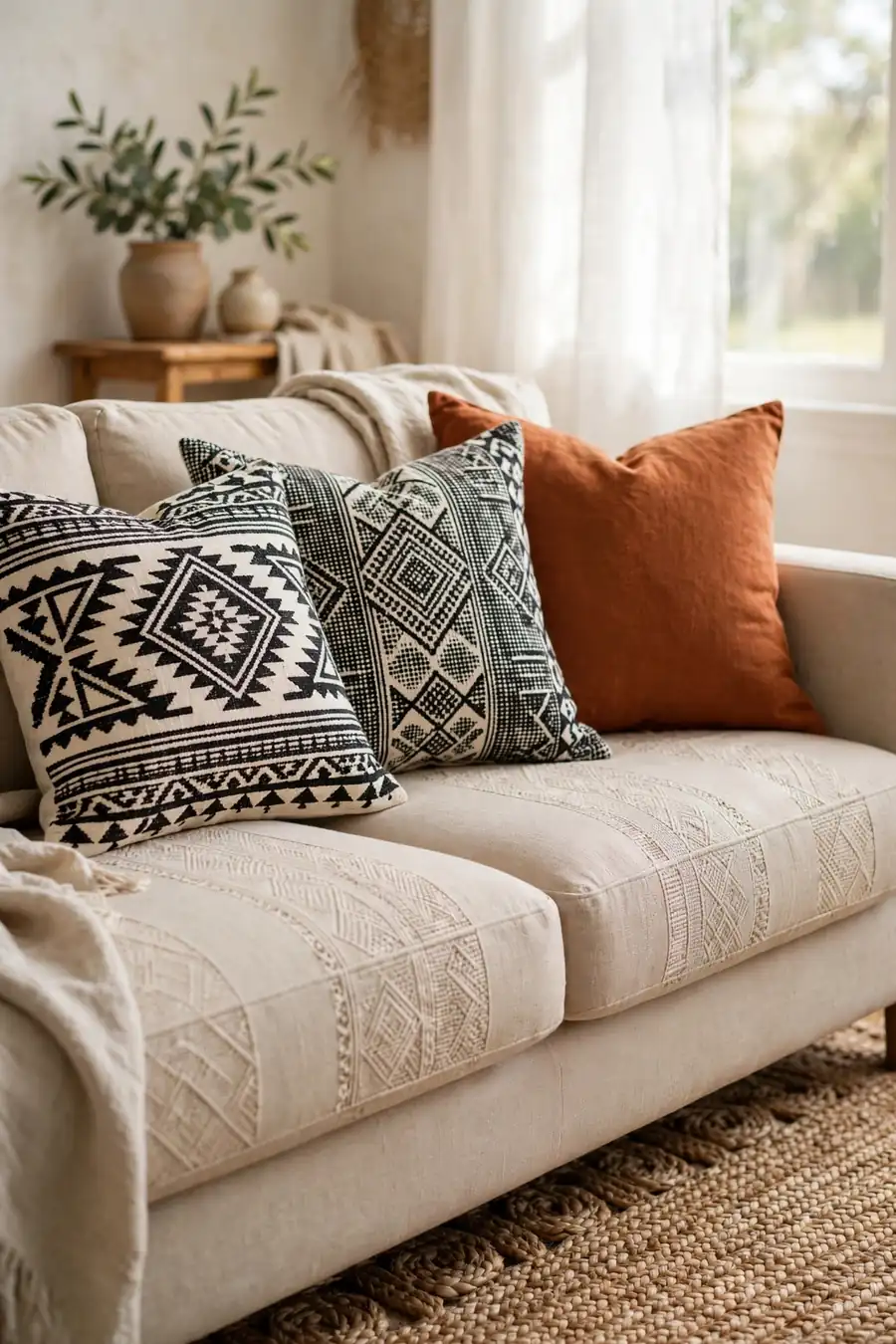
Start with one patterned cushion. Pull one color from it for a solid cushion, then add a textured throw in a quieter shade. On a cream sofa, a small olive print and a clay-colored cushion feel warm without fighting for attention.
Use what you own first:
- Move cushions between rooms.
- Replace covers before replacing inserts.
- Fold the throw where someone can actually reach it.
If the sofa already has a strong pattern, choose simpler pieces and let the upholstery lead.
🛋️ Build a small textile mix
10. Give a Room Two Zones With a Folding Screen
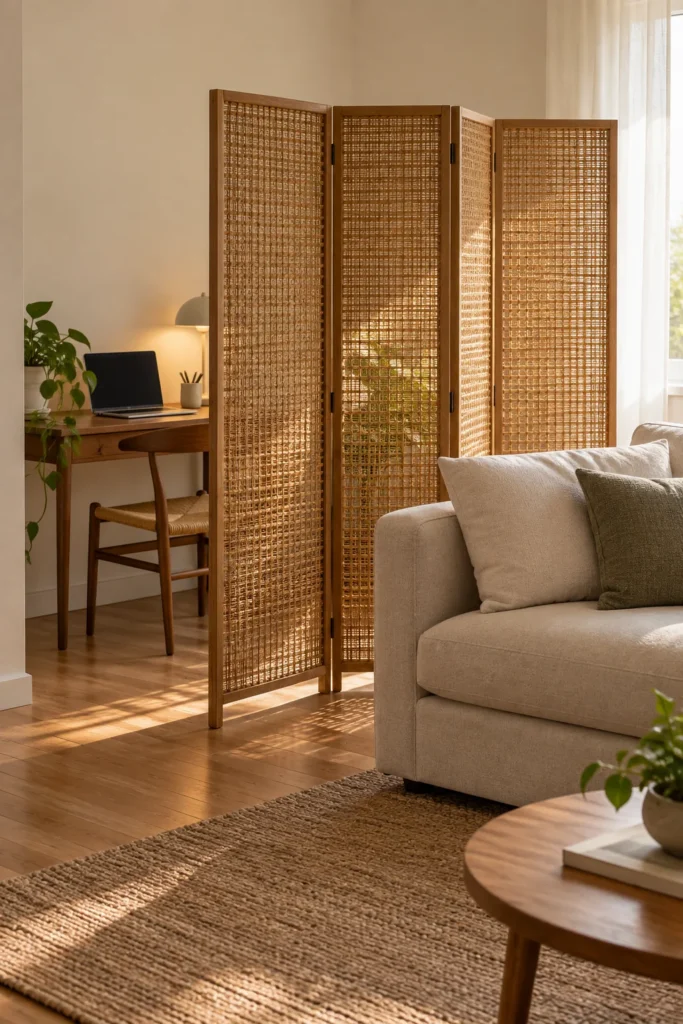
A desk placed in the living room can make work feel present all evening. A folding screen gives the desk a visual boundary, then folds away when you need the floor space.
Pick a screen that fits the room’s scale. Open woven panels let some light pass through. An opaque fabric screen hides more of the work area but can make a tight room feel closed in.
Place it where it can stand securely, clear of doors, heaters, and narrow walking routes. Check its stability in a home with children or pets. If the screen wobbles whenever someone walks past, it is the wrong piece for that spot.
✅ Leave breathing room
Place the screen far enough from the desk to sit, stand, and move comfortably.
⚠️ Keep exits clear
Do not place a screen where it narrows a doorway or could fall into a walking path.
11. Turn a Narrow Entry Bench Into a Landing Place
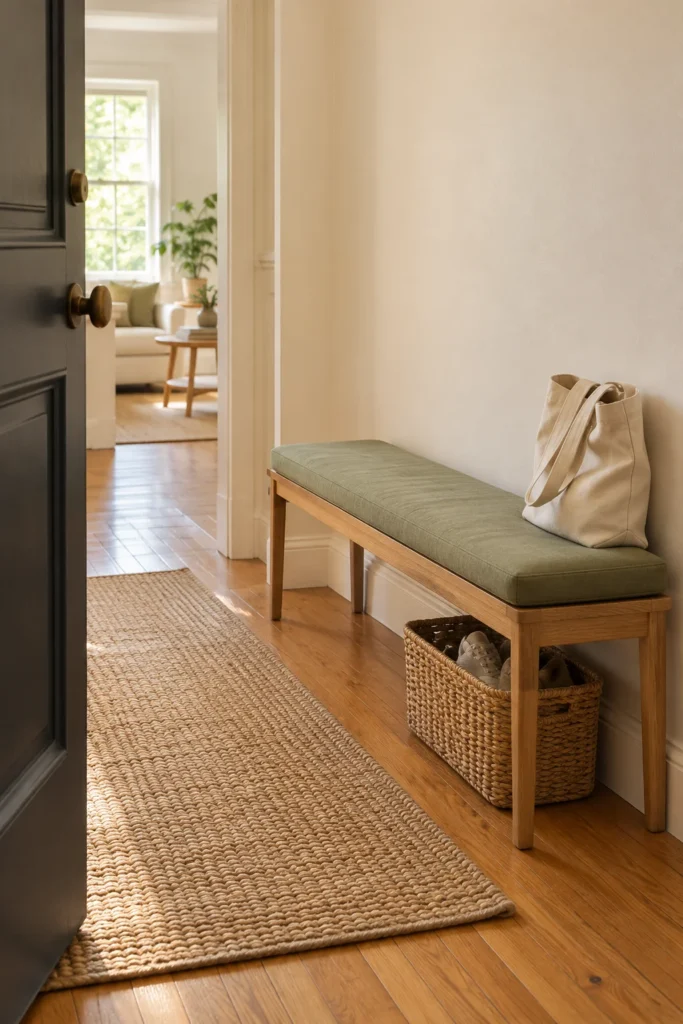
A small bench near the door gives shoes and bags a place to settle. Add one woven basket beneath it and a washable cushion on top. The entry begins to look planned without a shelf, hook, or strip on the wall.
Measure the hall before choosing a bench. The door must open fully, and people should still be able to pass without turning sideways. If the bench has storage underneath, keep the basket easy to pull out. Otherwise the tidy-looking setup will be annoying to use.
One useful habit makes the arrangement work: put the daily bag on the bench, and keep shoes in the basket instead of letting them spread across the doorway.
🚪
Door
Opens fully
🧺
Basket
Slides out easily
🚶
Path
Stays clear
12. Set an Easel Beside the Reading Chair
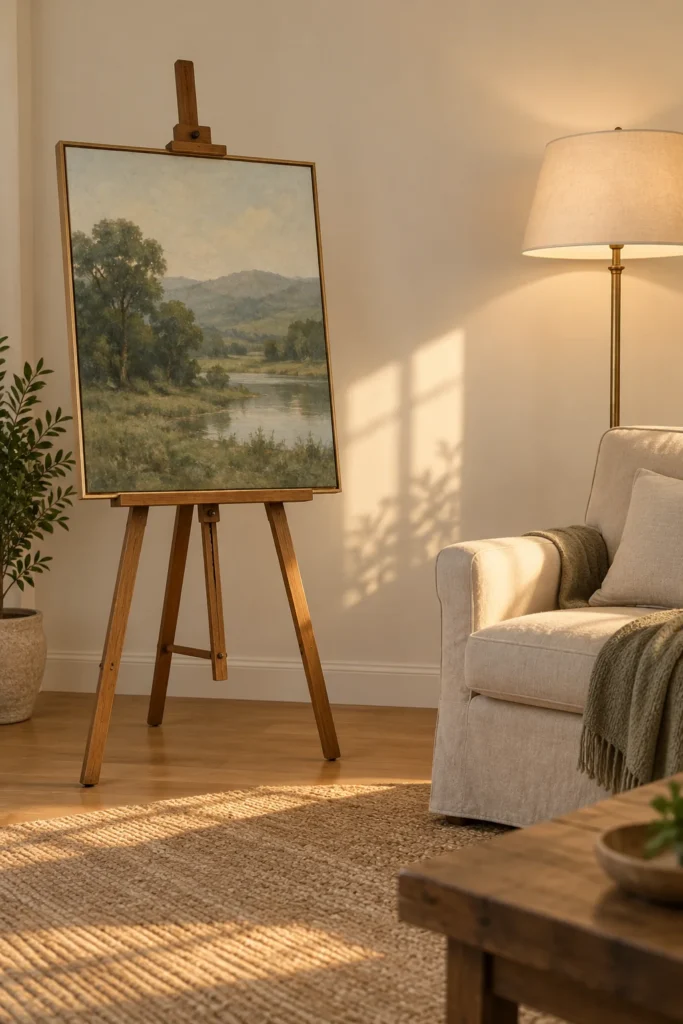
A freestanding easel lets a favorite print stand where you can enjoy it. Put it near a reading chair, with enough space that nobody brushes against the frame while walking through the room.
Keep the display simple: one print, one easel, and a lamp nearby. You can change the art without changing the room’s layout. A landscape with muted greens works especially well next to a warm wood chair or cream upholstery.
Check the easel’s stated size and weight limits. A heavy frame on a light display easel can tip. Keep the legs level and avoid placing it near a doorway.
🖼️ WHY IT WORKS
The easel gives one piece of art its own place in the room, even when the wall cannot hold a frame.
13. Add a Movable Cart to an Awkward Kitchen Corner
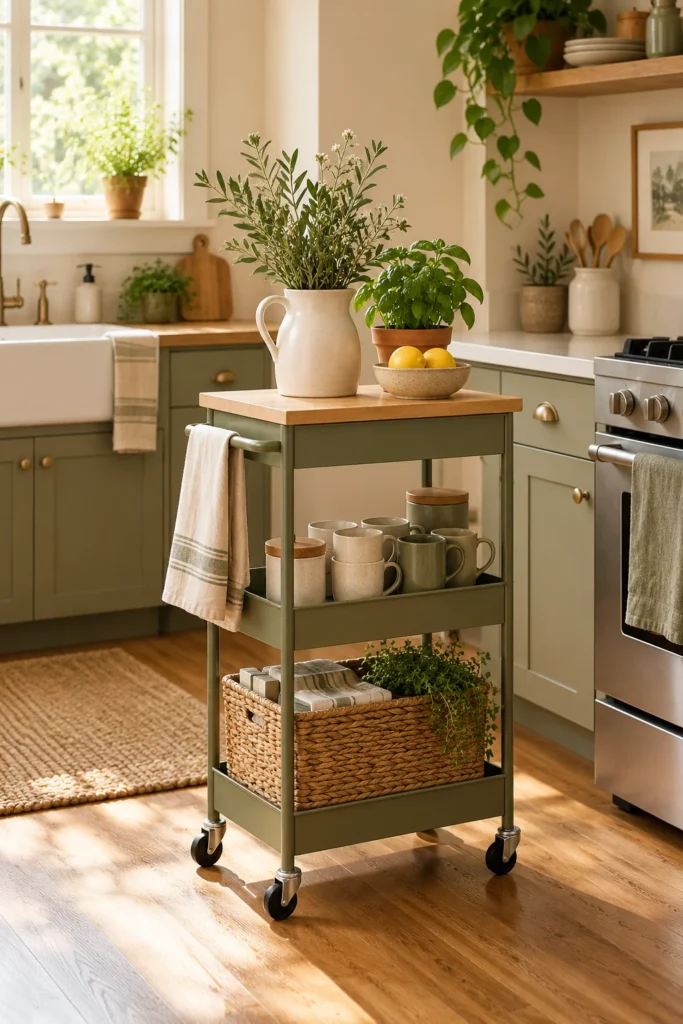
A narrow rolling cart can give an empty kitchen corner a job. Use the top for a coffee setup or a small plant, the middle for mugs, and the bottom for less attractive supplies in one basket.
The cart should still move without scraping the cabinets or blocking an appliance. Measure both the corner and the route it would take out of the kitchen.
- Put frequently used items where you can reach them.
- Keep heavier items low.
- Lock the wheels if the cart has brakes.
If you use an electrical appliance on top, check that the cart is suitable and keep cords and liquids safely separated. You can also keep it simple with mugs, a tray, and dry supplies.
🛒 Give each level a job
Top: one tray or a small decorative grouping.
Middle: the mugs or items you reach for most.
Bottom: heavier supplies gathered in a basket.
14. Let Bedding Carry the Bedroom Color
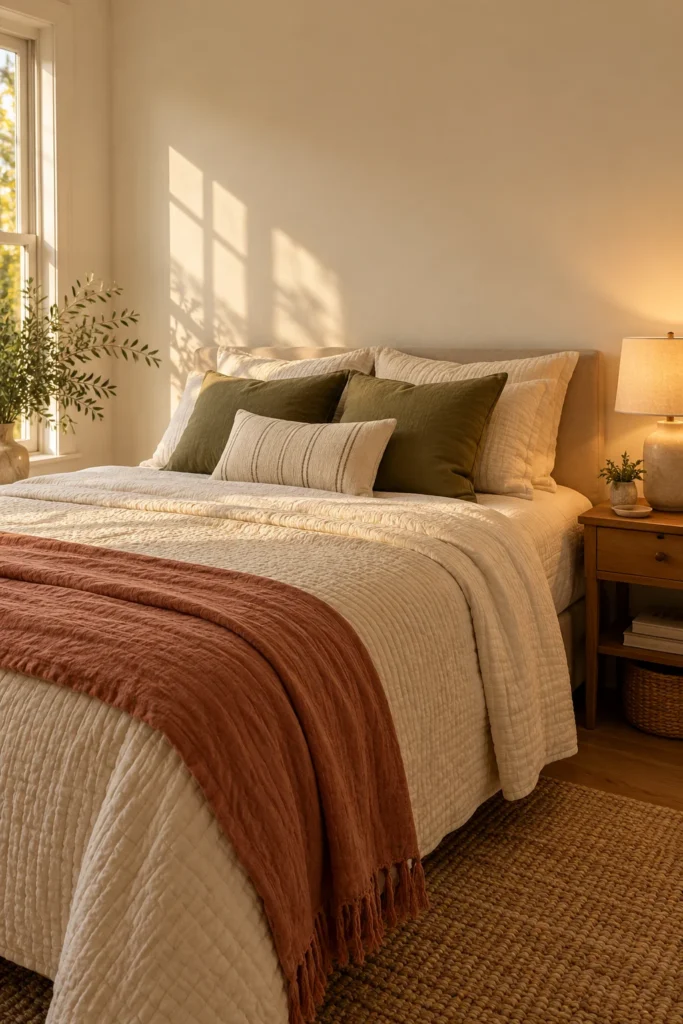
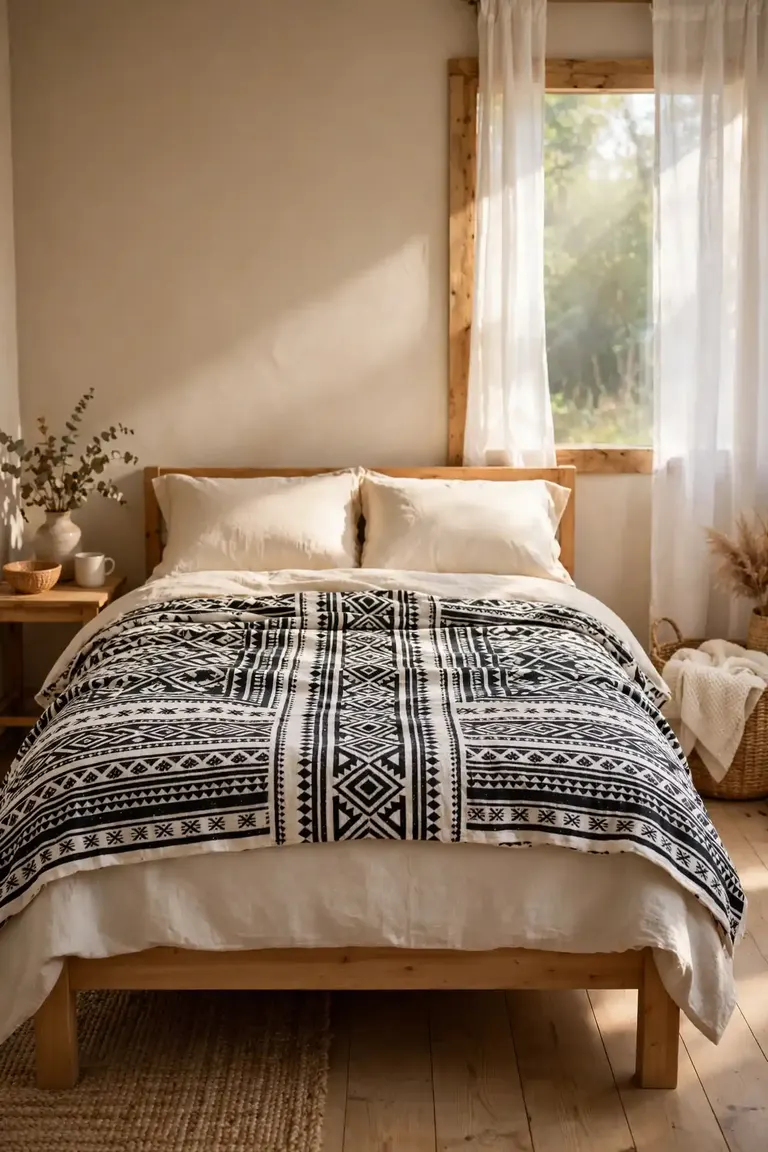
In a small bedroom, the bed fills much of the view. Change its cover and the room changes with it. Start with a warm cream quilt, add muted olive pillows, and fold a clay-colored throw across the foot.
Keep the bedside surfaces quieter if the bedding has a pattern. A plain ceramic lamp and one book may be enough. The wall can stay exactly as it is.
Before buying new bedding, lay out what you already have. A cover from the guest room or a throw from the sofa might be the missing color. Check how the fabrics look together in daylight, since cream, white, and beige can shift under warm indoor bulbs.
Mostly solid bedding
Add interest through a textured quilt and one stronger color at the foot.
Patterned bedding
Pull a single color from the print for pillows, and keep nearby objects simple.
15. Try a Smaller Rug Over Rental Carpet
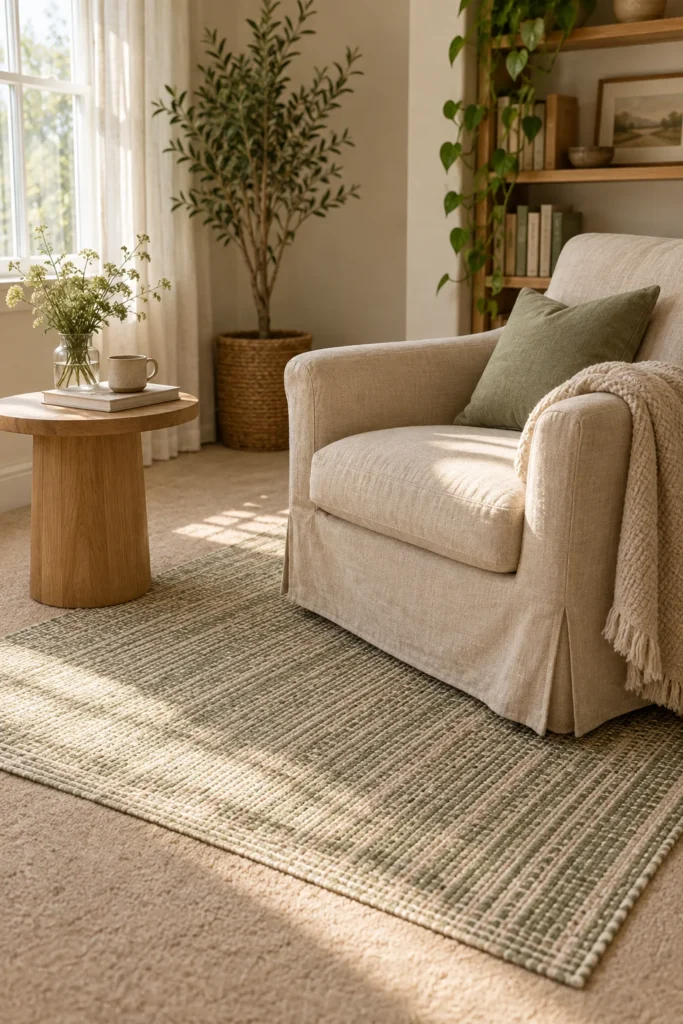
A large carpeted room can feel shapeless, especially when the carpet color does little for your furniture. A smaller low-pile rug can mark out a reading chair or the area beside the bed.
Choose a placement where the rug has a clear purpose. Under a chair, it should relate to the chair and side table. Beside the bed, place it where your feet actually land in the morning.
Check how the rug behaves over the carpet. If it ripples, shifts, or catches under a door, change the size, backing, or position. Test for color transfer and follow the carpet and rug makers’ care guidance.
| Look for | What it tells you |
|---|---|
| Flat edges | The rug is less likely to catch a foot or door. |
| No creeping | The layers stay where you placed them during normal use. |
| Compatible materials | Backing and color should suit the carpet underneath. |
16. Style the Space Above Kitchen Cabinets Sparingly
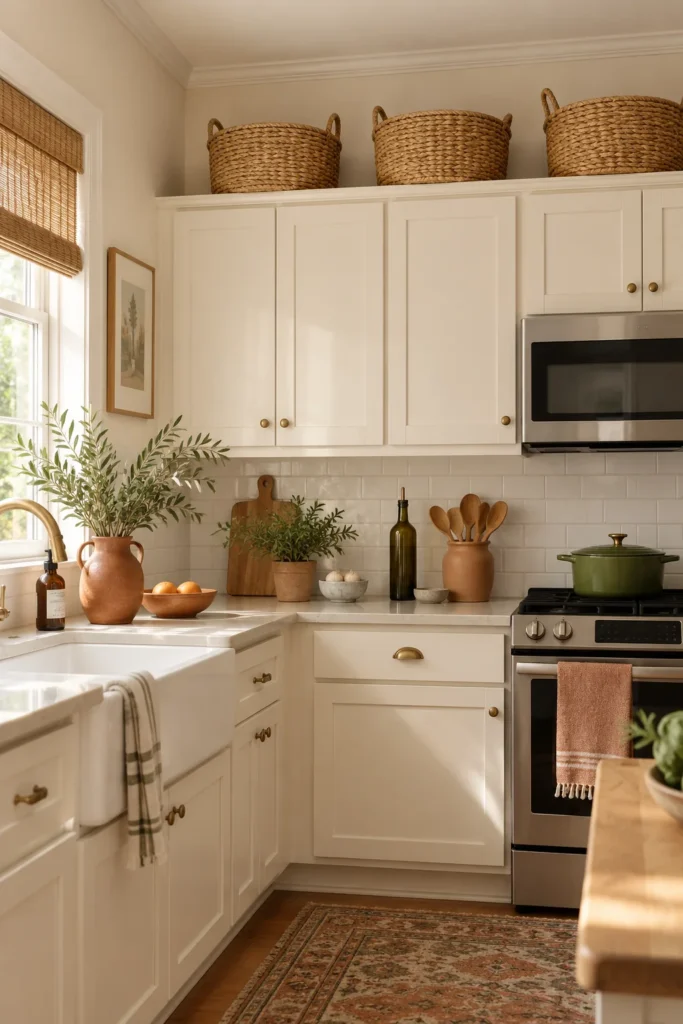
Some rental cabinets stop well below the ceiling. A few large baskets on top can bring texture to that empty band and hold things you rarely need.
Use matching or closely related pieces, and leave gaps between them. Filling every inch with little objects makes the area harder to clean and more cluttered from across the room.
This idea only works when the space is suitable. Check for vents, heat, grease, and cabinet load guidance. If reaching the top means standing on a chair, leave it empty. Keep anything stored there light enough to handle safely when you do need it.
⚠️ A display needs safe access
Leave the cabinet top clear if it is near heat or ventilation, collects grease, or cannot be reached with proper equipment. A bare space looks better than an unsafe one.
You do not need to decorate every empty surface at once. Pick the part of your rental that bothers you most and try one movable piece there. A lamp may help a dim corner more than another picture. A rug may do more for a seating area than extra accessories.
Keep the pieces that work and move the others around. That freedom is one of the best parts of decorating without adhesives. Save this list on Pinterest so you can return to the ideas when you are ready to work on the next room.