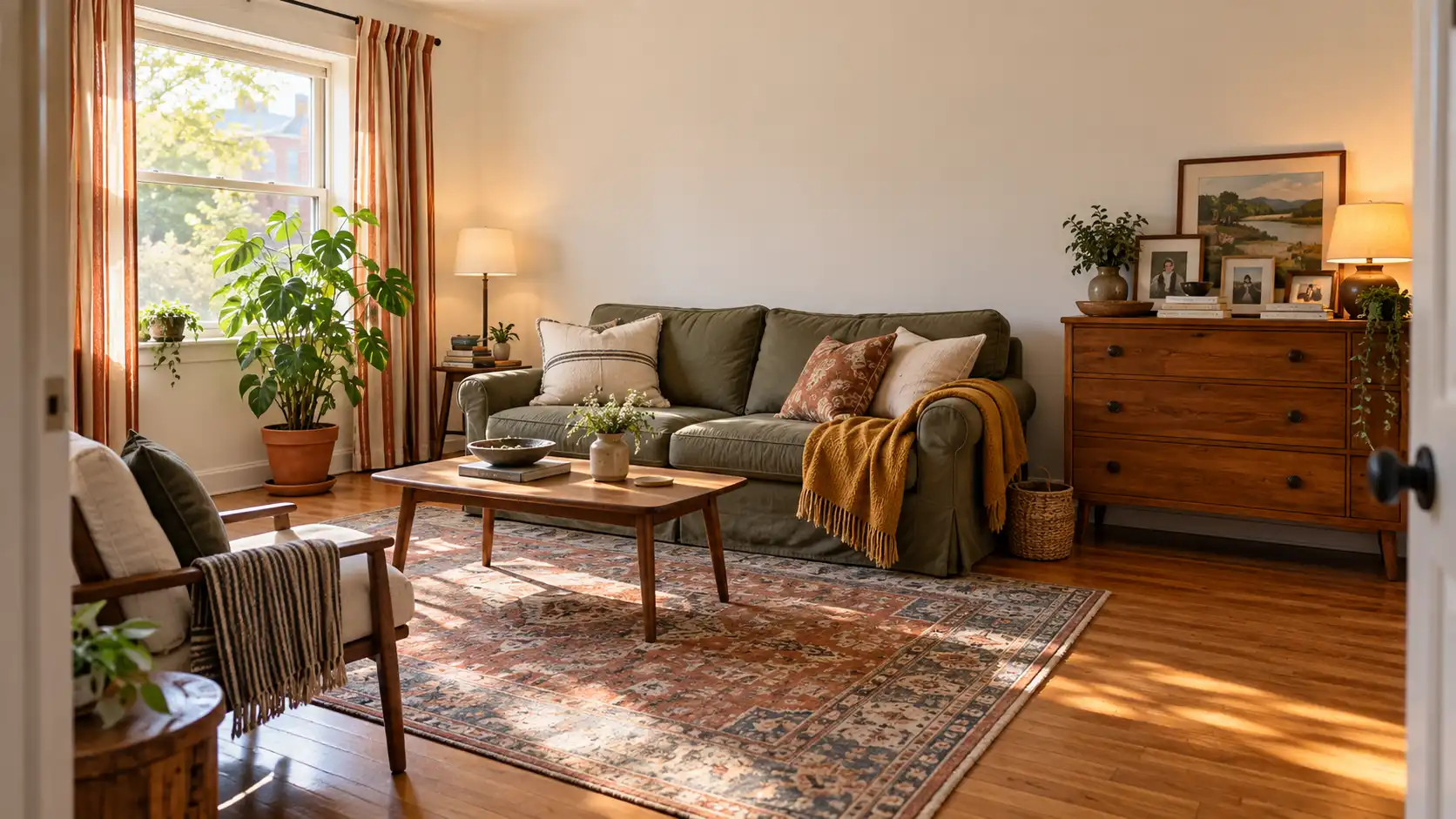
The walls are a color you would never choose, the cabinets belong to someone else, and every decorating decision comes with the question: can I undo this when I move?
It is easy to keep putting things off until you have a place of your own. But you live here now. Your favorite photographs, a comfortable reading corner, and somewhere sensible to drop your keys deserve a place in this home, too.
Learning how to personalize a rental starts with noticing what you can control. Curtains change how a window feels. Bedding brings color into a plain bedroom. A kitchen cart makes room for your morning routine. None of those ideas needs a freshly painted wall.
The ideas below mix visible changes with small, useful details that make daily life feel more settled. Some use things you may already own. Others involve removable additions, with permission and fitting checks where needed.
Start with the room you spend the most time in. You do not need to decorate the whole place before one corner can feel like yours.
Make It Feel Like Home, One Useful Change at a Time
You do not need to tackle all these ideas. Start with whatever bothers you most: harsh evening light, a bedroom that feels bare, or belongings that never seem to have a home.
Knowing how to personalize a rental means choosing changes you enjoy living with. Bring out the books you read. Use the bedding you like. Make space for the hobby you keep packing away.
Check permissions where needed, save any original fittings, and build the room slowly around your daily life. Save this list to your Pinterest board so you can return to it when another corner needs attention
1. Build a Personal Gallery on Top of a Dresser
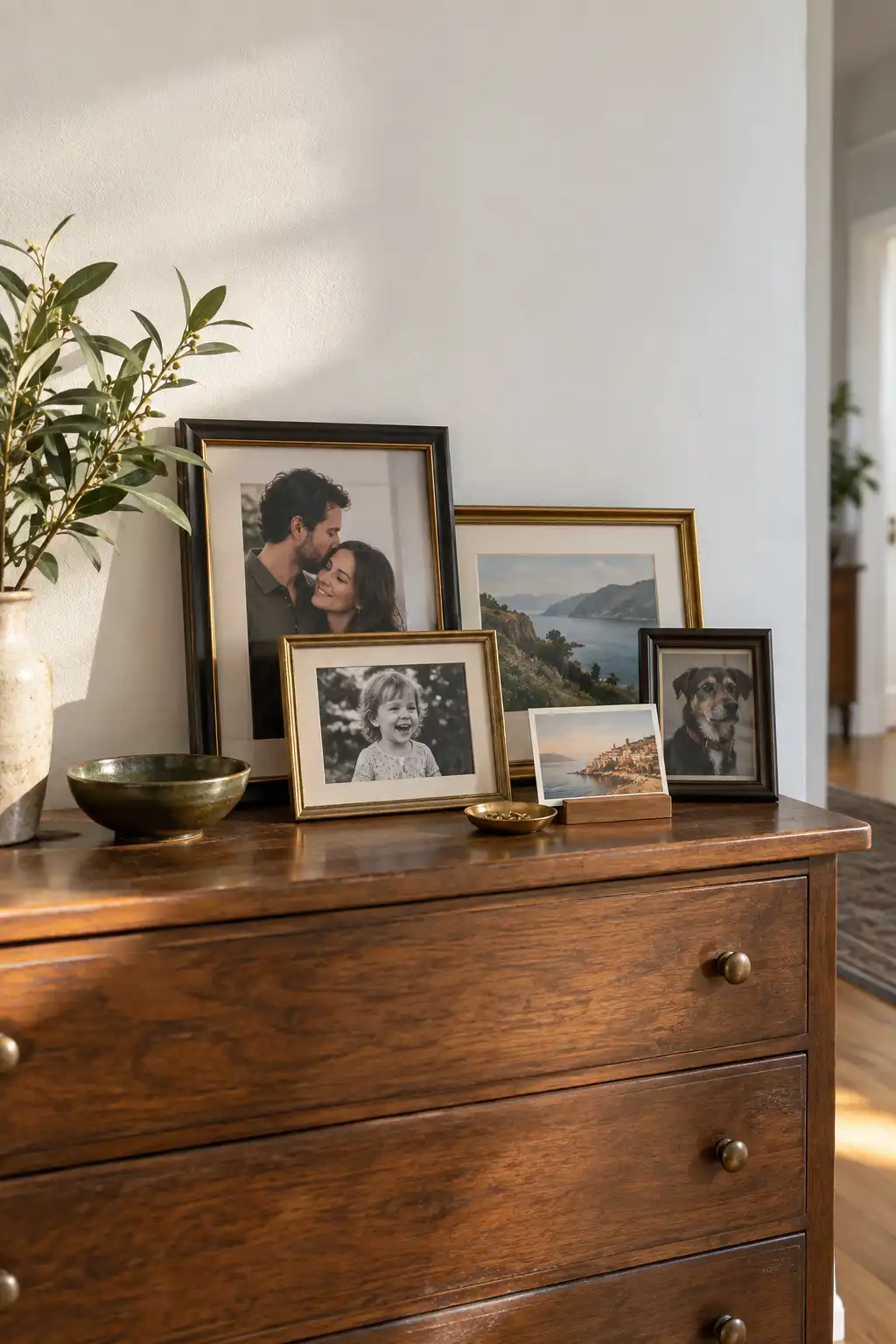
Your favorite pictures do not need an entire wall of nail holes. Arrange framed photographs, small prints, and a postcard on a dresser you already own.
- Place the largest frame at the back.
- Overlap a smaller frame near one corner.
- Leave some bare surface so the display feels collected, not crowded.
Mixing dark and gold-toned frames brings character to plain walls, much like your first reference image. Choose pictures that mean something to you rather than buying a matching set just to fill space.
WordPress HTML
🖼️ Choose the surface
Use a steady dresser with enough depth to support the frames.
🚪 Check the movement
Open nearby doors and drawers to check that nothing knocks the display.
2. Give a Forgotten Corner Its Own Lamp
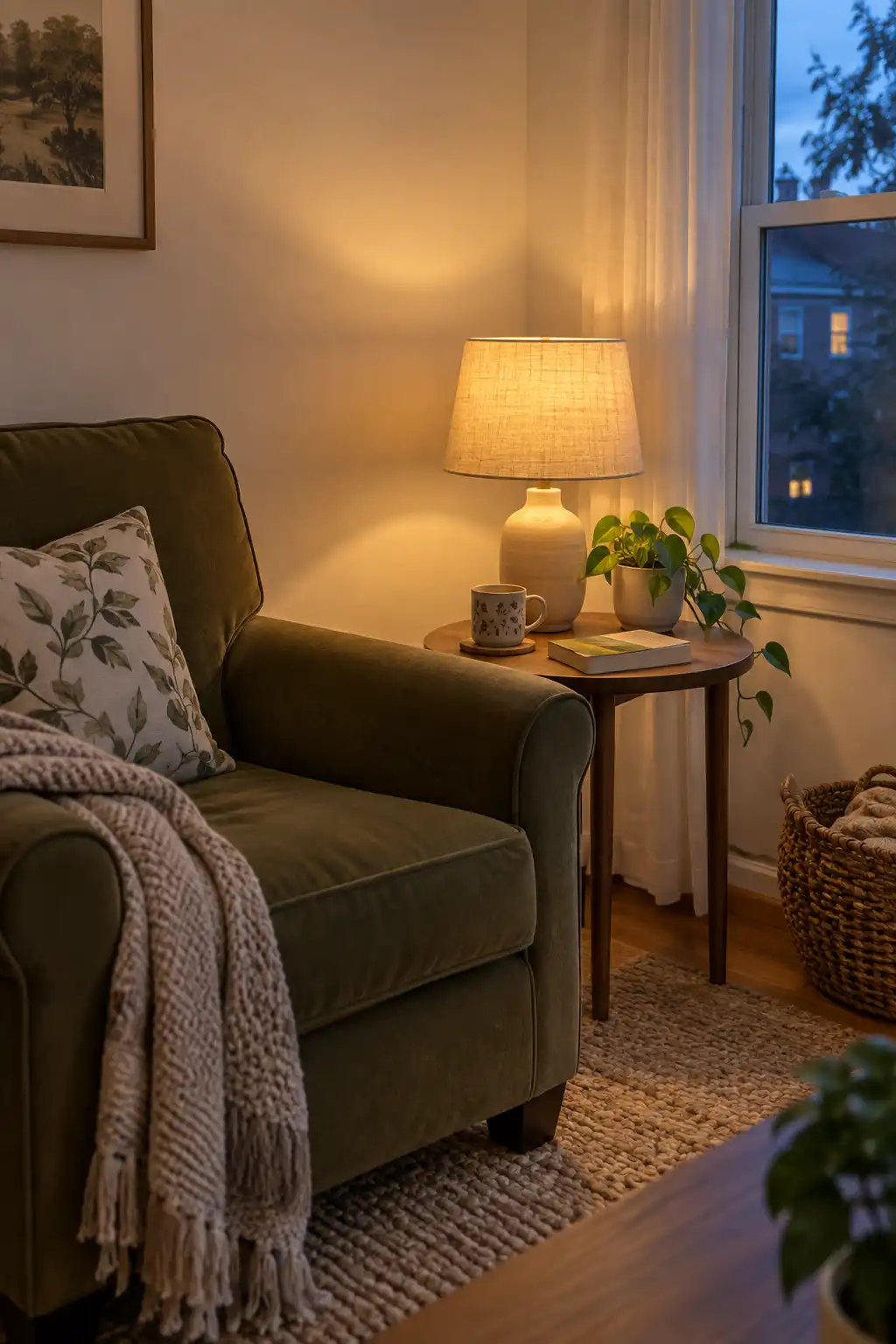
Overhead lighting can make a room feel like somewhere you are waiting rather than somewhere you live. A small table lamp gives an ordinary corner a purpose.
Set one beside the chair where you read or on the console where you leave your keys. A shaded lamp creates a softer pool of light, while an open shade casts more visible patterns.
Start with the place you actually use after dark. The goal is a comfortable evening routine, not a lamp on every empty surface. Keep its cord out of the walking path.
💡 Check the view from your seat
Sit down before deciding where the lamp belongs. If the bare bulb shines straight into your eyes, adjust the position or choose a shade that screens it.
3. Frame the Window With Curtains You Would Choose Yourself
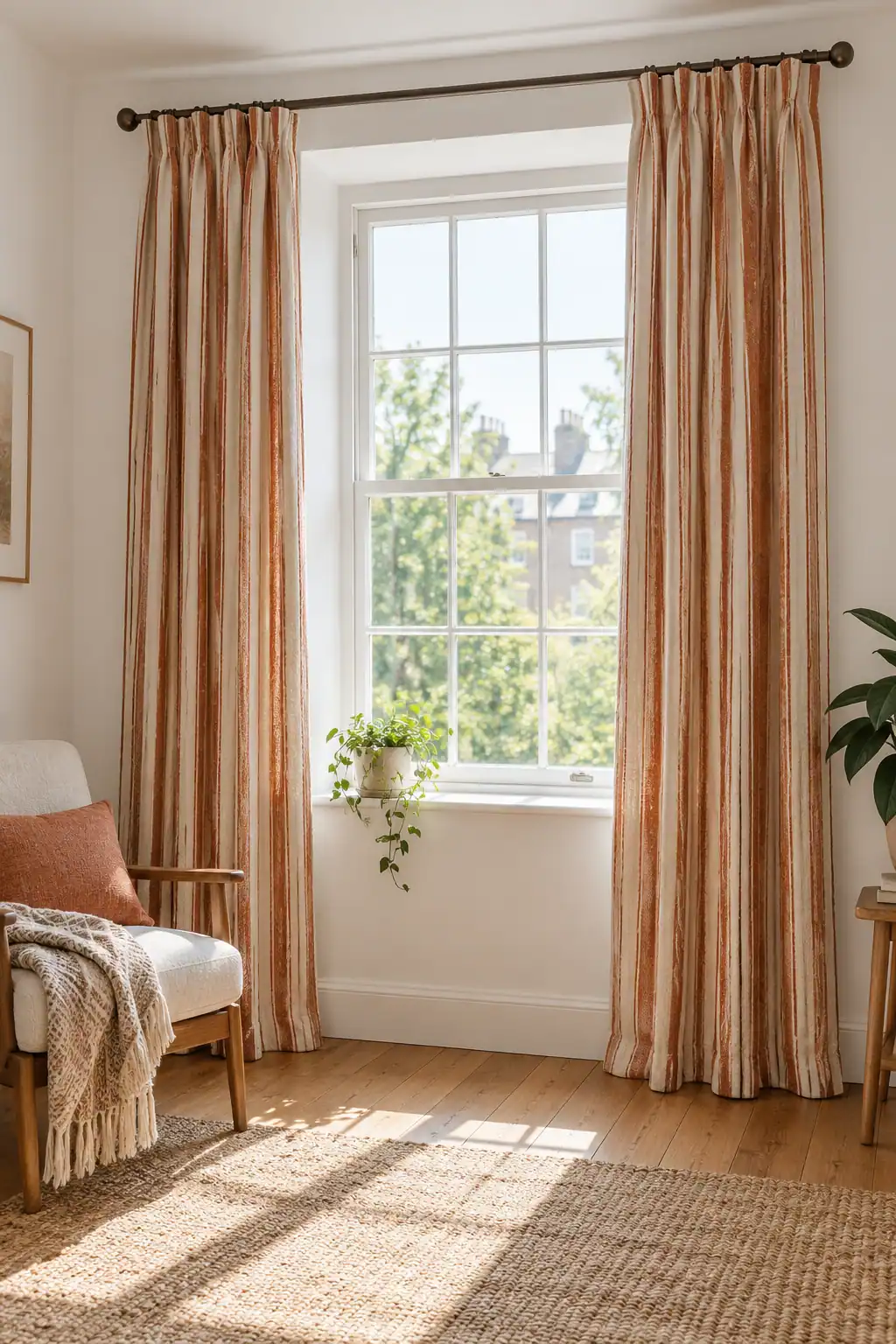
Landlord-supplied blinds may do their job, but they rarely say much about you. Curtains bring your own color and texture into the room without changing the wall finish.
- Check whether you can use an existing curtain rod.
- Choose fabric for the privacy and light you need.
- Measure around radiators, furniture, and the window opening before buying.
A fine stripe feels different from a plain woven curtain, even in similar colors. Where no rod exists, a suitable tension rod may work inside the recess. Check its fit and fabric weight before relying on it.
WordPress HTML
| Fabric choice | Check before choosing |
|---|---|
| Sheer | Daytime softness does not guarantee privacy after dark. |
| Heavier fabric | The rod and fittings must support its weight. |
4. Let a Patterned Rug Set the Room’s Colors
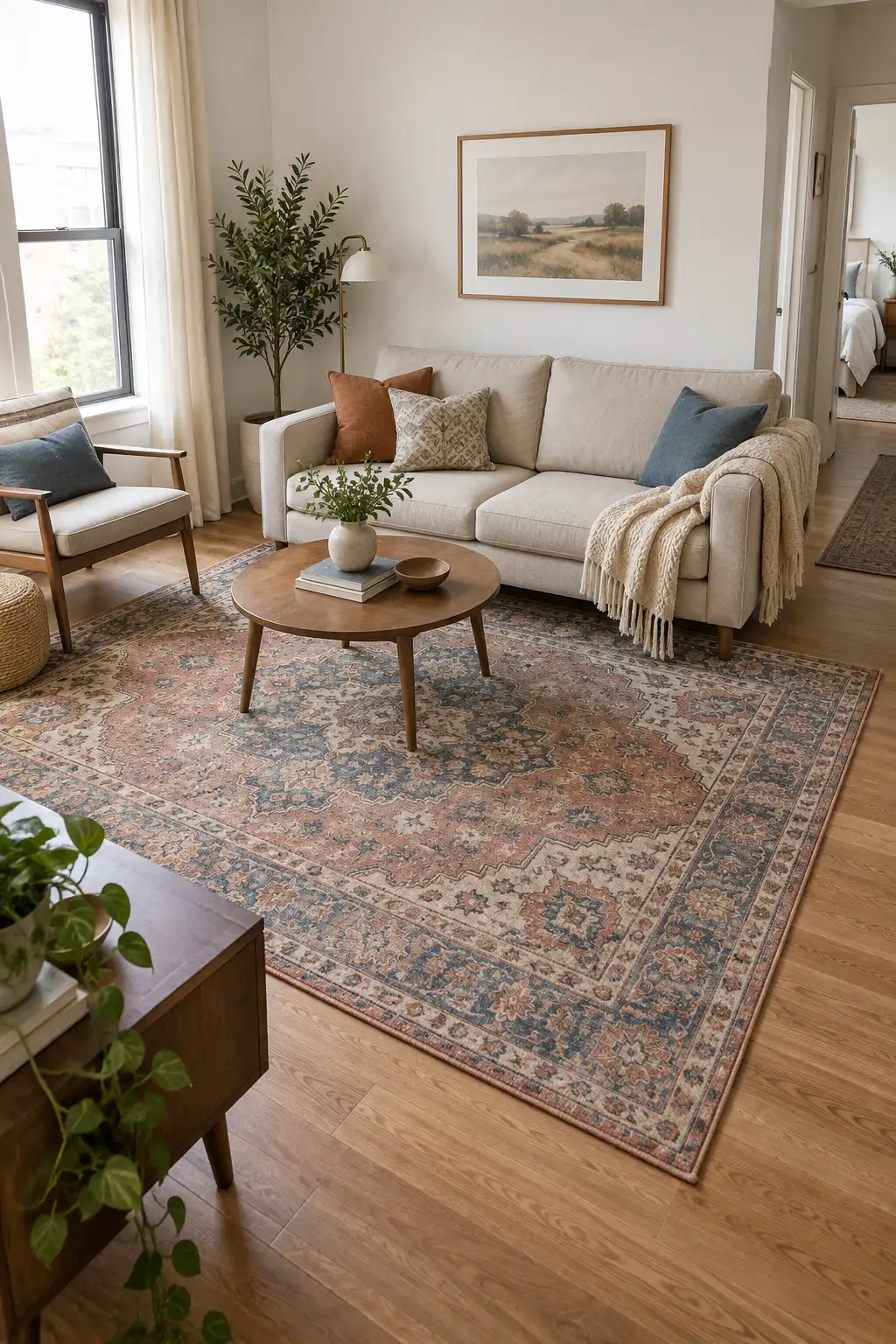
Blank walls feel less demanding when the floor has something worth looking at. A patterned rug can give a plain rental a clear color direction.
For a quieter room: choose a faded pattern with colors close to your sofa.
For a stronger statement: choose a deeper pattern and repeat one of its colors in a small accessory.
Before choosing a size, mark its outline on the floor with loose string. Check how it relates to the main furniture and walking route. A rug that interferes with a door will become annoying long before you stop liking the pattern.
✅ Check underneath
Choose a rug pad compatible with your flooring and follow its care instructions.
🚪 Check the edges
Keep corners flat and test the nearby door through its full swing.
5. Change the Sofa’s Look With a Fitted Cover
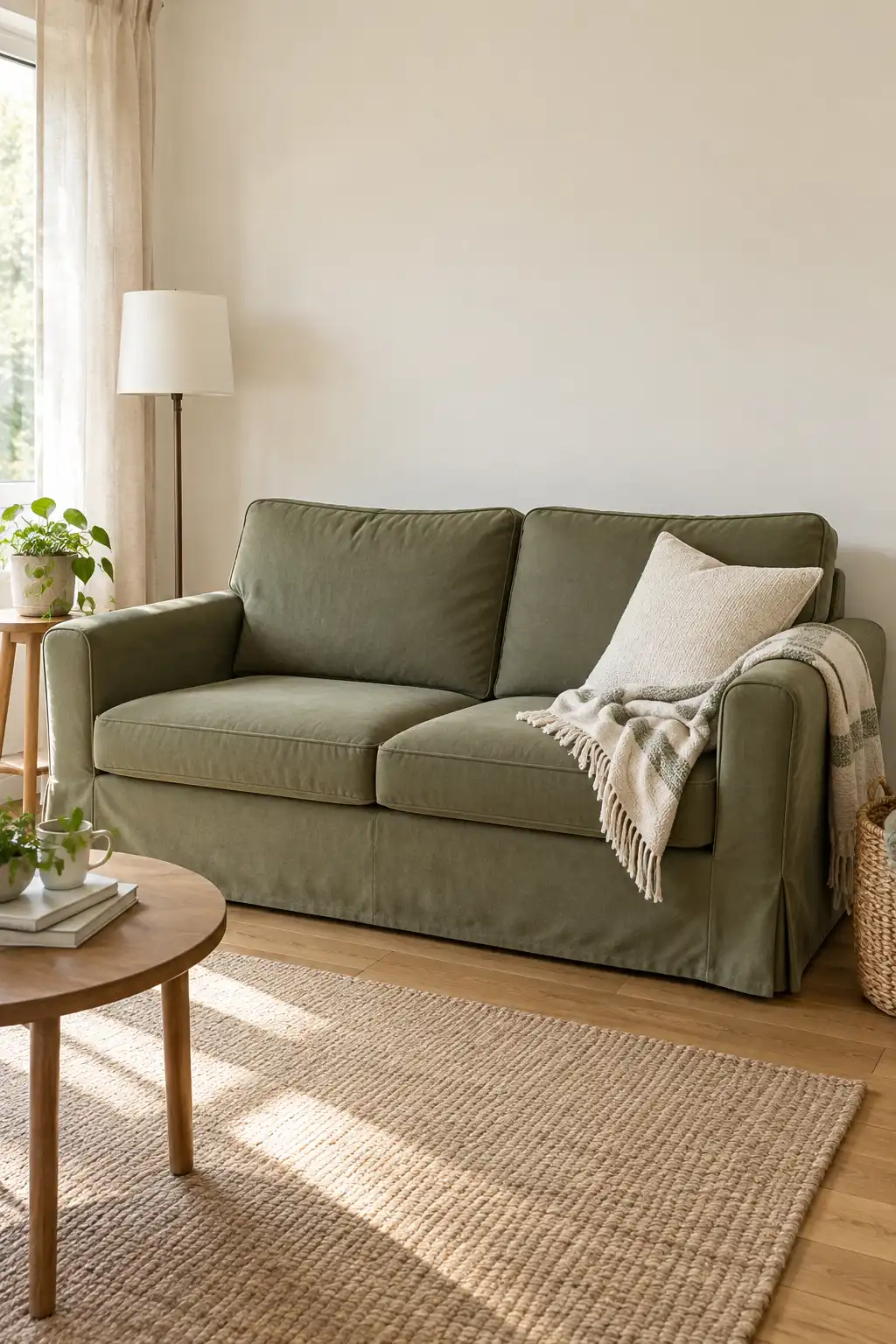
The sofa takes up too much visual space to ignore when its color bothers you. A removable cover can change that large block of color without replacing the furniture.
Check the arm shape, cushion arrangement, and measurements first. A cover made for a different sofa shape may shift every time you sit down.
- Pick a fabric you can care for easily.
- Tuck it neatly around the seat.
- Keep the cushions simple if the cover has a strong pattern.
On a furnished rental sofa, check care requirements and avoid fabrics that could transfer dye onto the original upholstery.
🛋️ Give it a real sitting test
Sit, stand, and settle into your usual spot. A cover that needs constant straightening is a poor fit, even if it looks good in a photo.
6. Make the Bed Your Main Color Statement
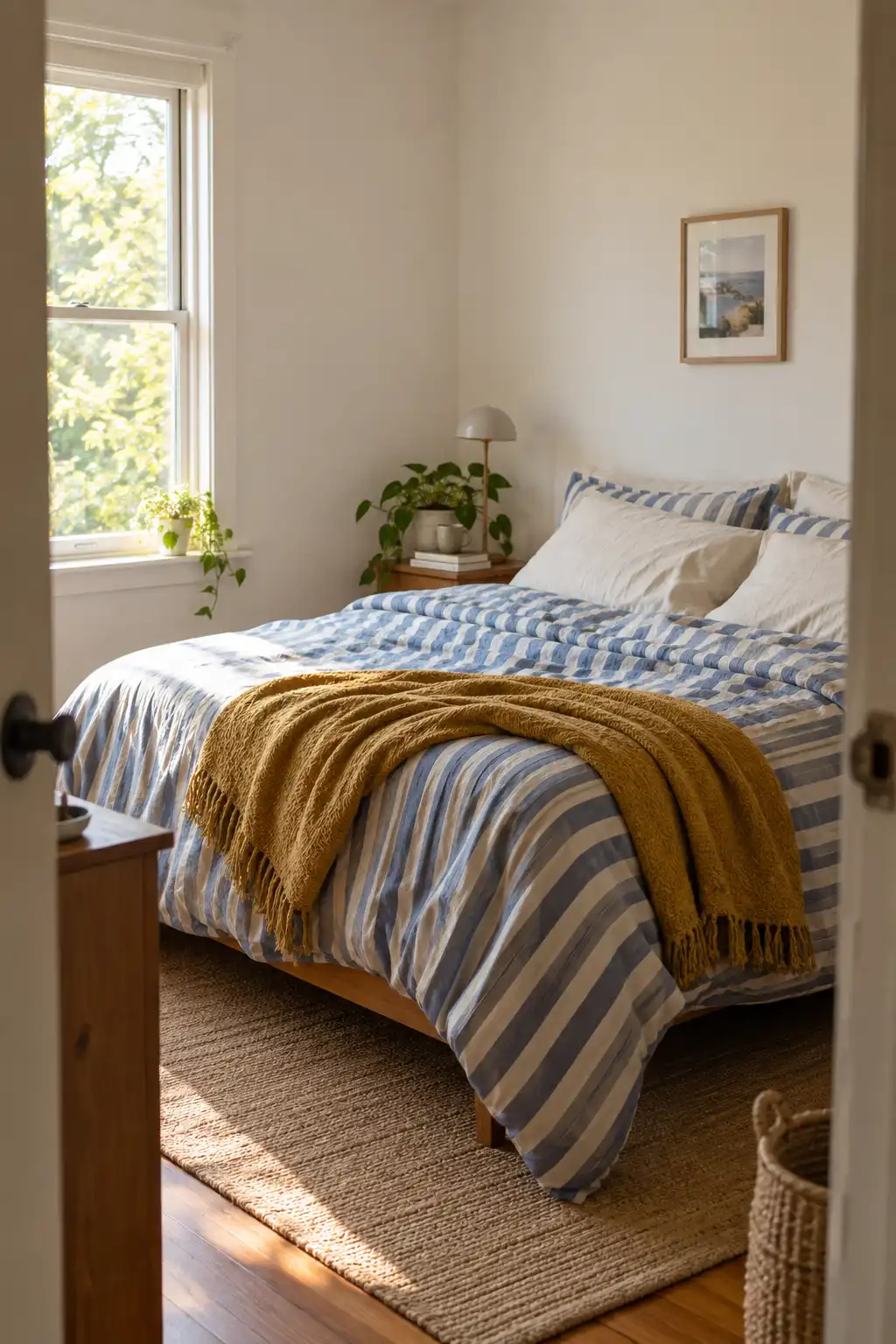
In a small bedroom, the bed is often the largest thing you see. That makes bedding a useful place to express your taste when the walls must stay plain.
Choose a duvet cover you would happily see every morning, then build around it with sheets and a blanket. A striped duvet with solid pillowcases feels lively without needing a matching set.
Keep the everyday routine in mind. If decorative cushions end up on the floor each night, leave them out. The room should feel like yours when you are using it, not only when the bed is freshly made.
🧺 Laundry
Check that the largest piece fits your washing setup.
🌙 Comfort
Choose layers you can remove as the room warms up.
7. Use a Folding Screen as a Movable Backdrop
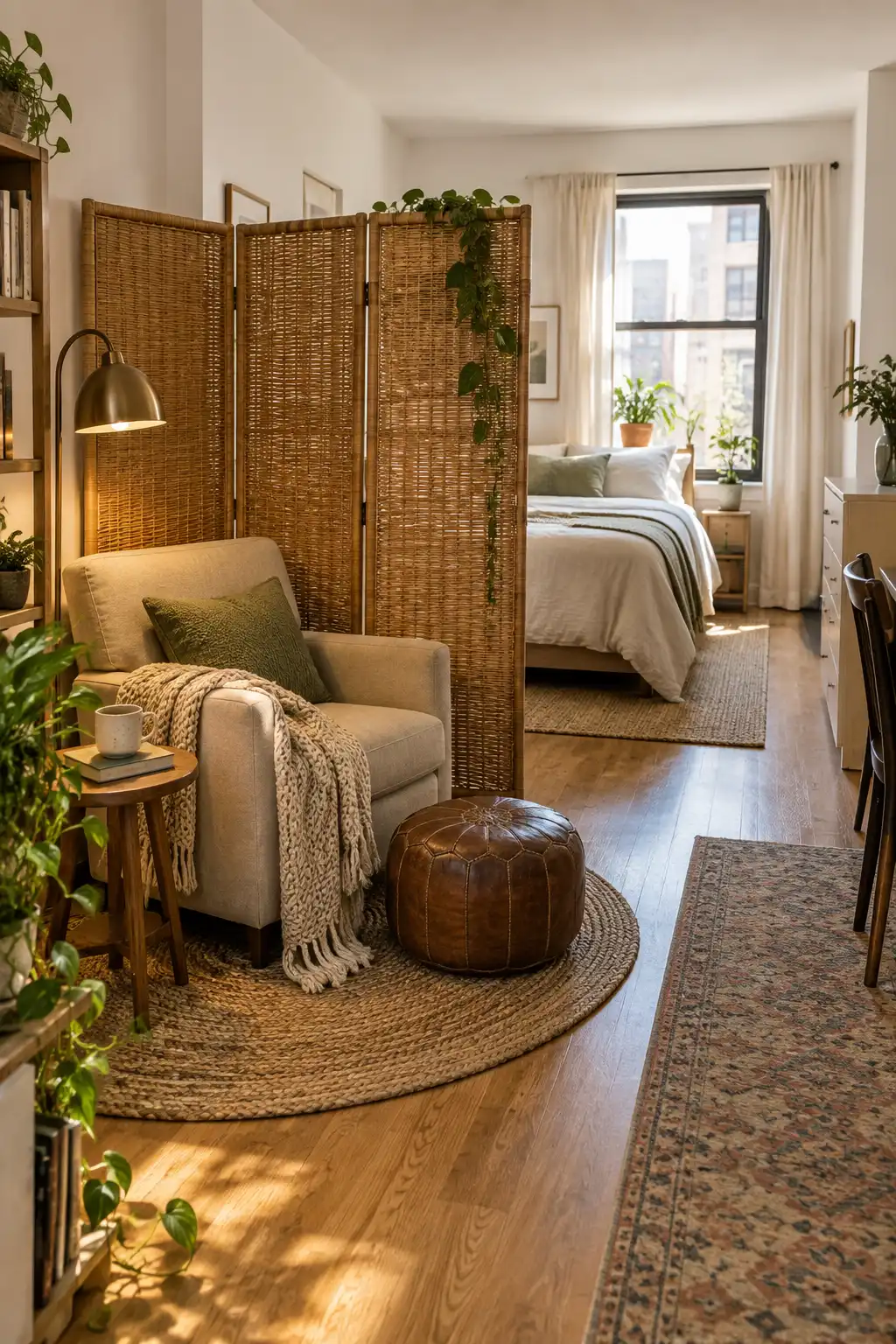
A folding screen gives you a backdrop you can take with you. Place it behind a reading chair or beside a work area to break up a long, plain wall.
- Choose a screen that stands securely in its intended position.
- Open the panels to the angle its design requires.
- Leave access to outlets, doors, and heating clear.
Woven panels bring texture, while fabric panels can carry a larger pattern. In a studio, the screen can also mark the edge of a sleeping area without pretending it is a full wall.
📌 Plan for everyday movement
A screen belongs outside busy paths. Follow its stability instructions and reconsider the location if children or pets could pull or knock it over.
8. Group Plants Where the Light Actually Reaches
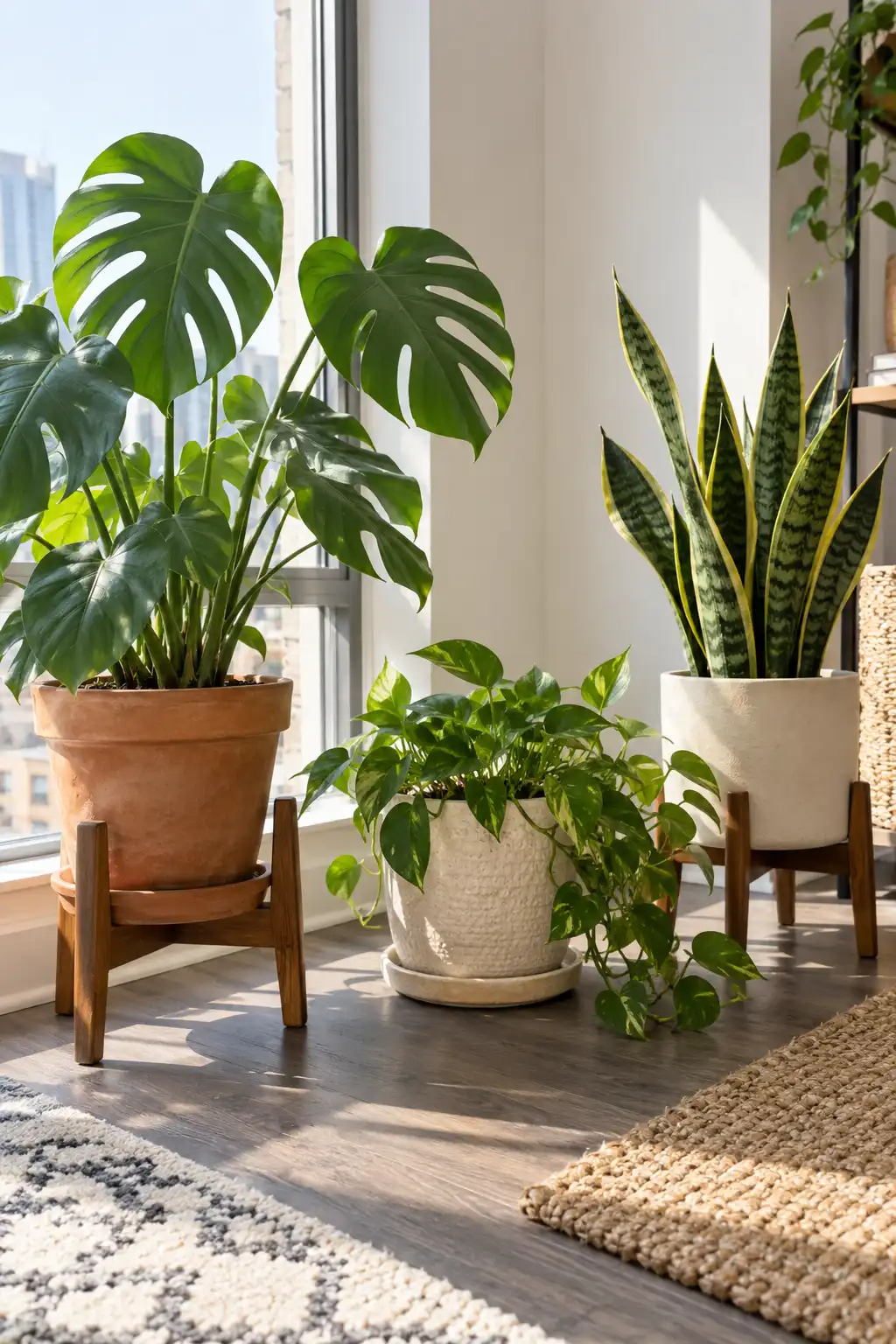
A plant corner can make a rental feel cared for, but the location needs to suit the plants. Start with the available daylight, then choose greenery for that spot.
Near a bright window: use plants suited to the actual sun exposure.
In a dim corner: do not assume a plant will thrive simply because it looks good there.
Vary pot heights with a stable stand and a lower floor pot. Keep the containers related through color or texture. A saucer beneath each pot helps catch water, but check underneath regularly rather than trusting it blindly.
9. Dress the Dining Table for Ordinary Days
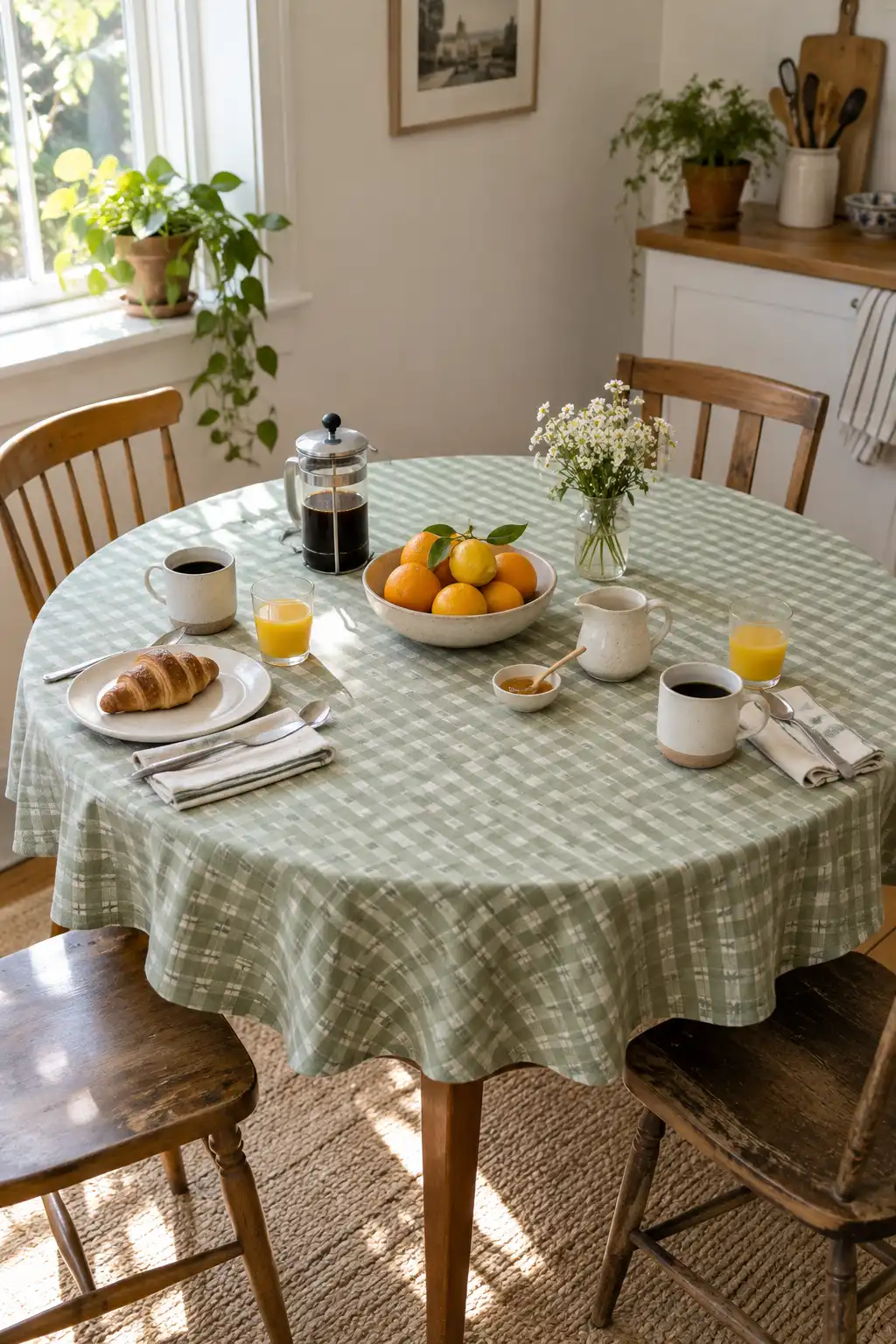
Your dining table does not need to wait for guests to look personal. A fabric runner, everyday placemats, or a favorite fruit bowl can change how the whole corner feels.
- Choose a washable textile for daily use.
- Keep the center low enough to talk across.
- Leave room for the things you actually do there.
A small checked cloth can soften a plain rental dining area without adding another piece of furniture. If the table also handles homework or laptop time, keep the decorative items together so they move aside easily.
🍽️ During meals
Keep enough clear space for plates, glasses, and serving dishes.
💻 Between meals
Store the centerpiece nearby if this is also your work surface.
10. Swap Cabinet Handles Where Permission Allows
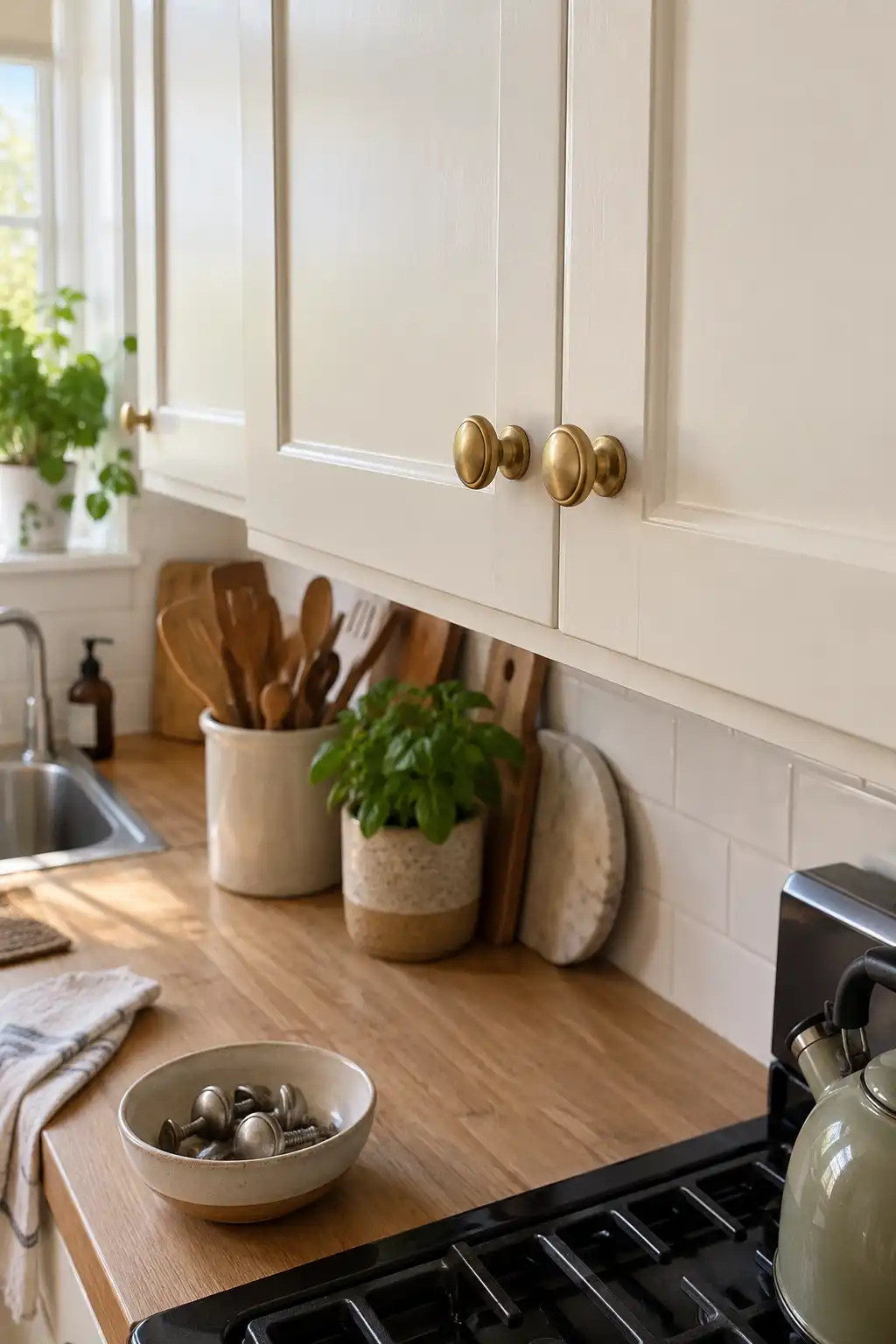
Small hardware changes can make a kitchen feel closer to your taste. Start by checking whether your landlord allows a reversible handle swap.
For replacement pulls, match the existing hole spacing. For knobs, check that the screw and fitting suit the door. New holes turn a simple swap into a different job.
Keep every original handle and screw together in a labeled container. Test a replacement on a single door before buying the rest, including whether it catches on clothing or prevents a neighboring drawer from opening. Good-looking hardware still needs to work comfortably.
🔧 Before you replace anything
- Confirm the change is allowed.
- Photograph the original fittings.
- Match the existing holes and door thickness.
- Store the originals for move-out.
11. Bring Pattern Into an Open Cabinet With Loose Liners
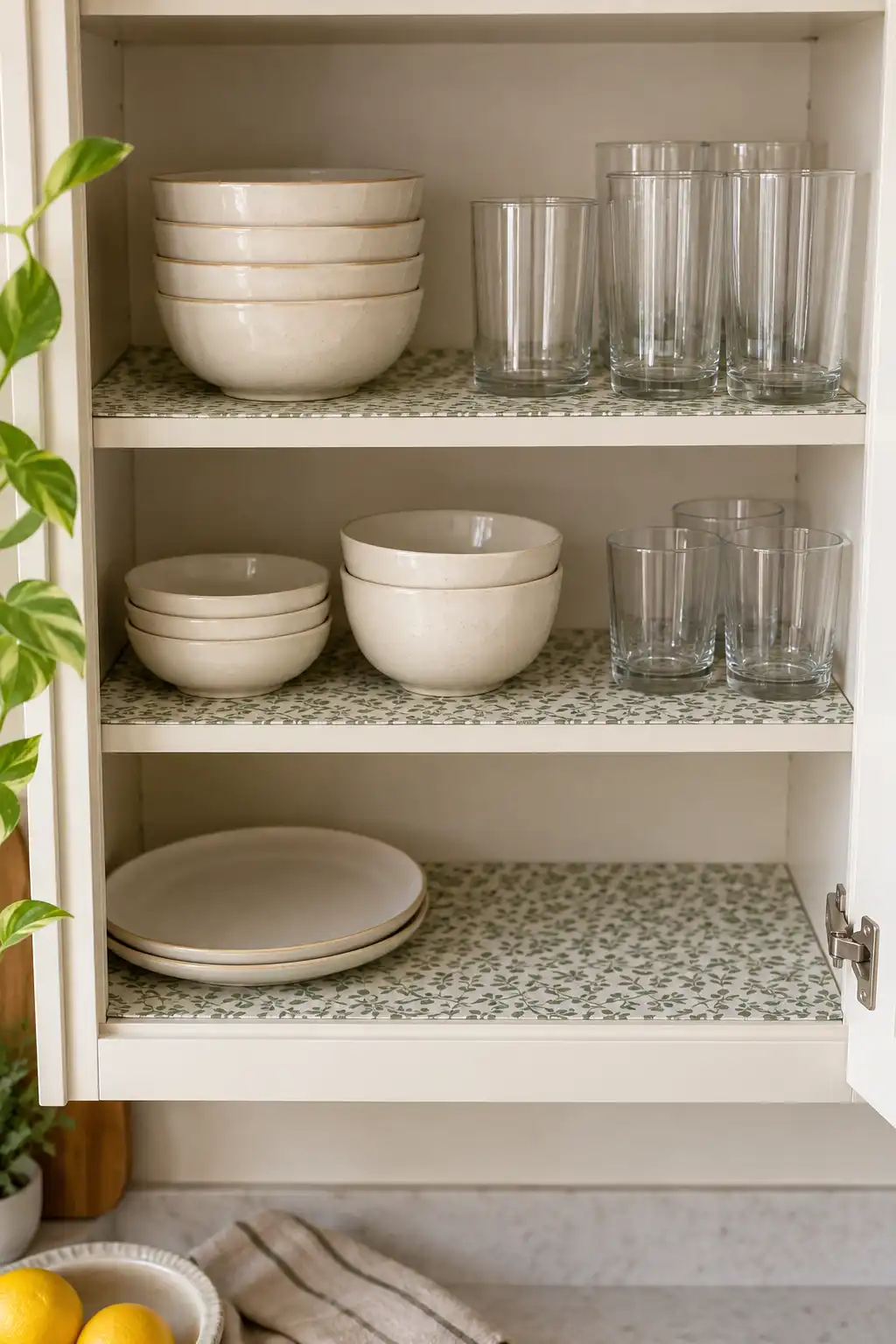
An open cupboard can hold more personality than its plain shelves suggest. A patterned, nonadhesive liner introduces color beneath everyday cups and bowls without covering the walls.
- Clean and dry the shelf.
- Cut a suitable liner to fit.
- Lay it flat without glue or tape.
Choose a material intended for shelf use and compatible with the finish. A small pattern reads neatly between dishes, while a bold one works better on a less crowded shelf. Lift the liner during cleaning so hidden crumbs or moisture do not stay trapped beneath it.
| Label to check | Why it matters |
|---|---|
| Nonadhesive | Avoids relying on glue for placement. |
| Surface compatibility | Some liner materials can mark certain finishes. |
12. Let the Shower Curtain Carry the Bathroom’s Style
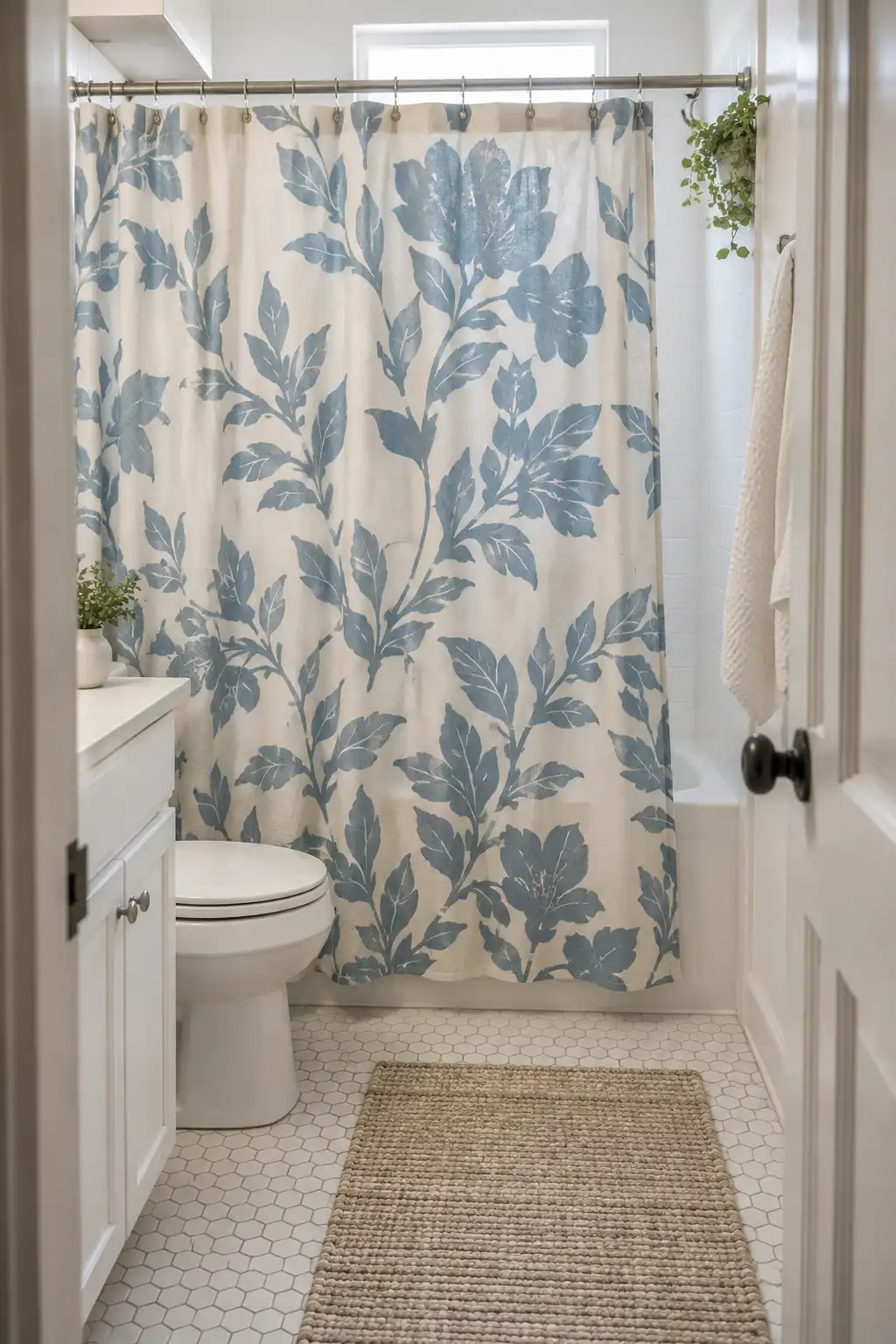
A shower curtain takes up enough space to change the feel of a basic bathroom. Choose a pattern or color you would use elsewhere in your home so the room feels connected to the rest.
Small pattern: useful when you want some detail without a strong focal point.
Large pattern: useful when the bathroom has little else competing for attention.
Use the existing rod if it is suitable, and follow the curtain’s care instructions. Where a separate liner is needed, choose the right fit. Keep the fabric off the floor so the bottom does not sit in puddles.
🚿 Plan for drying
After use, spread the curtain so its folds can dry and use the bathroom’s available ventilation. Follow the washing directions for the fabric and liner.
13. Create a Landing Station Around Your Daily Routine
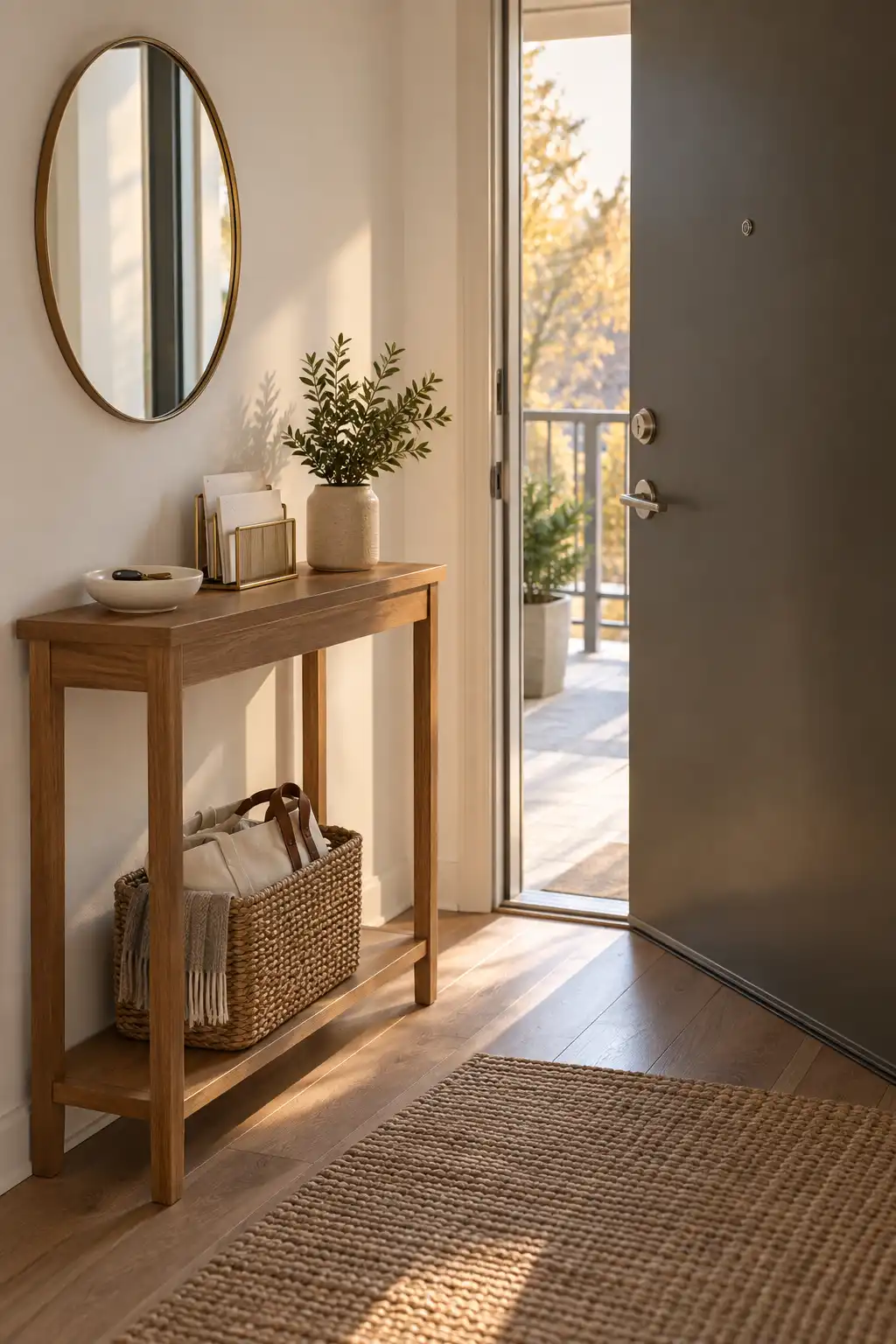
Keys on the counter, mail on the chair, and a bag on the floor make a rental feel unsettled. Give those things a clear home near the entrance.
- Use a shallow bowl for keys.
- Put incoming paper in an upright sorter.
- Slide a basket beneath a console for your everyday bag.
Borrow the useful organization in your third reference image, but keep it on freestanding furniture if wall mounting is not allowed. Choose containers you enjoy looking at. The best arrangement is the one you can use while coming through the door with your hands full.
📨 Incoming
Keep unread mail in a visible place that is easy to empty.
👜 Outgoing
Reserve a separate spot for returns or items leaving with you.
14. Put Your Favorite Books Where You Spend Time
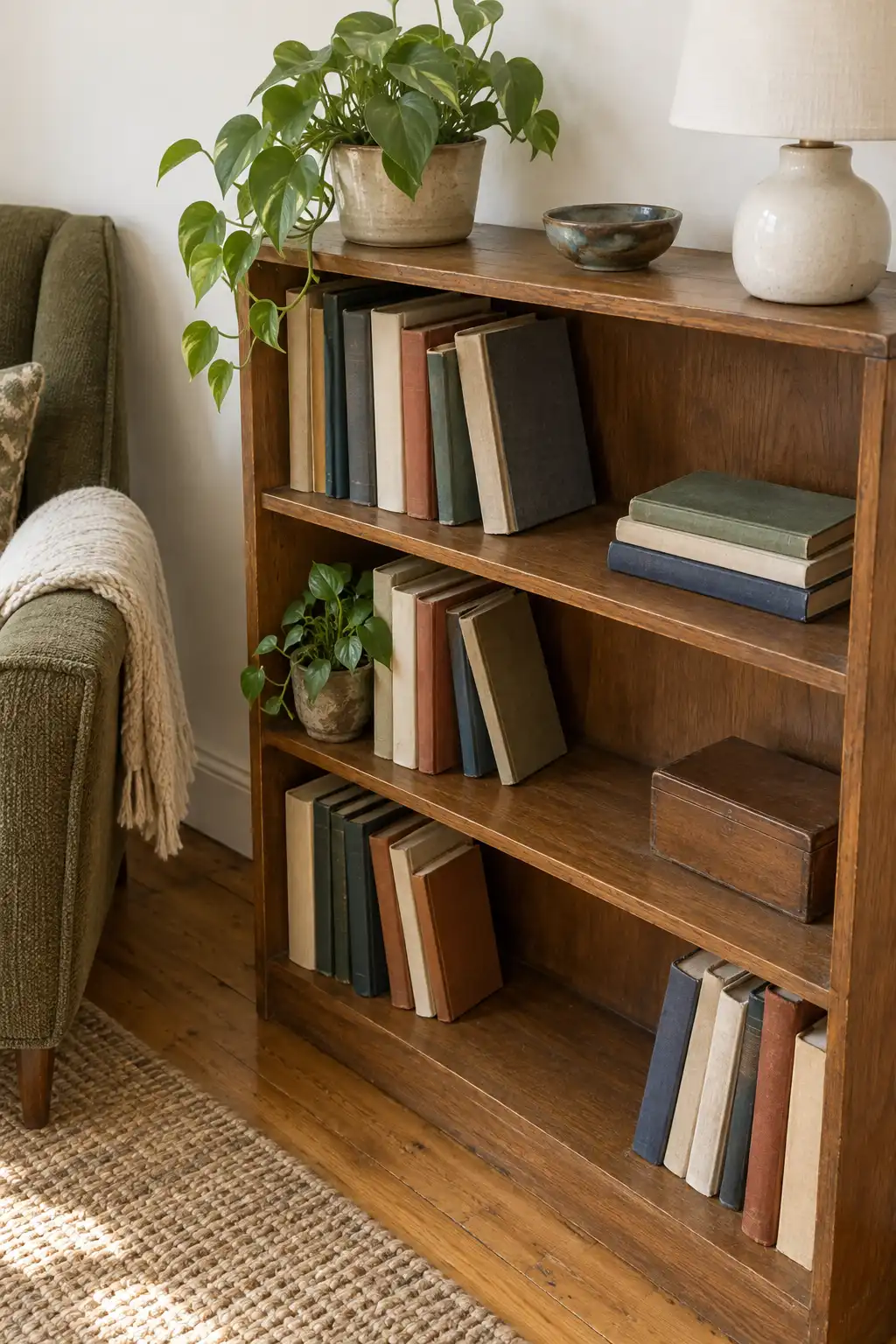
Books can tell visitors more about you than a shelf of matching ornaments. Keep the ones you read, browse, or return to near the place you use them.
A low bookcase beside a chair can hold novels, cookbooks, or a few albums. Mix upright books with a short horizontal stack where it makes practical sense, not just to copy a styled shelf.
Leave some room for new additions. If reaching a book means dismantling a display, simplify it. Follow the furniture maker’s anchoring instructions, and get permission for any required fixings.
📚 Arrange for use
Place frequently used books within easy reach. Keep heavier volumes on lower shelves and avoid loading shelves beyond their stated capacity.
15. Place a Standing Mirror Where It Reflects Something Good
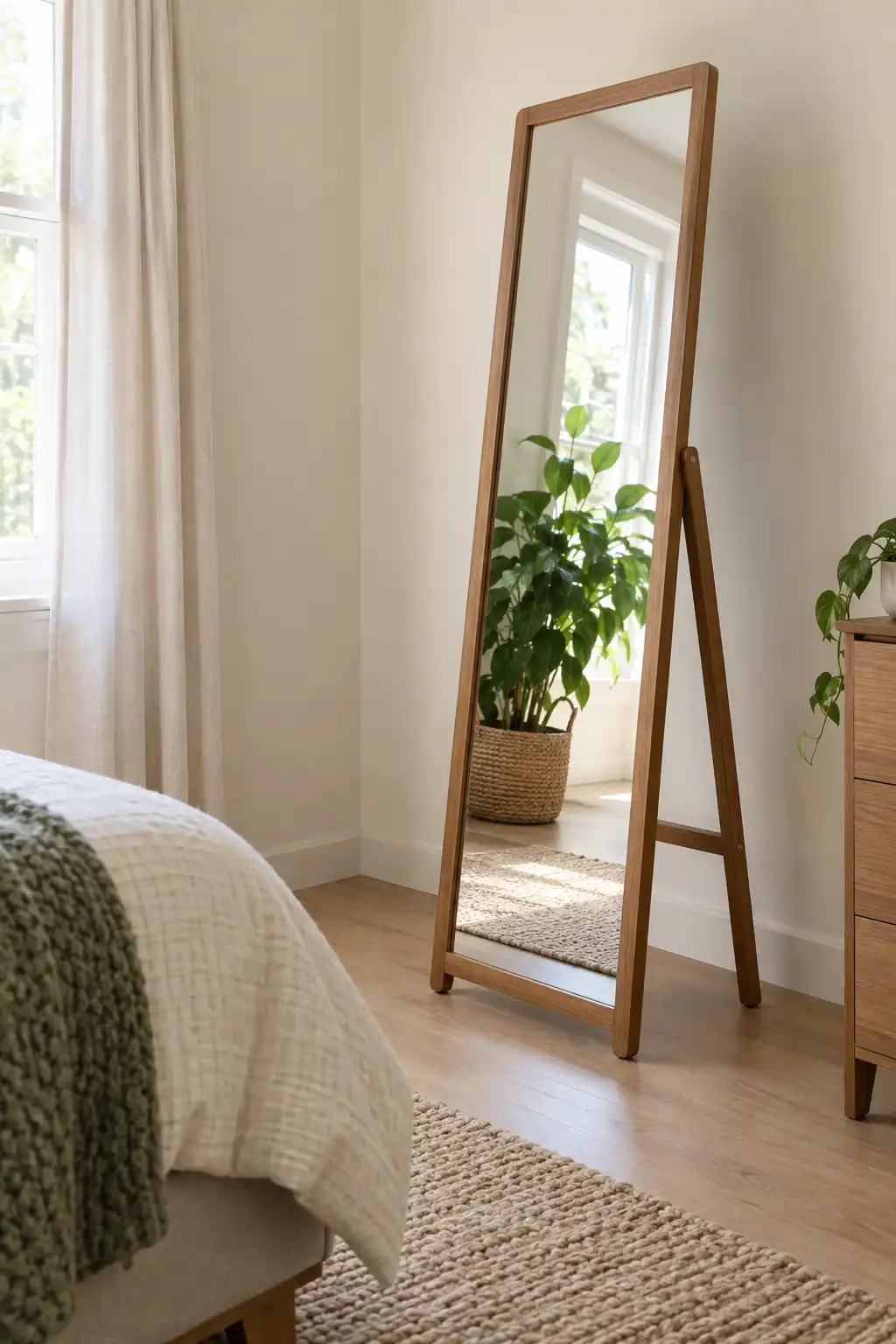
A mirror repeats whatever sits in front of it. Before placing one, check whether it will reflect a bright window, a plant, or the pile of laundry you keep meaning to move.
- Test the view from the doorway.
- Check the reflection from your usual seat.
- Choose the final position around both.
Use a mirror designed to stand in that way, and follow its securing instructions. A loose wall mirror propped on the floor is not automatically a suitable freestanding mirror. The frame can bring in your preferred style while the reflection makes an overlooked corner more useful.
✅ Reflect a calm view
A clear corner or leafy window view gives the reflection a purpose.
☀️ Check for glare
Avoid an angle that sends bright reflected light toward your seat or screen.
16. Make a Small Desk Feel Like Your Own Workspace
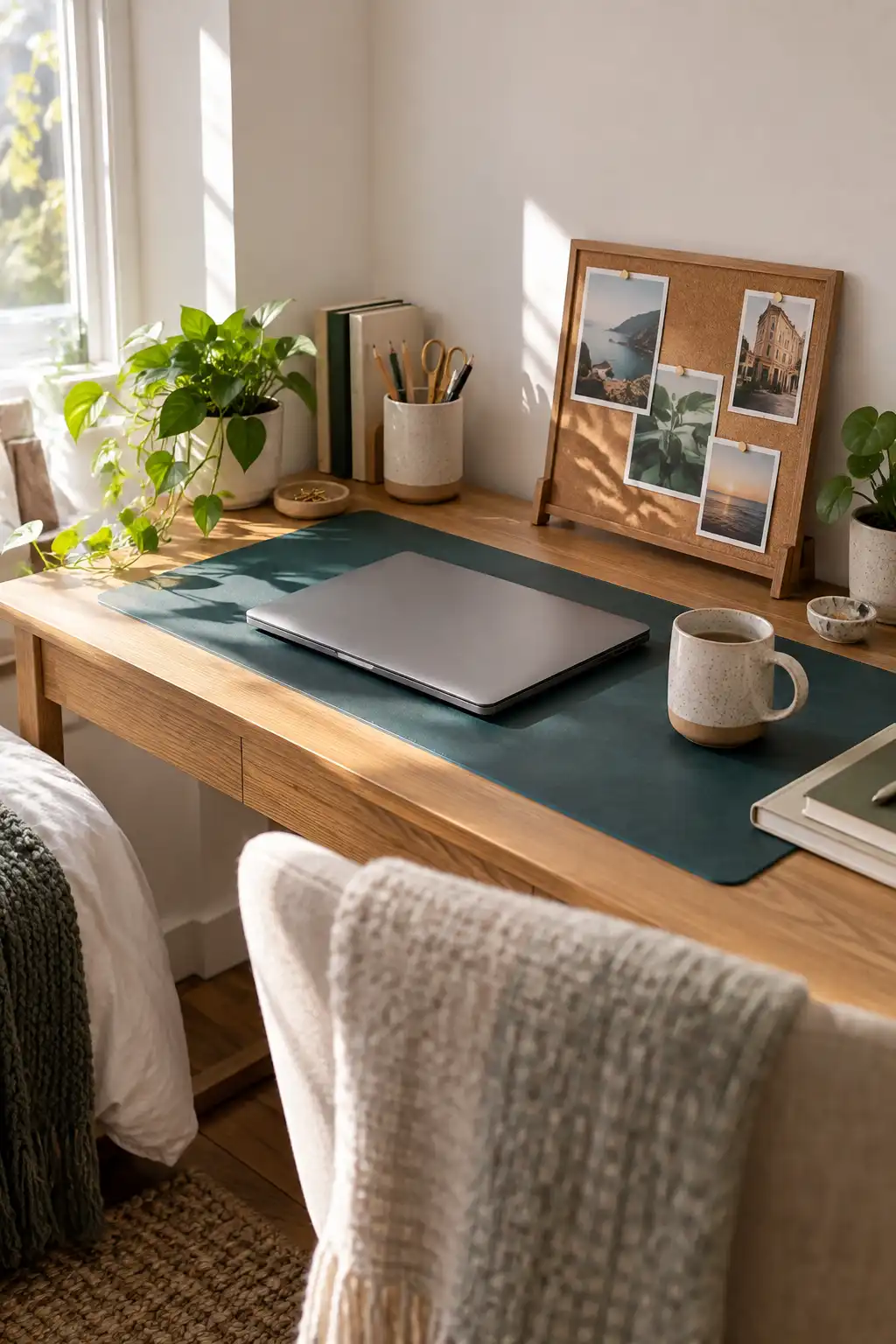
Working at a bare desk in a rented room can feel temporary even after months. A desk mat, a favorite mug, and a useful tabletop organizer give that spot a clearer identity.
For a shared room: keep supplies in a portable caddy you can put away.
For a dedicated corner: choose a larger desk mat to define the work surface.
Keep the colors related, but leave enough room to spread out a notebook. A small freestanding pinboard can hold personal photos without wall fixings. Your workspace should help you settle into work, not give you more objects to move.
💻 End-of-day reset
- Return loose tools to their holder.
- Put papers together for the next session.
- Clear the space where your hands and notebook go.
17. Turn a Kitchen Cart Into a Breakfast Station
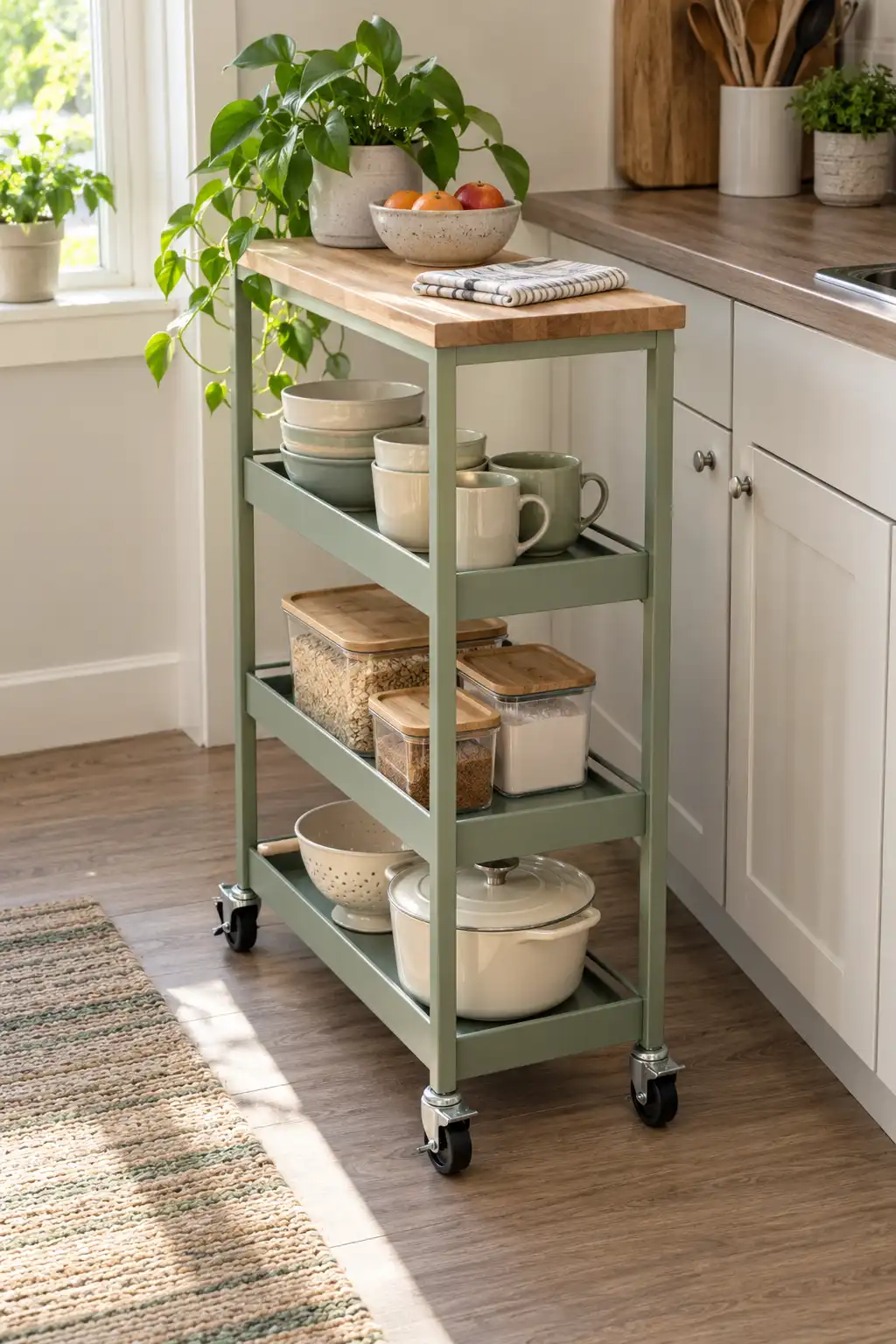
Limited cabinets do not have to decide where everything lives. A freestanding kitchen cart can hold the mugs, bowls, and breakfast supplies you reach for each morning.
- Keep daily items on the easiest shelf to reach.
- Use a bin for small packets.
- Put heavier supplies lower down.
Choose a cart that fits without narrowing the working path. If it has wheels, lock them when parked. A wooden top or colored frame gives you a finish you chose yourself, even when the fitted kitchen is completely outside your control.
18. Give an Interior Door a Fabric Detail
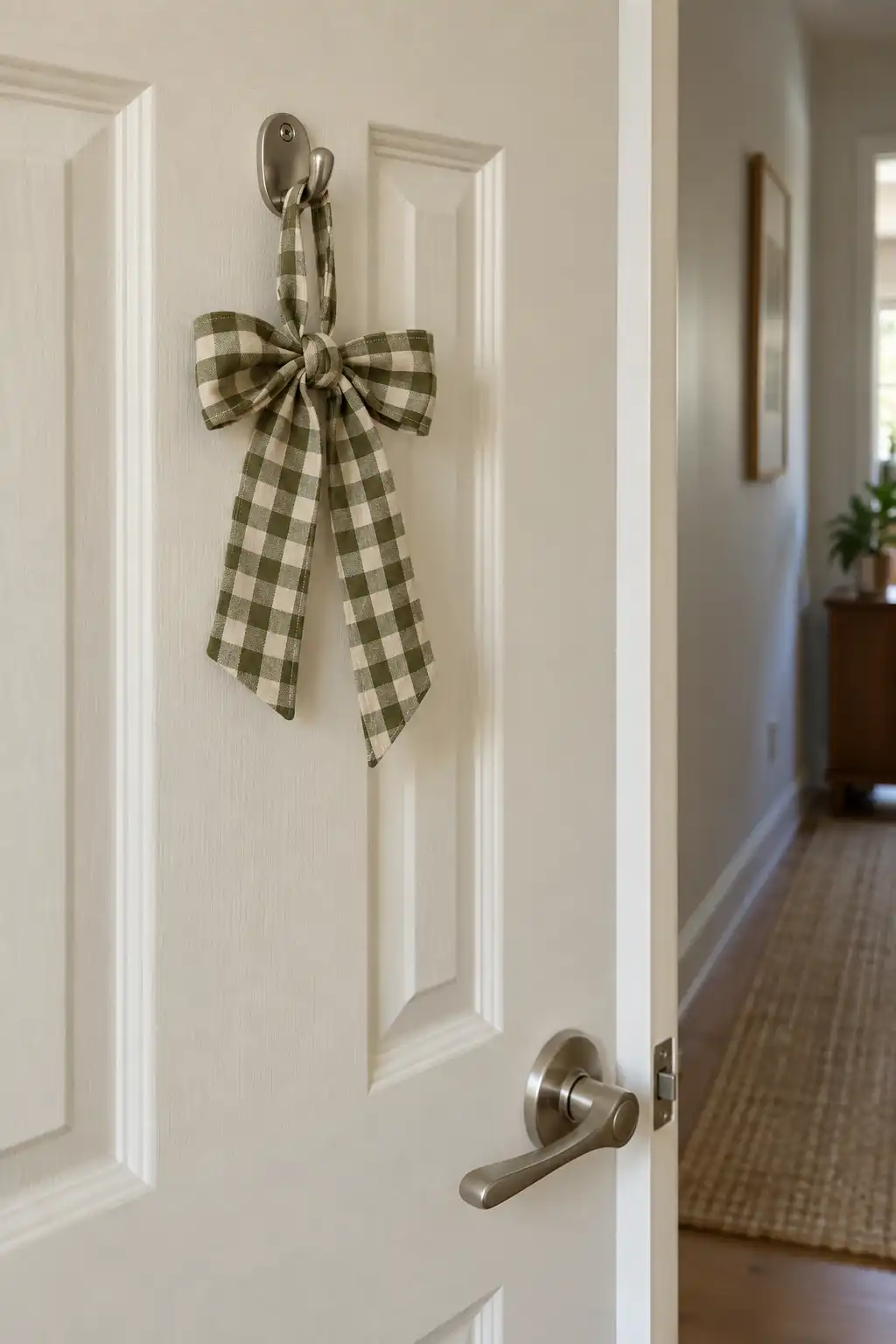
An interior door is a large blank surface that often gets overlooked. A small fabric decoration can give it character without changing its finish.
Tie a soft fabric bow or a lightweight padded ornament to a suitable existing hook. Pick a textile that connects with another room detail, such as a checked curtain or a striped cushion.
Keep it on an interior door where it will not interfere with the latch or daily use. If you use an over-door hanger, check clearance carefully. Skip anything that stops the door from closing normally or rubs against the frame.
🚪 Check before leaving it in place
- The door closes and latches normally.
- The decoration stays clear of the handle.
- The hanger does not scrape the door or frame.
- Any building restrictions are respected.
19. Make Room for the Hobby That Makes the Place Yours
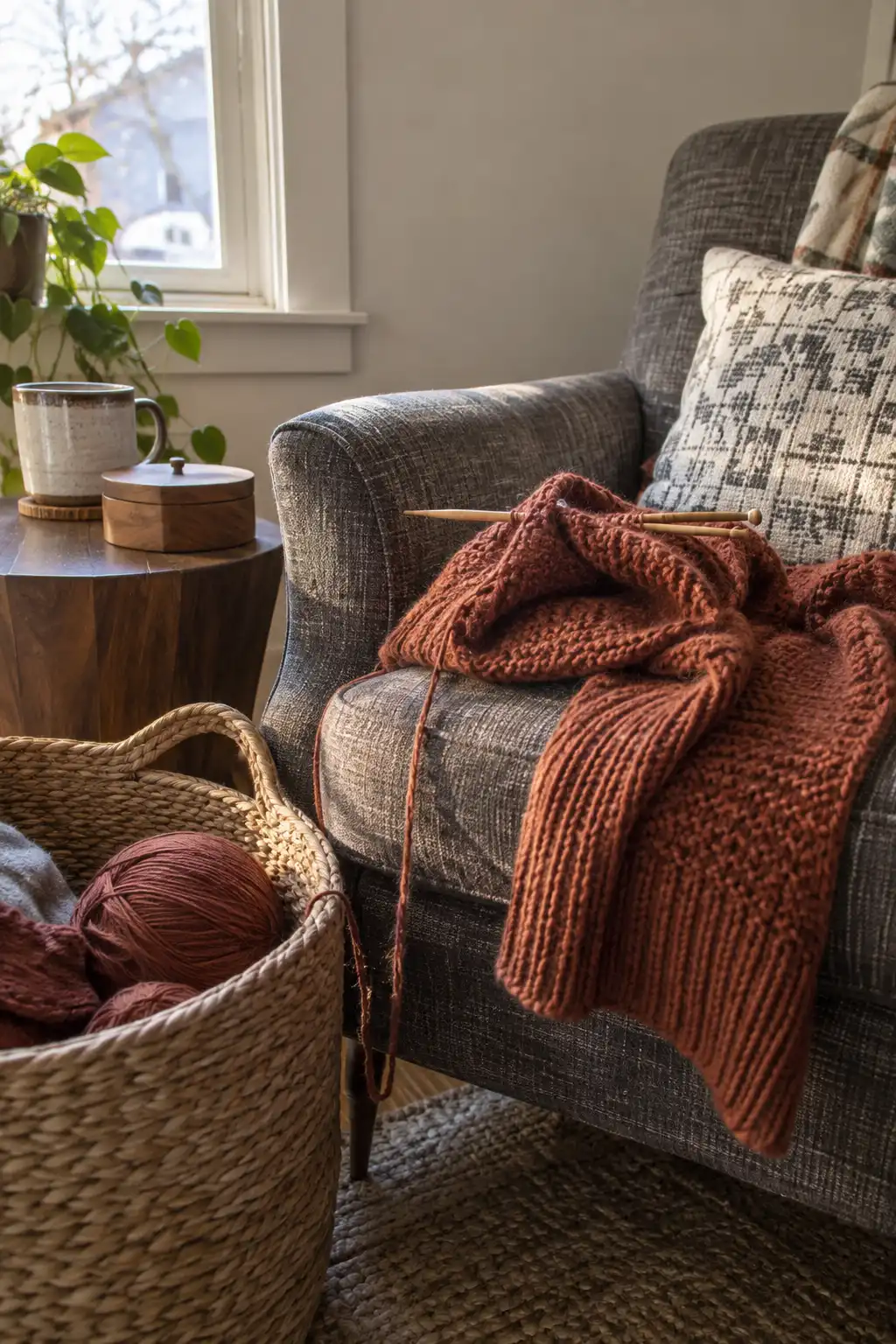
A rental feels more personal when your actual interests have a place in it. That might be a basket of knitting beside your chair, a drawing kit near the window, or a small stand for your records.
Choose the activity you already enjoy, then give its supplies a home that is easy to reach. Avoid turning it into a display you are afraid to disturb.
Keep the useful things visible and the loose bits contained. A partly finished project can make a room feel more like yours than another ornament chosen only because it matches.
🧶 Let use guide the setup
Keep the current project easy to pick up. Store spare supplies separately so your hobby corner stays ready for doing, not just looking at.