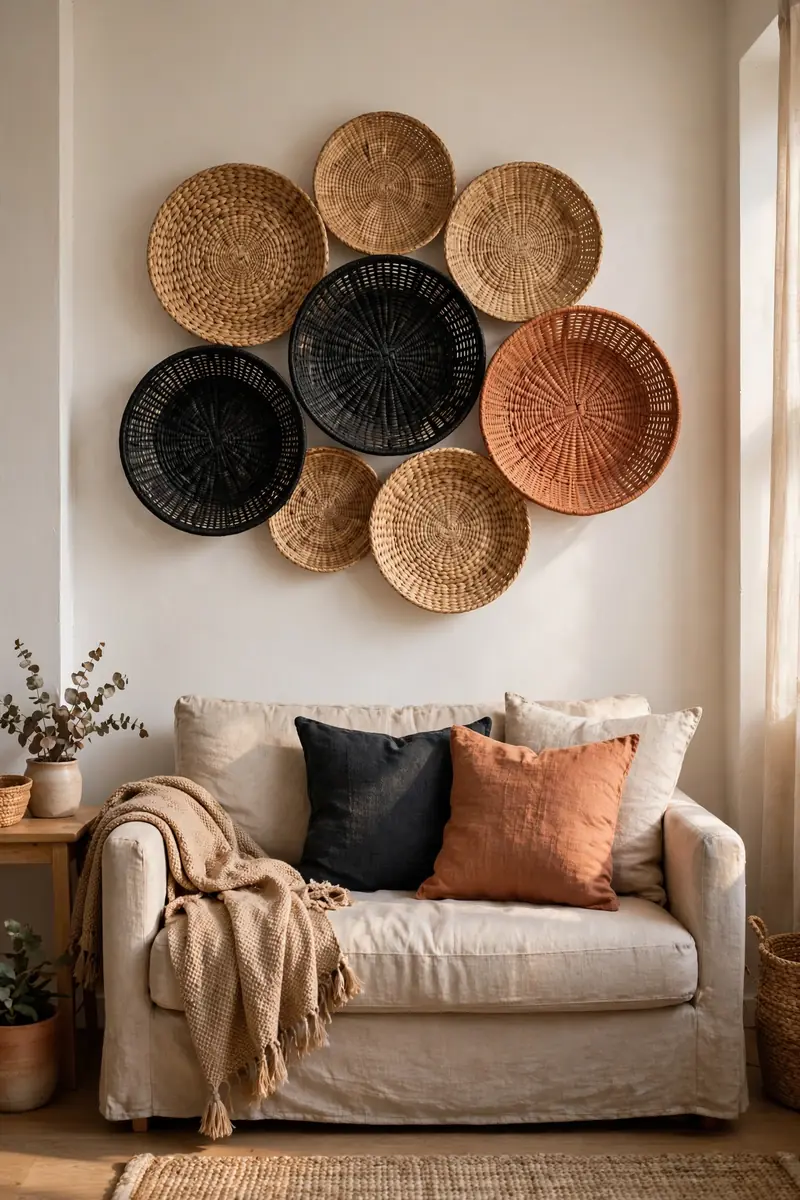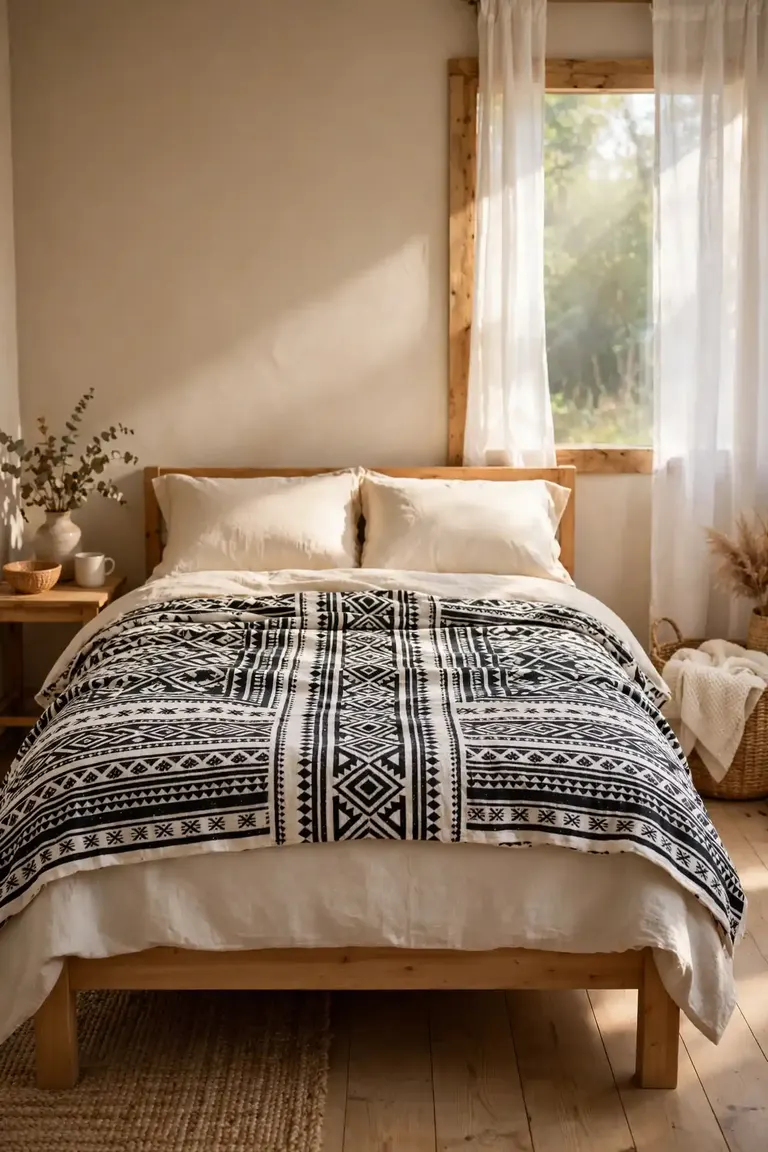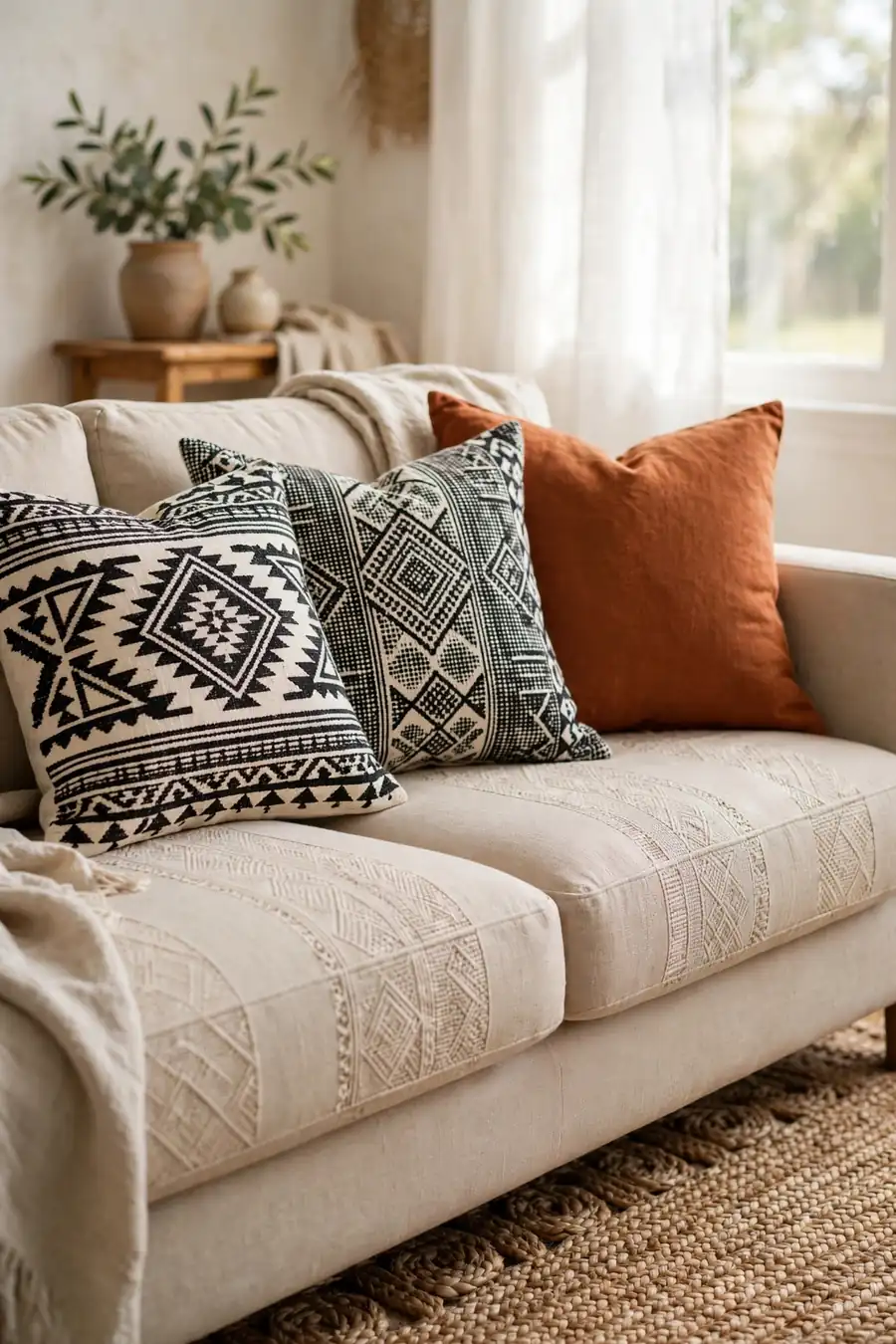

Good to knowThe room pictures in this guide were made with AI to show each idea clearly. They are not photos of a real home. Some links may be affiliate links. If you buy through them, we may earn a small fee at no extra cost to you. It never changes our honest advice.
A small room feels small for a few simple reasons. The colors are dark. The light is poor. The furniture is too big and heavy. And there is too much stuff. The good news is that you can fix all four without moving a single wall.
This guide shows you how to make a small room look bigger with 15 easy changes. We follow one room from start to finish. It is a 10 by 12 foot living room with one window. For each change, you will see why it works, how to do it, and what it costs.
These small room ideas work for living rooms, bedrooms, and small apartments. Many need no drilling and no big tools, so they are great for renters too. Pick the ones that fit your budget. Even three changes can make a clear difference.
The short answerTo make a small room look bigger, paint the walls and ceiling a light color, hang curtains high, put a large mirror across from the window, and use layers of warm light. Then choose furniture with visible legs, use a bigger rug, and keep clutter out of sight. Paint and lighting give the biggest change for the lowest cost.
simple changes, from easy to advanced
is enough to start with paint and lighting
weekends are enough for most of this plan
The Room Before
Our test room is a small living room. It measures 10 by 12 feet and has one window. It has beige walls, dark curtains, and a big sofa. The corners feel dark and the room feels tight. Nothing is “wrong” with it. It simply uses the wrong tricks for a small space.
Why This Room Feels So Small
Each problem below makes the room feel tighter. The last column shows where we fix it.
| Problem in the room | Why it makes the room feel small | Fixed in |
|---|---|---|
| Dull beige walls | They soak up light instead of bouncing it | Change 1 |
| Dark curtains hung low | They cut the window short and hide the wall height | Change 2 |
| One ceiling light | It leaves shadows in the corners | Change 4 |
| Bulky sofa | It looks heavy and covers the floor | Change 5 |
| Small floating rug | It chops the floor into small pieces | Change 6 |
| Items on every surface | The eye has no place to rest | Change 7 |
Change 1: Paint It Light, Ceiling Included
Paint is the fastest way to make a small room look bigger. Light colors bounce light back into the room. That makes the walls feel farther away. Dark colors soak up light and make the walls feel close.
Why It Works
Every paint color has a Light Reflectance Value, or LRV. It is a score from 0 to 100. A higher score means the color reflects more light. For the best paint colors for small rooms, aim for an LRV of about 70 or higher. You can often find it on the paint chip or the can.
How to Do It
- Pick a warm white, soft cream, pale gray, or light sage.
- Paint the ceiling a light color too. This makes the room feel taller.
- Use flat paint on the ceiling and a washable matte or eggshell paint on the walls.
- Test two large sample patches. Check them in the morning and at night, because light changes color.
Clean and bright
Cozy and warm
Calm and modern
Fresh and gentle
Soft and flexible
Renting?Ask your landlord before you paint. If paint is not allowed, try light removable wallpaper or bright fabric. Find more ideas in our renter-friendly upgrades.
Change 2: Hang Curtains High and Wide
Curtains change how tall and wide your window looks. When you hang them right above the window frame, the window looks short. When you hang them high and wide, the window looks bigger and the wall looks taller. This also lets in more natural light.
Why It Works
The eye follows vertical lines. Curtains that start near the ceiling and touch the floor draw a long line up the wall. The room feels taller without changing the real height.
How to Do It
Hang the rod halfway between the window and the ceiling, or even higher.
Extend the rod this far past each side of the window frame.
Let the curtains just touch the floor, or hover about half an inch above.
Before
- Rod right above the frame
- Curtains cover the glass
- Short, dark fabric
After
- Rod near the ceiling
- Curtains rest beside the glass
- Floor-length, light fabric
Mistake to avoidDo not use heavy, dark curtains in a small room. Pick light, simple fabric such as linen or cotton in white, cream, or a soft color that matches your walls.
Change 3: Put a Large Mirror Across From the Window
A mirror is a classic trick to make a small room look bigger. It copies the window, the light, and the view. That adds depth and brightness. It feels like the room goes on farther than it does.
Why It Works
Natural light is the best free tool you have. A mirror placed across from the window catches that light and sends it back. The reflection also shows the outdoors, so the room feels connected to a bigger space.
How to Do It
- Choose a big mirror. One large mirror beats three small ones.
- Place it on the wall that faces the window, or at a right angle to it.
- Hang it so the center is about eye level, around 57 to 60 inches from the floor.
- Check what it will reflect first. A plant or the window looks great. A messy shelf does not.
| Mirror position | Effect | Result |
|---|---|---|
| Across from the window | Doubles daylight and adds depth | Best |
| Next to the window, on a side wall | Adds some light | Good |
| On a wall far from any light | Reflects only shadows | Weak |
No-drill tipLean a tall floor mirror against the wall. It needs no holes. For more ideas, see our no-drill decor guides.
Change 4: Layer the Lighting, Kill the Dark Corners
One ceiling light makes harsh light in the middle and shadows in the corners. Shadows make walls feel close. Good lighting for a small room uses three layers, so every corner has a glow.
The Three Layers of Light
Main light
Your ceiling light. It fills the room with general light.
Task light
A lamp by the sofa or desk. It gives light where you read or work.
Accent light
A small lamp or string light in the darkest corner. It chases shadows away.
Choose the Right Bulbs
Use warm white bulbs, about 2700K to 3000K. They feel cozy and make skin and wood look good. Use the same bulb color in the whole room. Mixed colors make the room look messy.
Lighting Checklist
- One main light overhead
- One lamp at seat height
- One light in the darkest corner
- All bulbs the same warm color
Change 5: Swap Bulky Furniture for Leggy Pieces
Big, heavy furniture makes a small room feel full. Furniture with slim legs feels light. You can see the floor underneath, and the eye reads that as extra space. This is one of the best small living room furniture tricks.
Why It Works
Designers call it “visual weight.” A sofa that sits flat on the floor looks heavy. A sofa on legs looks lighter, even if it is the same size. The open space underneath also lets light travel across the floor.
How to Do It
- Look for sofas and chairs with legs that show at least 6 inches of floor.
- Choose low backs and slim arms. They block less of the room.
- Pick glass, metal, or light wood tables. They look less heavy than dark, thick wood.
- Use pieces that do two jobs, like a storage ottoman or nesting tables.
Smart Swap Chart
| Instead of | Try | Why |
|---|---|---|
| Skirted, floor-length sofa | Sofa with visible legs | Shows the floor, feels lighter |
| Big, dark coffee table | Round glass or slim table | Smooth edges, easy to walk around |
| Bulky armchair | Small open-arm chair | Less visual weight |
| Heavy TV cabinet | Wall shelf or slim console | Frees up floor space |
Mistake to avoidDo not squeeze in a huge sectional because it is comfortable. In a room under 120 square feet, a loveseat and one chair usually feel better and leave room to walk.
Change 6: Size the Rug Up, Not Down
Many people buy a tiny rug to “save space.” It does the opposite. A small rug cuts the floor into pieces and makes the room look chopped up. A larger rug makes the floor look wide and calm.
Why It Works
When the front legs of your sofa and chairs sit on the rug, the furniture and rug feel like one group. The room looks planned, and the floor looks bigger because the eye sees one large shape instead of many small ones.
How to Do It
- Choose a light color or a soft pattern, which opens the floor.
- Leave about 6 to 12 inches of bare floor around the rug edges.
- If the rug has stripes, run them toward the longest wall.
- Pick a low pile. It lies flat and is easy to clean.
Rug Size Guide for Small Rooms
| Room size | Good rug size | Where to place it |
|---|---|---|
| About 9 x 10 ft | 5 x 8 ft | Front legs of sofa and chairs on the rug |
| About 10 x 12 ft | 6 x 9 ft | All seating legs on, or front legs on |
| About 12 x 14 ft | 8 x 10 ft | All furniture legs on the rug |
Mistake to avoidDo not let the rug float alone in the middle with furniture far away. It looks like a small island and shrinks the room.
Change 7: Clear the Clutter, Hide the Rest
Clutter is the quiet enemy of small spaces. Every extra item pulls at the eye. In a small room, that makes things feel crowded and loud. Clear surfaces make the room feel calm and bigger.
Why It Works
Empty space, also called negative space, is part of good design. It gives your eyes a break. When surfaces are clear, the room looks bigger because you see more wall, more floor, and more light.
Where to Hide the Rest
| Item | Smart hiding spot |
|---|---|
| Remotes, chargers, small things | Lidded box or tray on the table |
| Blankets and pillows | Woven basket or storage ottoman |
| Books and papers | Closed cabinet or fabric bins on a shelf |
| Seasonal items | Boxes under the bed or on top shelves |
| Cords | Cord clips and a cable box |
10-Minute Declutter Checklist
- Clear the coffee table, then put back only three things
- Collect loose items into one basket
- Tuck cords behind furniture
- Follow “one in, one out” for new items
Need more space-saving ideas that do not harm walls? Browse our damage-free storage guides.
Change 8: Go Vertical With Storage to the Ceiling
Floor space is precious in a small room, but wall space is often unused. Tall storage uses that space. It also pulls the eye upward, which makes the ceiling feel higher.
Why It Works
A tall, narrow shelf holds more than a wide, short one, yet takes less floor. When the shelf matches the wall color, it almost disappears, and the room looks neat and open.
How to Do It
- Pick a narrow bookcase or wall shelves that go up high.
- Paint it the same color as the wall, or choose white.
- Use matching bins on the shelves so everything looks tidy.
- Always attach tall furniture to the wall with an anti-tip strap for safety.
The Three Storage Zones
Top shelves
Seasonal items, extra blankets, things you rarely need.
Middle shelves
Everyday items and a few nice decor pieces at eye level.
Bottom shelves
Heavy items and baskets, easy to pull out.
Renter tipChoose a freestanding tall bookcase instead of drilling many shelves. Use over-the-door hooks and slim wall pockets for extra space.
Change 9: Keep the Palette Tight (Three Colors, Tone on Tone)
Too many colors cut a small room into pieces. Each color pulls the eye in a new direction. A tight color palette makes everything flow, so the room feels like one calm space.
Why It Works
When colors repeat in a pattern, the eye moves smoothly across the room. “Tone on tone” means using different shades of the same color, like light, medium, and deep green. It adds depth without adding noise.
The 60-30-10 Formula
| Role | Share | Where to use it |
|---|---|---|
| Main color | 60% | Walls, big sofa, curtains |
| Second color | 30% | Rug, chair, shelves |
| Accent color | 10% | Pillows, art, small decor |
Quick tipPick your main color first. Then choose a second color from the same family, and one accent that stands out a little. Repeat each color in at least two places.
Change 10: Style Shelves With the 3-5-7 Rule
Shelves can look neat or messy, even with the same items. The difference is how you group them. The 3-5-7 rule is a simple styling trick that makes shelves look planned and calm.
What Is the 3-5-7 Rule?
Group items in odd numbers: 3, 5, or 7. Odd groups feel more natural than even groups, because the eye does not pair them up. Mix tall, medium, and short items, and leave some empty space on every shelf.
How to Do It
- Pick one tall item, one medium item, and one small item for each group.
- Stack a few books flat, then place a small object on top.
- Add one plant or green stem for life.
- Leave about one-third of each shelf empty.
Change 11: One Large Art Piece Beats a Cluttered Gallery Wall
Many small frames can make a small wall look busy. One large piece looks calm and bold. It gives the room a clear focal point, so the eye has one place to land.
Why It Works
A large piece makes the wall feel bigger because it scales up. Small items on a big wall can feel lost. In a small room, one strong piece does more than ten small ones.
How to Do It
- Choose art about two-thirds as wide as the sofa below it.
- Hang it so the center is about 57 inches from the floor.
- Pick soft colors that match your palette.
- Leave 6 to 8 inches between the sofa and the frame.
Before
- Eight small frames
- Different sizes and colors
- Wall feels busy
After
- One large frame
- Colors match the room
- Wall feels calm
Change 12: Add Reflective Accents for an Expensive Feel
Small shiny touches catch the light and make a room feel finished. Think of a brass lamp base, a glass vase, or a metal tray. These small decor accents add a little glow without adding bulk.
Why It Works
Shiny surfaces reflect light, just like a mirror does on a smaller scale. A little shine breaks up matte surfaces and adds depth. It also makes a simple room look more expensive.
Shine Checklist
- One metal accent, such as brass or gold tone
- One glass piece, such as a vase or lamp base
- One mirror or mirrored frame
Mistake to avoidUse shine in small doses. Three to five shiny items are enough. Too many can look cluttered or flashy.
Change 13: Keep Doors, Trim, and Ceiling in the Same Color Family
Look at the edges of your room. Where the wall meets the ceiling, the door, and the baseboard, the eye stops. When those parts are different colors, the room looks cut into boxes. When they are close in color, the eye glides across and the room feels larger.
How to Do It
- Use the same soft white, or a very close shade, on trim, doors, and the ceiling.
- Use flat paint on the ceiling and satin or semi-gloss on trim. The color matches while the finish suits each part.
- Keep wall color just a shade or two away from the trim color.
Before
- Dark door and white trim
- Beige walls
- Eye stops at every edge
After
- Soft white door and trim
- Light walls and ceiling
- Eye glides across the room
Change 14: Protect the Sightline From the Door
A sightline is what you see when you look straight into a room from the doorway. A clear sightline makes a room feel deeper. A blocked one makes it feel stuffed.
Try the Door Test
- Stand in the doorway. Look straight ahead and notice what you see first.
- Find the blockers. A tall shelf, a big chair, or a pile of boxes will stop your eye early.
- Move or lower them. Place tall pieces along the side walls, and keep low pieces in the middle.
- End on something nice. A window, a plant, or a piece of art makes a great last stop.
Quick tipKeep a clear walking path about 30 inches wide. It looks open and feels easy to move through.
Change 15: Finish With Budget Premium Touches
The last step is the fun one. Small upgrades make the room feel finished and expensive. Most cost less than $50, so you can add them one at a time.
Budget Touch Ideas
| Touch | Approx. cost | What it adds |
|---|---|---|
| Two textured pillow covers | $20 to $40 | Soft depth and comfort |
| One real or good faux plant | $15 to $40 | Life and a fresh feel |
| New cabinet knobs or hooks | $10 to $30 | A custom look |
| Soft throw blanket | $20 to $45 | Warmth and texture |
| Metal or wood tray | $15 to $35 | Tidy grouping for small items |
Budget Touch Checklist
- Two textured pillow covers in your palette colors
- One plant in a simple pot
- One matching set of hooks or knobs
- One soft throw blanket
The Room After
The same room now feels light, tall, and open. The walls seem farther away. The corners glow. We did not knock down a wall or buy a bigger home. We used light, height, and smart choices.
| Part of the room | Before | After |
|---|---|---|
| Walls and ceiling | Dull beige | Light and bright |
| Curtains | Dark and low | Light and high |
| Lighting | One harsh light | Layered warm light |
| Furniture | Bulky and heavy | Leggy and light |
| Rug | Small and floating | Large and anchoring |
| Surfaces | Busy and cluttered | Calm and tidy |
Which Changes Matter Most? (Impact Chart and Weekend Plan)
You do not need to do all 15 steps at once. Some changes give a bigger result than others. This chart shows our estimate of how much each one helps a small room feel bigger. Start at the top and work down.
Your Two-Weekend Plan
- Weekend 1, Saturday: Declutter the room, clean the walls, and paint the ceiling and walls.
- Weekend 1, Sunday: Paint the trim, hang high curtains, and add lamps with warm bulbs.
- Weekend 2, Saturday: Add the mirror, the larger rug, and your new furniture pieces.
- Weekend 2, Sunday: Style the shelves, hang the art, and add the final budget touches.
What This Makeover Costs: Three Budget Tiers
You can make a small room look bigger on almost any budget. Pick the tier that fits you. Each tier includes everything from the one before it. Prices are rough estimates. They change by store, brand, and area.
Paint and Light Refresh
The biggest change for the least money.
Layout and Mirror Upgrade
Adds the pieces that open the room.
Furniture Swap
Adds lighter furniture and finishing touches.
$300: Paint and Light Refresh
This tier gives you a fresh, brighter room. It covers the biggest changes: color, light, and height.
| Item | Approx. cost |
|---|---|
| Light paint for walls, ceiling, and trim | $90 to $120 |
| Brushes, rollers, tape, and drop cloth | $30 to $40 |
| One extra lamp and warm bulbs | $45 to $65 |
| Light curtains and a high rod | $60 to $80 |
| Baskets and bins for decluttering | $20 to $30 |
$600: Layout and Mirror Upgrade
Do everything in the $300 tier. Then add these pieces to change how the room feels and flows.
| Add this | Approx. cost |
|---|---|
| Large mirror across from the window | $80 to $150 |
| Bigger rug (5 x 8 or 6 x 9) | $100 to $180 |
| Tall shelf or wall storage | $60 to $110 |
| One large art piece | $40 to $90 |
$1,000+: Furniture Swap
Do everything above. Then replace the heaviest items and add the final polish.
| Add this | Approx. cost |
|---|---|
| Leggy sofa or loveseat | $400 to $800 |
| Slim coffee table or nesting tables | $80 to $200 |
| Reflective accents, such as a metal tray and glass vase | $40 to $90 |
| Textured pillows, throw, and plants | $60 to $120 |
On a tight budget?Start with paint and lighting. They change the room the most for the least money. Add one new piece each month after that.
Frequently Asked Questions
What is the best color to make a small room look bigger?
Light, soft colors work best. Warm white, cream, pale gray, and soft beige reflect light and make walls seem farther away. Use the same color family on the walls, trim, and ceiling for the biggest effect. Look for paint with a high LRV, about 70 or more.
How to visually enlarge a small room?
Use light paint, hang curtains high, add a large mirror, and layer your lighting. Choose furniture with visible legs, use a bigger rug, and keep clutter off surfaces. Together, these steps make the room feel open, bright, and tall.
What is the 3-5-7 rule in decorating?
It is a styling rule. Group items in odd numbers: 3, 5, or 7. Odd groups look natural and balanced. Mix different heights and leave some empty space, so the display does not look crowded.
What makes a home look cheap?
Clutter, one harsh ceiling light, mismatched colors, tiny rugs, and curtains hung too low can all make a home look cheap. Too many small decor pieces also look messy. Fewer, better items look more expensive.
What colors make a room look expensive?
Warm whites, cream, soft gray, deep green, navy, and warm wood tones feel rich. Add small touches of brass or gold. Keep the palette to about three colors for a calm, polished look.
What color mistakes should I avoid in my living room?
Avoid too many bright colors at once, dark walls in a tiny room with little light, and a ceiling that clashes with the walls. Also avoid choosing paint without testing it in your room’s real light.
Do mirrors really make a small room look bigger?
Yes, when you place them well. A large mirror across from a window reflects daylight and the view, so the room feels brighter and deeper. A mirror in a dark spot only reflects shadows, so check what it will show first.
Should I paint a small room a dark color?
You can, but it will not make the room look bigger. Dark colors make walls feel closer. They can make a small room feel cozy, though. If you love dark paint, use it in a room with lots of daylight and add plenty of warm lamps.
What size rug is best for a small living room?
For a room around 10 by 12 feet, a 6 by 9 foot rug often works well. Aim to place at least the front legs of your sofa and chairs on the rug. Leave about 6 to 12 inches of bare floor around the edges.
How to make a small room look bigger before and after?
Before: dark walls, curtains hung low, a bulky sofa, one harsh ceiling light, a small floating rug, and clutter on every surface. After: light walls and ceiling, curtains hung high and wide, a large mirror across from the window, layered warm lighting, leggy furniture, a larger rug, and clear surfaces. Paint and lighting give the biggest before-and-after change for the lowest cost.
How to rearrange your room to make it look bigger?
Start with the doorway test: stand in the doorway and keep a clear 30-inch walking path, with nothing tall blocking your view. Put the largest piece on the longest wall, move tall furniture to the side walls, and keep the window wall clear. Place a large mirror across from the window, pull furniture slightly away from the walls so the floor shows, and leave the centre of the room open. This rearrange costs nothing and makes the room feel deeper right away.
Conclusion
Making a small room look bigger is about smart choices, not bigger walls. Light colors, high curtains, a large mirror, and layered lighting do most of the work. Leggy furniture, a bigger rug, and less clutter finish the job.
You do not have to change everything. Start with paint and lighting, then add one change at a time. Each step makes your room feel brighter, taller, and calmer. Renting? Many of these ideas need no drilling. Explore more in our renter-friendly upgrades, no-drill decor, and damage-free storage guides.
Your next stepLook at your room today and pick one change from this list. Small steps add up to a big difference.

Elora Vania here, founder and Senior Editor of Home Aure. With years of experience in interior styling and home decor, I created this site to bring thoughtful, practical design advice to real homes—helping you create spaces that feel warm, personal, and beautifully lived-in.