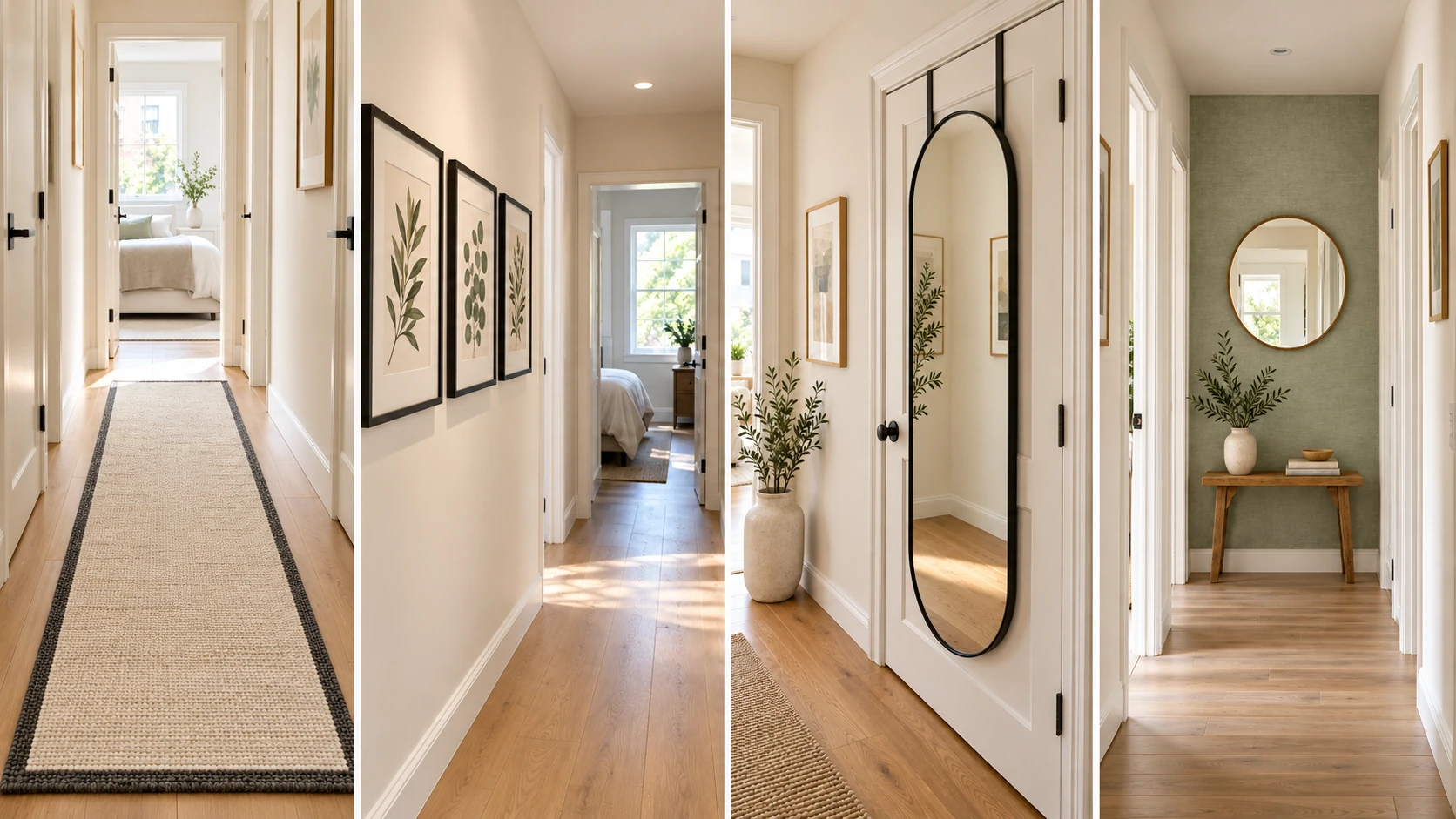
A hallway should not make you turn sideways to get past the decor. Yet it is easy to bring home a console, a basket, and a plant, then realize you have furnished the only route to the bedroom. Rentals add another snag. The wall finish may be uncertain, and a fitted shelf is rarely a casual weekend choice.
The most useful narrow hallway decor ideas for renters work with the space you already have. Think a flat runner that clears the bathroom door, a small row of prints, or warm light beside the spot where you hunt for your keys. Cream, wood tones, muted green, and thin dark outlines can give plain walls some shape without filling every corner.
Start with the thing that bothers you each day. Maybe the floor feels bare, the lighting is harsh, or the far wall looks forgotten. Pick one change for that problem, live with it, then decide what comes next. These ideas give you room to choose.
1. Lay a Flat Runner With Bare Floor Along Both Sides
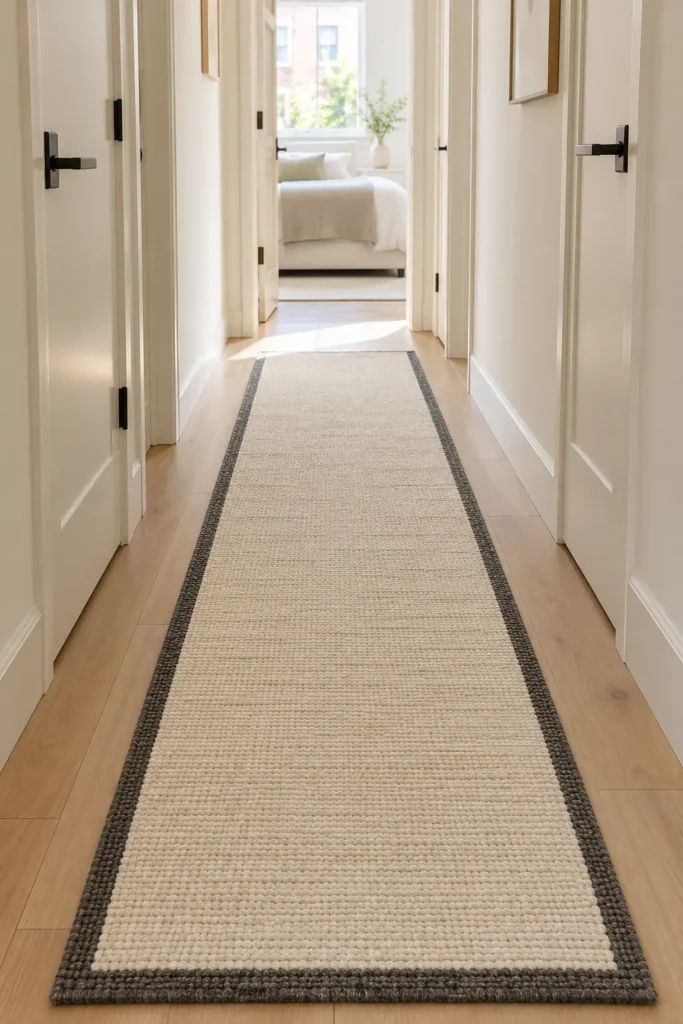
Leave a visible strip of floor on both sides of your runner. It gives the rug a clear outline instead of making it look wedged between the skirting boards.
Choose the pattern based on what is already there:
- With dark doors, a cream runner with a thin charcoal border echoes the trim.
- Beside pale wood, a small woven pattern brings texture without another bold color.
Open every nearby door across the rug and pad together before settling on the spot. For the pad, follow your flooring manufacturer’s material guidance, especially if you do not know the rental’s floor finish. rugpad.com
Choose for the way you use the hall
Muddy shoes
Read the cleaning label. A washable look does not mean a rug can go in your machine.
Bare feet
Feel a sample if possible. A coarse weave can look softer in a photo than it feels.
Frequent vacuuming
Bound ends avoid loose fringe catching in the vacuum head.
2. Hang Lightweight Frames in One Level Row
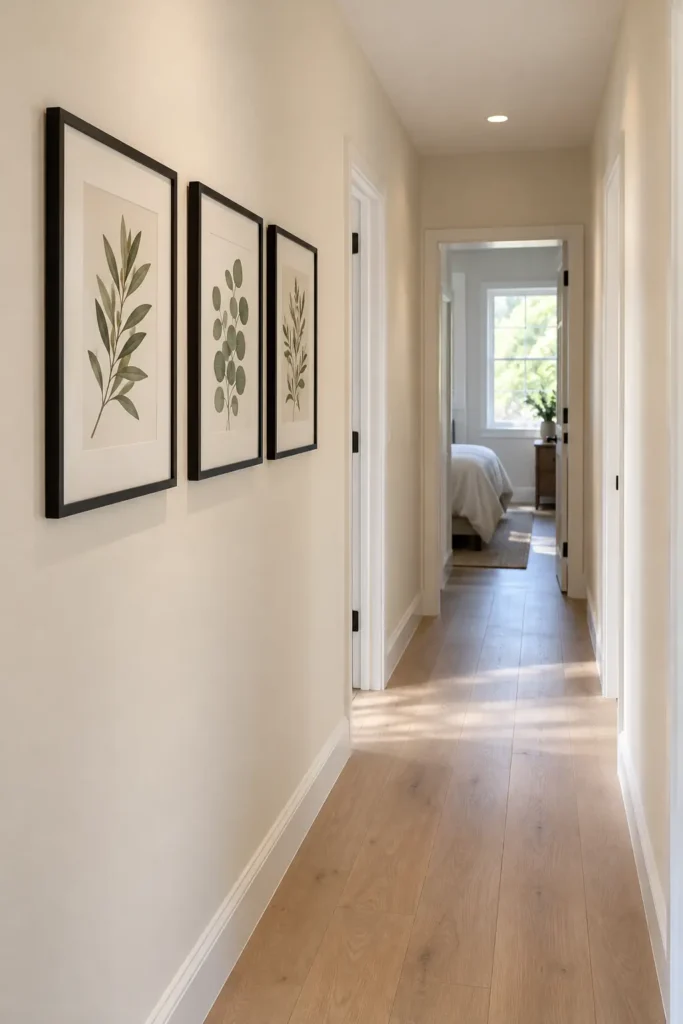
A small gallery works well on the stretch between doorways. Keep the frames on one wall so your eye has a clear line to follow.
Choose one family of pictures. Pair simple leaf prints with pale mats and thin black frames for a crisp outline. Soft landscapes in oak frames suit a floor that already has warm wood tones.
Use frames of the same size to make spacing easier, and choose lightweight glazing if available. Removable picture strips have weight and surface limits, so check the complete frame before choosing a hanger. Leave enough clear space around the light switch for someone carrying a laundry basket. Command™ Brand
Plan the row before anything sticks
Arrange the frames on the floor. Use a scrap of card as a spacer between them.
Choose a top edge or a centerline for alignment. Measure it against a fixed point, such as the door trim.
Follow the hanger’s preparation and waiting instructions. Keep its removal tabs accessible.
3. Fit a Slim Mirror to the Back of a Suitable Door

A hallway mirror does not need a console underneath it. A mirror made for door mounting gives you a place for a quick coat check while leaving the floor alone.
A thin dark frame gives definition beside white trim. An oval outline softens the straight edges of nearby doorframes.
Check the fit before choosing the shape:
- Match the supplied brackets to the door thickness and the maker’s instructions.
- Check that the door still closes and latches without the brackets rubbing the frame.
Use the mirror’s specified hardware. If it shifts or rattles as the door moves, stop and resolve the fit rather than adding improvised tape.
Check the reflection as well as the fit
✅ A useful view
Look for a reflection of a clear wall, artwork, or daylight.
Check the view from the doorway you use most often.
🚫 An awkward view
Avoid placing a bright exposed bulb in the main reflection.
A mirror facing a shoe pile will repeat the clutter too.
4. Brighten a Dark Stretch With Rechargeable Wall Lights

The ceiling bulb can be fine for finding shoes and still feel harsh when you come home after dark. A small light aimed at a print or a blank wall gives that spot a softer focus.
Choose for the light it gives:
- Look for a warm setting and brightness control.
- Choose a shallow shape that a passing shoulder or tote bag will not catch.
Start with one light and check the effect at night before repeating it along the wall. Some rechargeable models use magnetic heads and adhesive mounting pads. Leave room to remove the light for charging. ezvalo.com
💡 Read the mounting details
Cordless describes the power source. Check whether the base needs screws or adhesive, whether it suits the wall finish, and how it is removed. A detachable lamp head does not make its base removable.
5. Use Removable Wallpaper on the Short End Wall

Muted green at the end of a pale hallway gives your eye somewhere to land. Keep the long side walls quiet so the finish has room to stand out.
A plain sage panel works beside botanical prints and pale wood. A subtle linen-look print brings texture beside black doors and simple frames. Keep the paper on the wall rather than carrying it across trim or door hardware.
Sample first. Check your rental terms and the product’s surface requirements. Order a sample and test it before buying full rolls. Removable is not a promise that every painted surface will stay untouched. For patterns, measuring and hanging help, see our removable wallpaper accent wall ideas. Tempaper & Co.
Move from a sample to a wall plan
BEFORE BUYING ROLLS
View the sample in daylight and under the hallway light.
Follow the maker’s test period and removal method. Check the paint beneath the sample.
AFTER A SUCCESSFUL TEST
Mark sockets, switches, and wall edges on your measurements.
Use the maker’s coverage guide and allow for any pattern repeat before ordering.
6. Hang a Flat Textile for Texture Without a Deep Frame
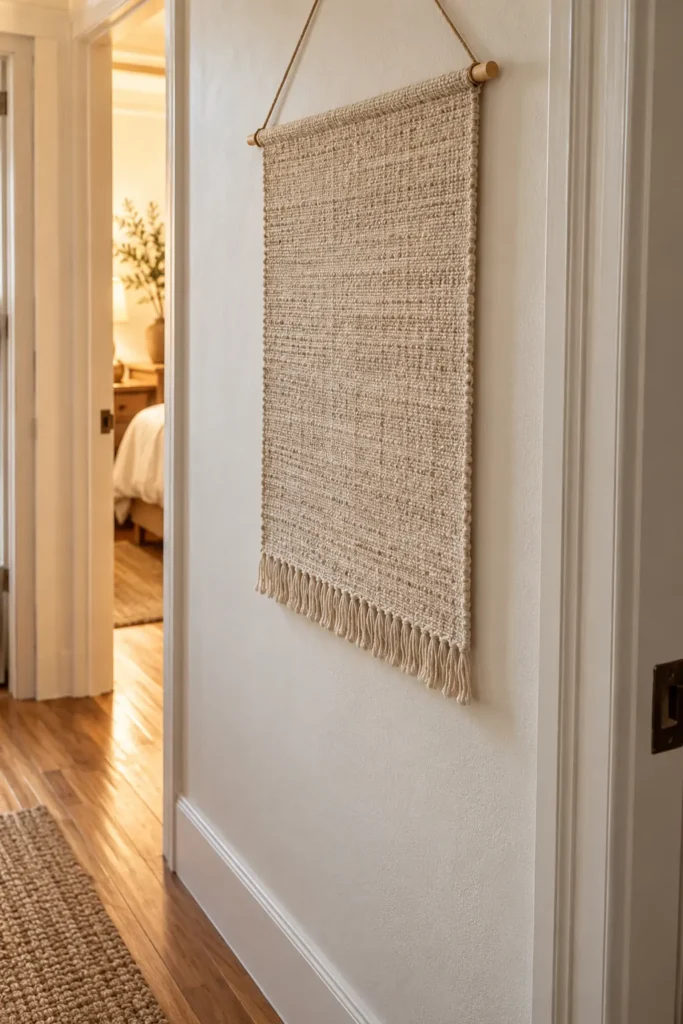
A flat cotton hanging brings the texture of a woven runner to a hallway that already has enough pictures.
- Choose cream or oat beside botanical art so the two finishes do not compete.
- Keep the fabric and its dowel inside the width of the wall section.
Check the weight of the whole hanging, including the rod, before choosing a mount. Keep fringe away from passing bags. Smooth folds according to the care label and let the bottom edge fall straight.
Let the wall decide the fabric
| Solid woven panel | Printed fabric panel |
|---|---|
| A quiet choice beside a group of pictures. | A choice for a blank wall where the fabric becomes the artwork. |
| View a sample from the side to check raised loops and thickness. | View the whole design to check its direction and where it will be cropped. |
| Check whether the weave is easy to dust with the tools you have. | Check the print color under the hallway light before choosing nearby accessories. |
7. Set an Open-Leg Console Inside an Existing Recess
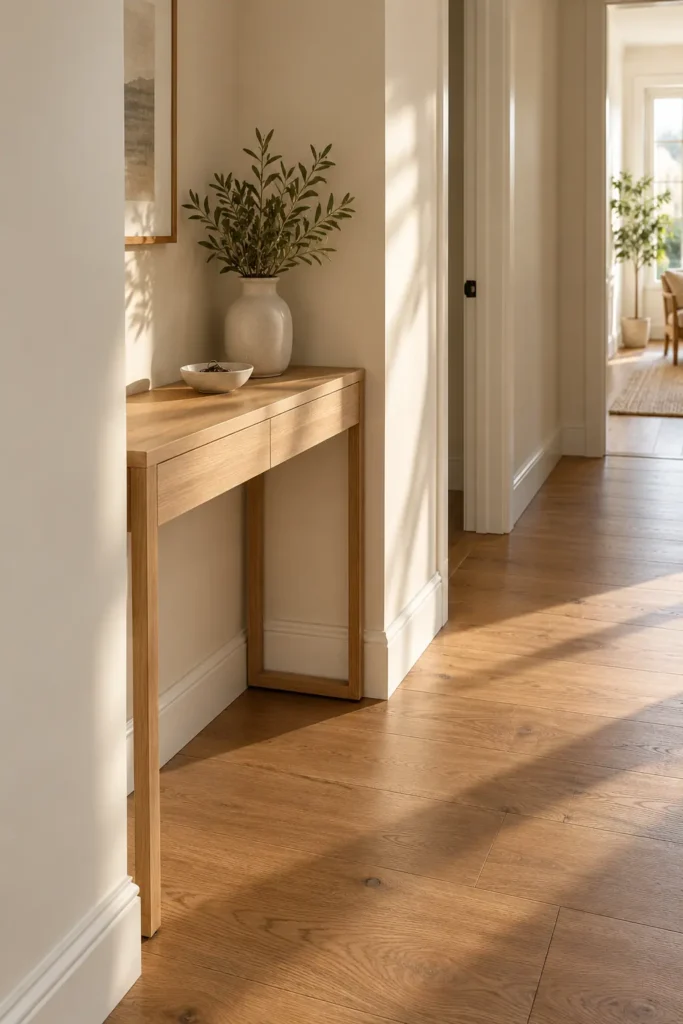
Measure the recess before shopping for a console. An open base shows the floor beneath it, while an oak or dark wood top picks up the tones in a runner or nearby door.
Keep the top within the recess. Allow for skirting boards that hold the legs away from the wall. Measure the assembled table’s outermost points, including any projecting top edge.
Walk past with a laundry basket held where you usually carry it.
A small bowl is enough for daily keys. Leave the space underneath empty so the table stays visually light. Follow the maker’s anchoring instructions. If the required fixing is not allowed in your rental, choose another piece.
8. Hide Hats and Gloves in an Over-Door Pocket Organizer
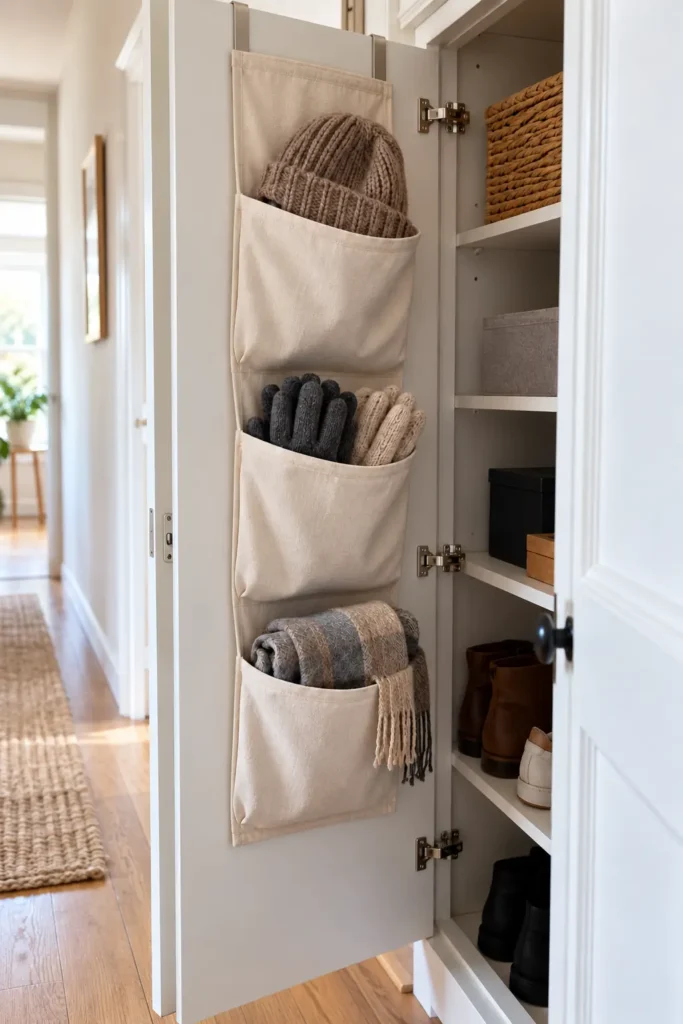
The gloves that vanish each morning need a home. Use a fabric pocket organizer inside a hallway cupboard door.
Give the pockets clear jobs:
- Use upper pockets for hats and spare gloves.
- Put the scarf you wear most in a middle pocket.
Keep the contents soft and light, within the organizer’s rated capacity. Bulging pockets can stop the cupboard closing even when the empty organizer fits. Choose fabric close to the door color if you want the storage to look quiet whenever the door opens.
Measure the door before buying
9. Apply Static-Cling Privacy Film to a Hallway Window
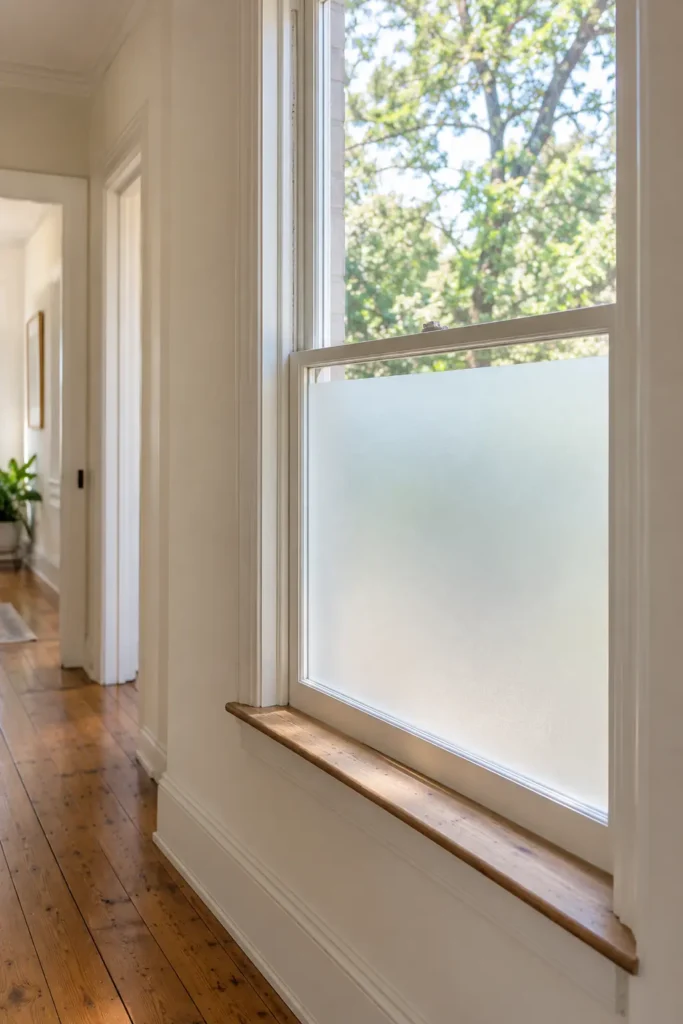
A hallway window can feel less exposed without adding a curtain that hangs into the passage. A frosted static-cling film gives the glass a quiet finish and leaves the sill free. Gila Window Film
Beside botanical prints, choose plain frosting so the window does not become another busy pattern. For an otherwise bare corridor, a subtle reeded look can carry more of the detail.
Check the exact film and window together. Static-cling and adhesive films are different products, and the maker’s glass and installation guidance still matters. Test privacy with the hallway light on after dark before relying on it. Gila Window Film
Choose coverage for the sightline
Full pane
A starting point when neighboring windows face the whole pane. Check the film’s privacy rating.
Lower pane
Keep an upper view only when it stays above the sightline you need to screen.
Patterned band
A decorative detail. Clear glass around the band still leaves a view through.
10. Swap Plain Cupboard Knobs and Keep the Originals
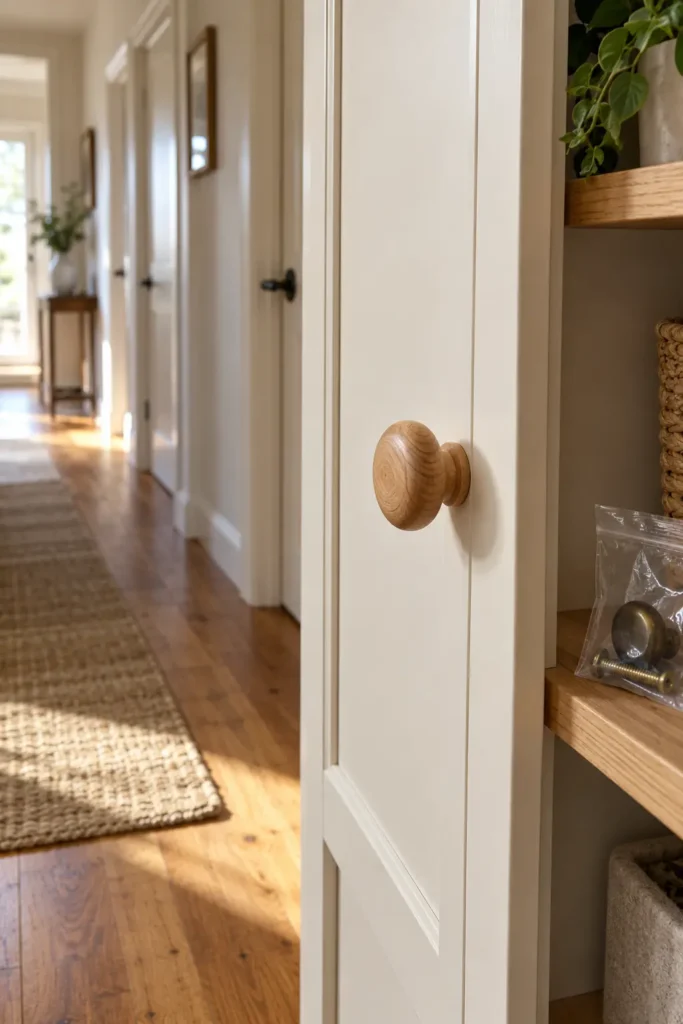
New cupboard knobs are easy to buy in the wrong size. Start by checking how the old fitting attaches and whether your rental terms allow the swap.
For the look:
- Small dark knobs can echo black frames and door handles.
- Plain wood knobs work with an oak console and a woven runner.
Feel the edges before buying, especially for the cupboard you open in a hurry. A rounded knob should be easy to grasp.
Keep the original hole pattern. A replacement pull needs the same screw-hole spacing, with screws suited to the door thickness. Test one fitting before ordering the rest. Bag each original knob with its screws and label the bag for that cupboard. Moving day is a poor time to hunt for tiny parts. libertyhardware.com
Check one fitting before changing the set
Photograph the old fitting from both sides with the cupboard open. Keep its parts together as you remove it.
Check the paint beneath its base. A smaller replacement may reveal an old outline or an unpainted patch.
Fit the replacement as directed. Check that it sits flat, feels comfortable to grip, and clears the neighboring door.
11. Put a Small Plant on an Existing Sunny Sill
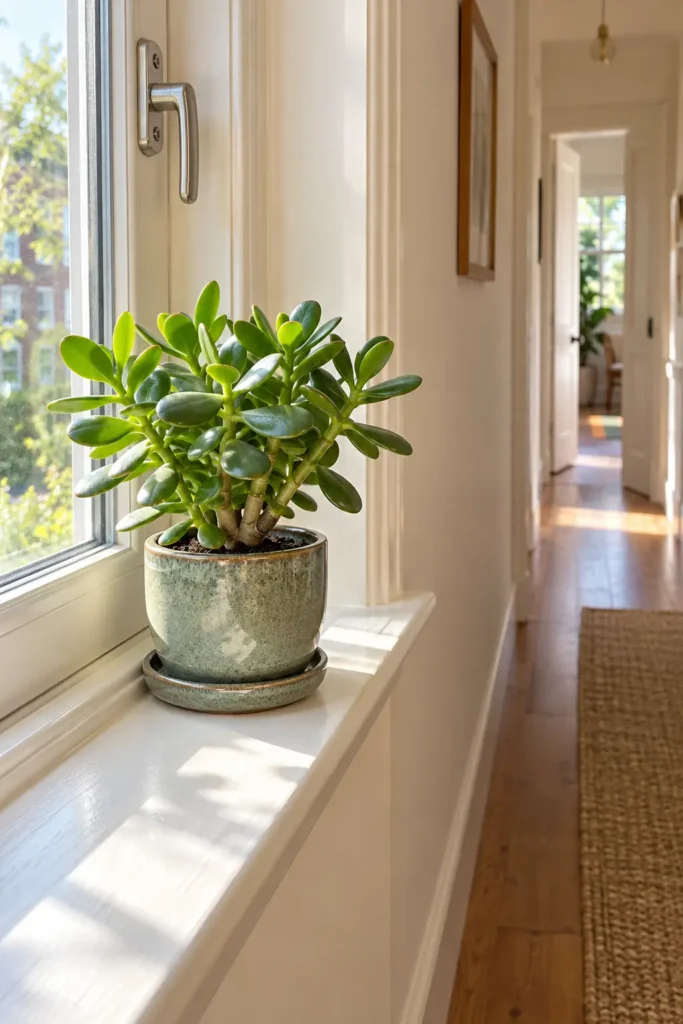
A small plant on an existing sill brings in the green of botanical prints while keeping the floor clear.
Choose for the window:
- Match the plant’s light needs to the daylight the sill actually gets.
- Allow for mature leaves as well as the pot and saucer.
Look at the window at different times of day before choosing a plant. A brief sunny patch does not tell you the whole story. UMN Extension
Use a pot with drainage holes and a waterproof saucer. Take it to the sink for watering, let excess water drain, and wipe the pot before returning it to the painted sill.
Keep the window usable
✅ Leave room
Keep the whole saucer supported by the sill.
Leave the handle, blind controls, and window opening clear.
🚫 Avoid the squeeze
Keep trailing stems out of window catches and moving parts.
Choose a smaller pot instead of balancing one on a narrow edge.
12. Hide Open Alcove Storage With a Recessed Tension Curtain
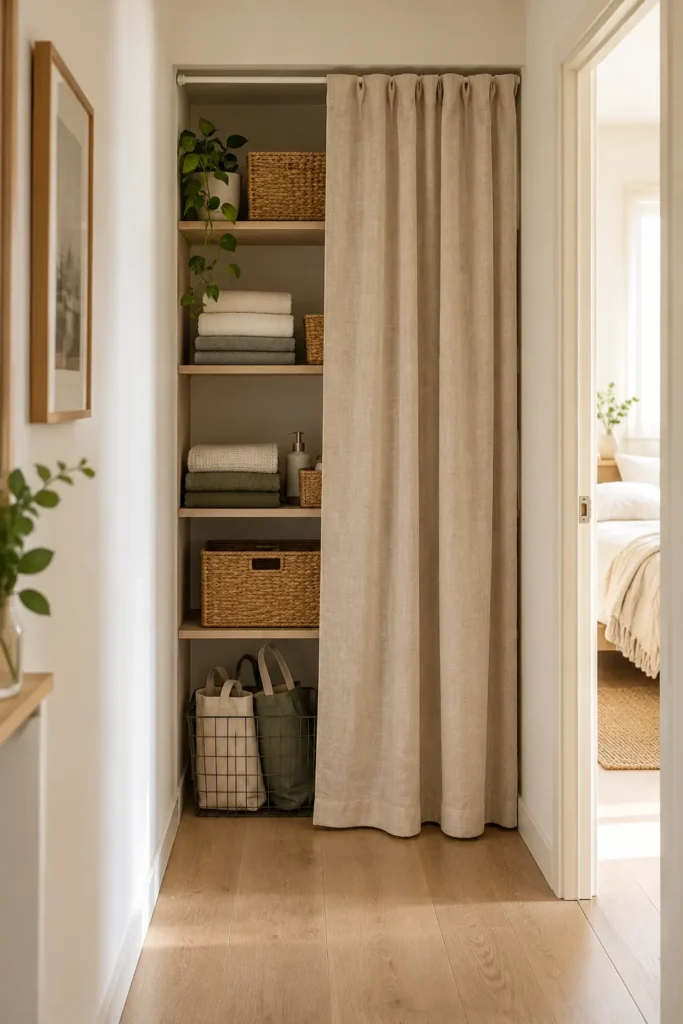
Open alcove shelves put every shopping bag and spare towel on show. A light curtain lets that storage fade into the background.
Keep the fabric inside the opening. Set a tension rod between suitable solid sides, using a model rated for the span and curtain weight. Follow its fitting instructions and hem the panel clear of the floor.
Choose plain oat or cream fabric with enough width for soft folds. Too much fabric gathers in a lump when pulled back. Before cutting the hem, check the curtain both open and closed with the shelves loaded.
📌 Plan which way it opens
A single panel can slide toward the side you reach less often. Leave room for the gathered fabric so it does not hide a handle or block your most-used shelf.
13. Make a Key Drop With a Tray on an Existing Ledge
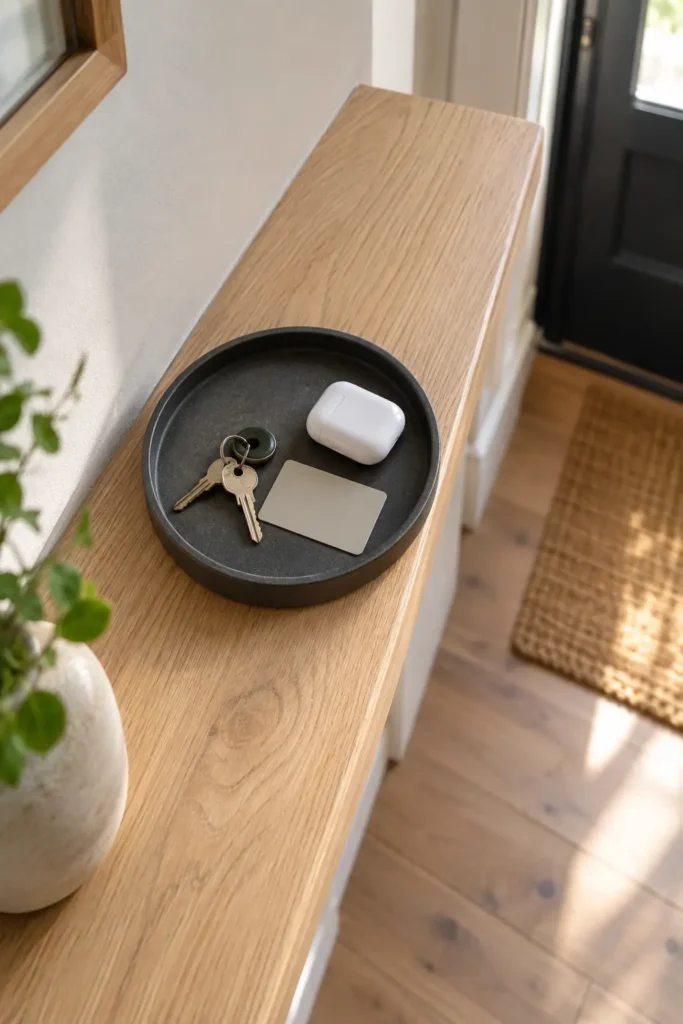
Keys, earbuds, and receipts tend to spread across whichever surface is nearest the door. Give them a boundary with one shallow tray on a ledge you already have.
- Choose a tray with a smooth, soft base, and check underneath for grit.
- Leave some uncovered ledge so you can lift the tray without nudging other objects.
Keep only the things that leave with you each morning. Post and spare chargers need another home. Empty old receipts when you take out the recycling, so a place for keys does not become a paper pile. The aim is to grab what you need without sorting first.
Reset a crowded landing spot
BEFORE THE RESET
Receipts for returns can stay with the item or its paperwork.
Post needing a reply goes where you handle household paperwork.
AFTER THE RESET
Give your daily keys and travel pass their own spots in the tray.
Use the same corner for each item so an empty spot is easy to notice.
14. Repeat One Accent Color in Three Small Details
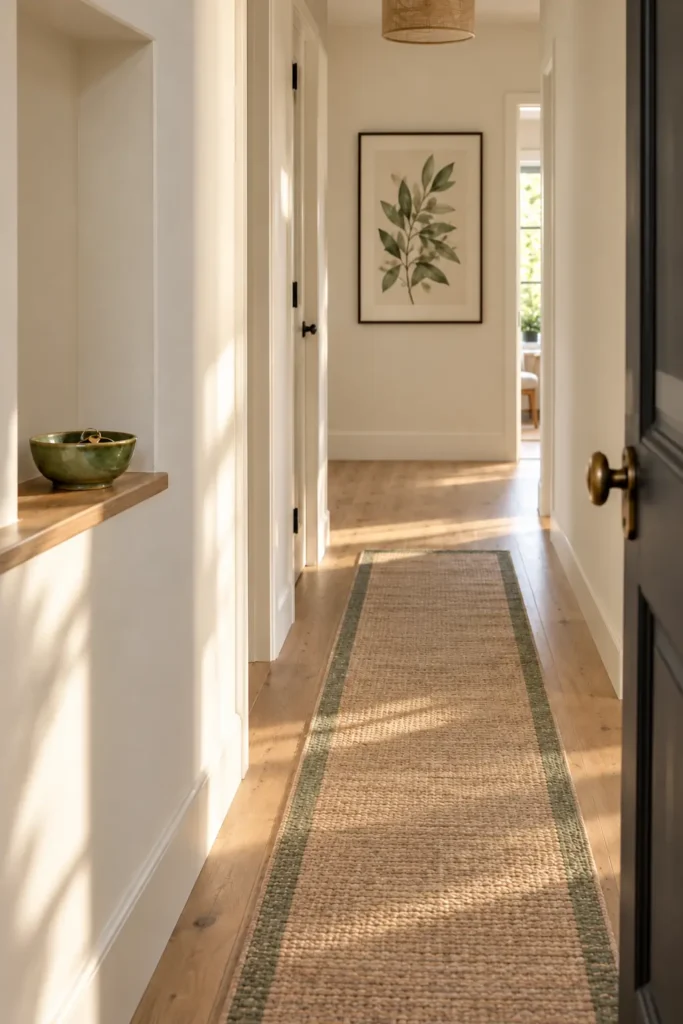
Start with a color your hallway already has, even if it appears only in one leaf print or a thin line in the runner.
Echo that shade in a small bowl and another detail, such as a fabric border. Keep the wall color and wood tones as they are.
Let one piece lead. A print can carry the strongest green, with softer versions elsewhere. Check the pieces together under the hallway light. Once the color feels connected, stop shopping for more of it.
Find a color link in what you own
- Dark doors can link to charcoal picture frames and the edge of a tray.
- A muted green print can link to a woven pattern and a small glazed bowl.
- A warm patterned runner can supply a clay shade for a dish and a fabric detail.
15. Leave the Long Wall Opposite Your Art Bare
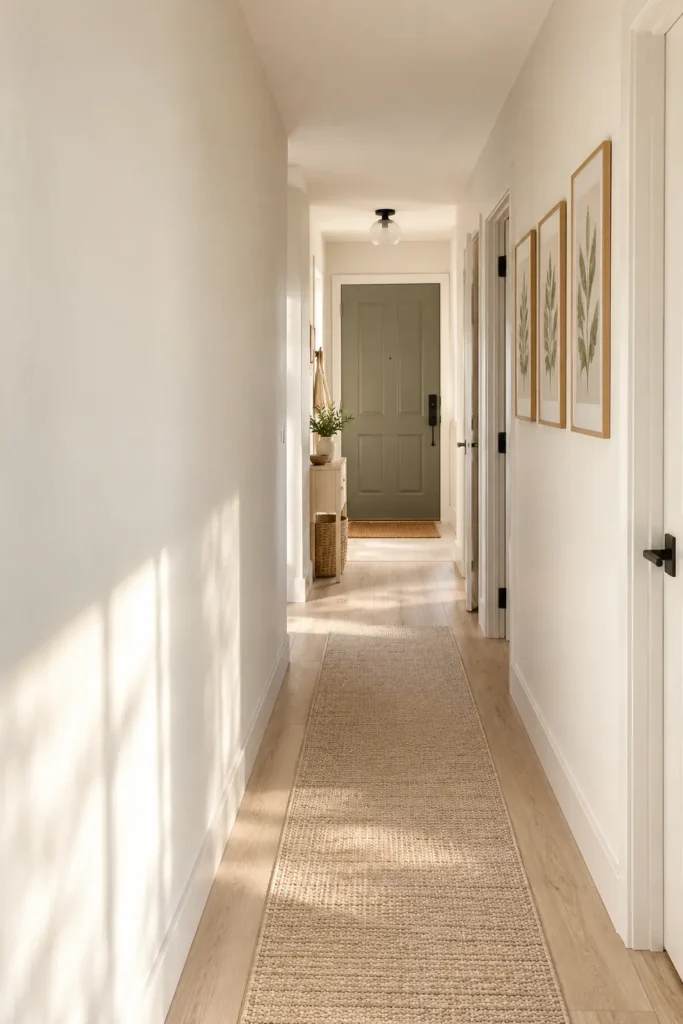
The empty wall is doing a job too. Keeping the long wall opposite your artwork clear gives the frames, runner, and doors a little breathing room.
Check the view with the hall in use:
- Stand at the entrance with the usual doors open.
- Look for blank stretches between the features you already have.
Remove the smallest extra piece before adding anything else. If a doorway now looks calmer and the coat you carry has room to pass, leave that gap alone. A hallway can feel finished while still having a wall with nothing on it.
Take a photo from each end of the hall. View the small previews on your phone to check where the layout feels crowded. Remove one extra object, then compare again.
Frequently Asked Questions
How do you decorate a narrow hallway in a rental without damaging the walls?
Choose pieces that lean, hang from doors, or cling rather than stick or screw: a flat textile instead of a deep frame, a mirror on the back of a suitable door, static-cling film on glass, and over-door organizers. If you use adhesive pads or removable wallpaper, test a hidden patch first and keep the product’s removal steps. More no-damage approaches are in our guide to rental decorating ideas without adhesives.
How wide should a runner be in a narrow hallway?
Leave a border of bare floor visible on both sides — a few inches is enough to make the hall feel wider and to let doors swing freely. A low, flat weave also stops the runner catching on door bottoms.
How can I brighten a dark hallway without hiring an electrician?
Rechargeable wall lights add warm light with no wiring, and a slim mirror bounces what light you have down the hall. A pale runner and light frames help too. For more small-space light tricks, see how to make a small room look bigger without buying anything new.
Will removable wallpaper damage a rental wall?
It is designed to peel off cleanly, but results depend on the paint and surface underneath. Order a sample, leave it for the maker’s test period, and check the paint beneath before ordering full rolls — the step-by-step is in our removable wallpaper accent wall ideas.
What should you avoid in a narrow hallway?
Skip deep furniture, floor-standing clutter, and anything that narrows the path people walk with laundry baskets and coats. If a piece makes you turn sideways, it is too big — remove the smallest extra piece first and live with the gap.